Terra Industries, the Nigerian defence tech startup building aerial and ground systems designed for defence of national and critical infrastructure, has raised another $18 million to continue expanding its business, specifically to fire up a second production facility in Ghana and open a new office in London both for hiring a wider pool of talent, and to interface more directly with those who might finance Terra’s growth.
Nathan Nwachuku, the CEO who co-founded the company with CTO Maxwell Madukasays, told Resilience Media in an email interview that the company is on track to see revenues in the tens of millions this year, with $100 million in current contracts. Terra is not disclosing valuation but in February the company confirmed that it was in the low-hundreds of millions. It has yet to disclose any specific contract wins, but we’ll hopefully hear more about that — or at least we’ll ask about it again — when Nwachuku joins us on stage at Resilience Conference in London. (Please join us, too.)
Terra is a startup worth watching. At a time when defence tech has been expanding rapidly in regions like Europe, it emerged as out as an outlier in Africa, one of the very first homegrown companies to emerge to target customers specifically across Africa facing not just issues and threats across borders but domestic ones in the form of terrorism and corruption. (It even styled itself as wanting to become “The Anduril of Africa.”) As more companies are now growing up in the region — others include Terrahaptix, Proforce, Safari UAV and FalconEye Labs — Terra perhaps remains the most prominent and ambitions. It hasn’t taken long for Terra to identify the need/opportunity beyond its own continent, with the facility and office expansion in aid of that.
“While we started with a mission to protect Africa and its critical infrastructure, that mission has evolved to include defending other regions across the Global South against the same threats: transnational terrorism, insurgency, border insecurity, illegal extraction, and attacks on critical infrastructure,” said Nwachuku. “Countries in the Global South are looking to build and invest in sovereign military and defense capabilities, often designed around affordability, autonomy, persistence, and local operational realities.” Some of this is in response directly to conflicts spreading elsewhere. The first regions it plans to sell into will include the Gulf, South America, and South Asia, he said.
Notably, this latest capital injection is not a new round. It is an extension to the Seed funding that Terra originally announced in January of this year, and had already extended by $22 million in February, bringing the total now to $52 million for the Seed.
A Series A is in the works to “fund manufacturing at volume and the international footprint that follows the customers, starting with Africa, then across the Gulf, South America, and South Asia,” Nwachuku said.
As with the other investments, the $18 million funding is coming largely from several in the group that first seeded the company — 8VC, Silent Ventures, Nova Global, Belief Capital, and SV Angel — plus two new names: Norleo Space Investments and Grant Gordon.
Defence tech and the wider category of resilience technology have blown up in the last couple of years, fuelled by shifts in the geopolitical landscape, ongoing conflicts, and an awareness of what weaponry adversaries are developing.
All of these are driving nations to consider how to better equip their own militaries with more modern tools, how to build critical infrastructure that is more secure against cyber and physical attacks, and how to develop supply chains — not just for defence, but for technology, food, energy and the other essentials of life — that less reliant on countries that are potential, or existing, adversaries.
All of the above has become a driving force for company and technology building across nations in the NATO alliance. the same applies perhaps even more in regions like Africa, which face a number of domestic threats (which Nwachuku describes as terrorism) alongside those that extend across borders.
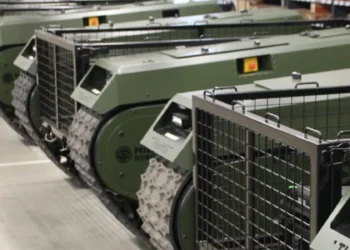
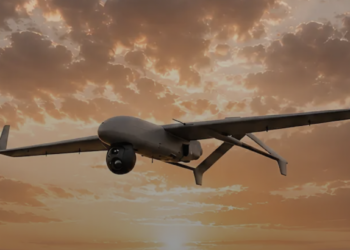
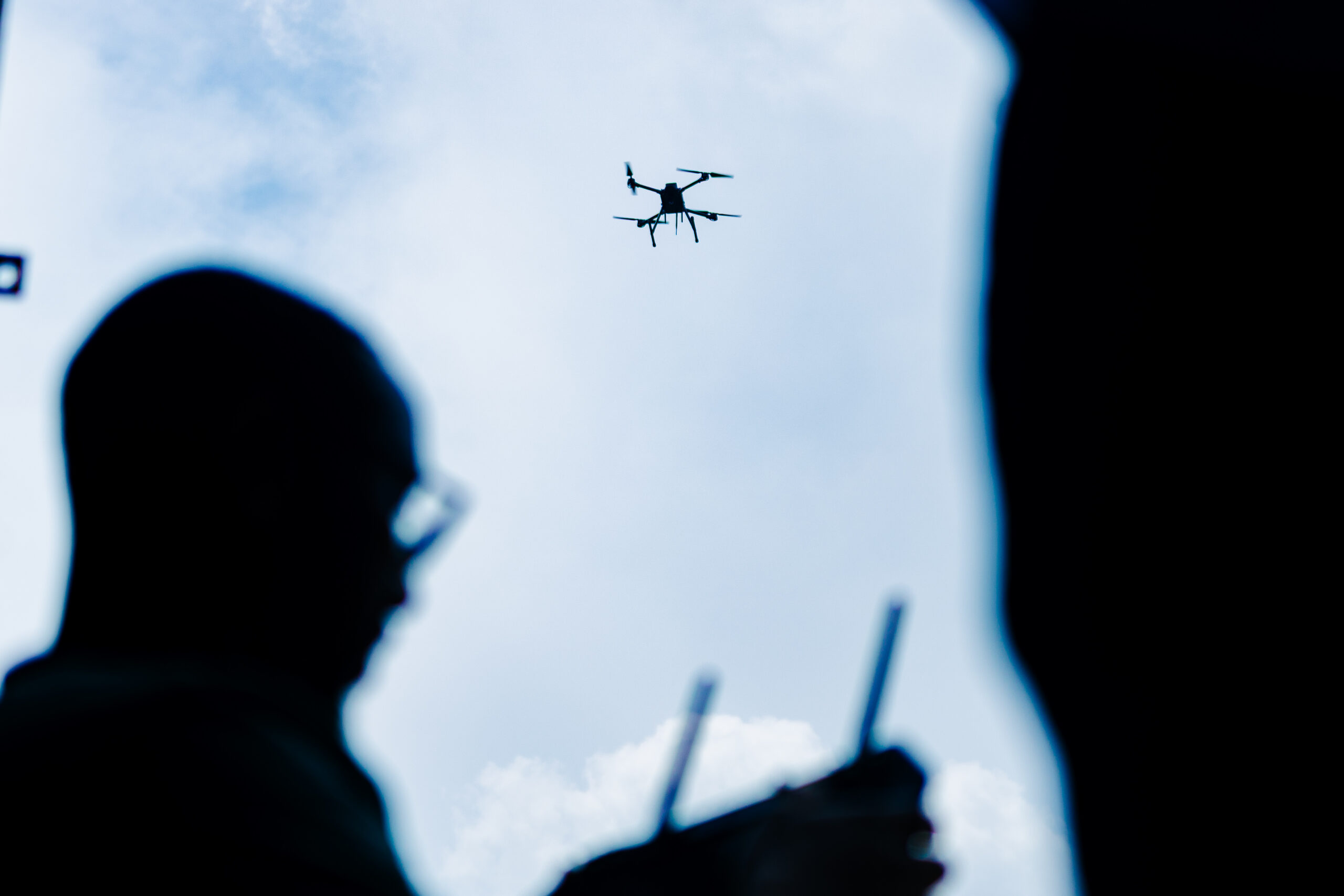
In addition to its Archer drone and Iroko quadcopter (an unmanned aerial vehicle aimed at first response and infrastructure inspection), Nwachuku said that it’s seeing interest for its newer products as well, which include Kama, a counter-drone interceptor; and Minesweeper and Combat Dumas, respectively mine-detecting and combat unmanned ground vehicles.
The aim for all of these is to keep manufacturing them in Africa. Nwachuku said that the new 34,000 square foot Pax-2 manufacturing facility in Ghana will open sometime un Q4 2026 and will make it the largest drone factory on the continent, producing 50,000 units annually by 2028 (relatively modest if you consider that Ukraine targets monthly production of 500,000 drones). That will be in addition to Terra’s 15,000 sq. ft. Pax-1 flagship in Abuja, Nigeria.
The domestic industry remains nascent. While there are a handful of other defence tech companies emerging on the continent, Nwachuku said that it competes mostly against “external suppliers from China, Turkey, and the West that have won government contracts over the years for everything from legacy military equipment to drones and autonomous systems.”
However, he notes that the ease of procurement from further afield has fuelled more problems that need addressing. “The diversification of the continent’s defence supply chains has been destabilizing,” he said, “and the outsized effect of these systems on conventional warfare has made conflicts in the Global South particularly prone to foreign meddling.”
Interestingly, while we have seen a number of smaller and bigger defence tech startups link up with much larger prime contractors to scale production and to sell into militaries, that is not a template that Terra seems destined to follow for now.
“In the U.S., a defence startup partners with an established prime because that company owns the customer relationship and the production lines. In Europe, the same logic applies,” Nwachuku said. “Africa and parts of the Global South have no equivalent. That is the gap we are building into.”