Good afternoon from Resilience Media.
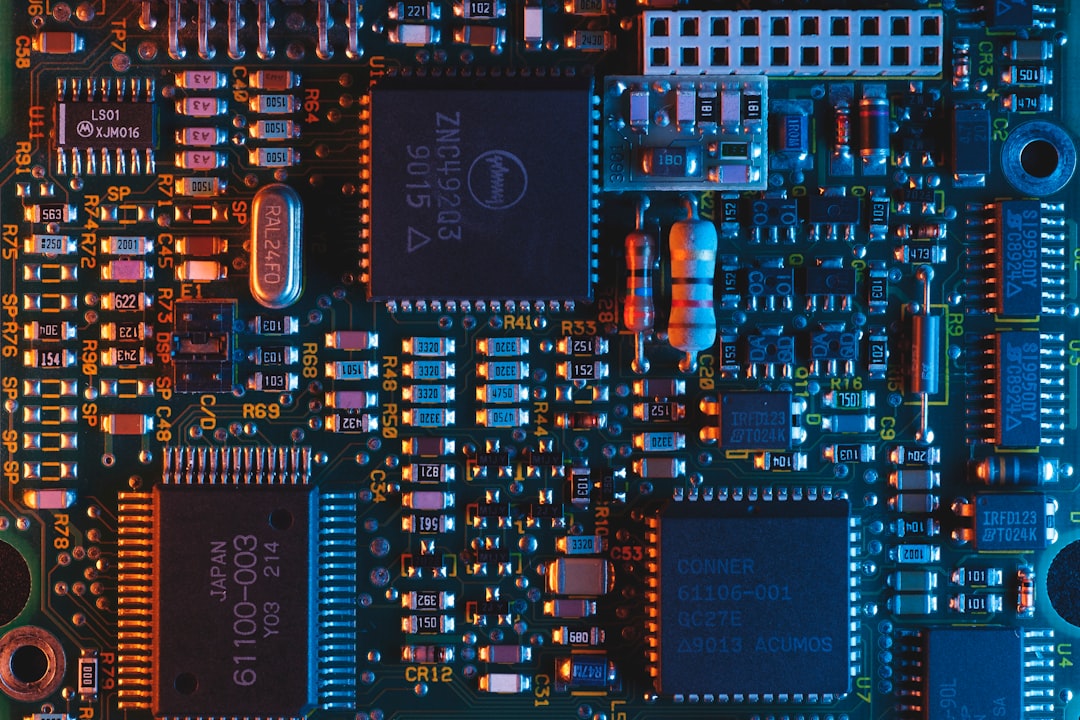
Sovereignty is a term bandied about across all aspects of the European resilience, but one area where it feels critical is with regard to semiconductors. The European Chips Act directive to double chip production to 20% by 2030 is not expected to yield the desired results, but some startups see another path to achieving sovereignty: become indispensable to the supply chain.
One example of this surfaced in our reporting this week. Rotterdam-based, TNO-spin off Nearfield Instruments, which makes quality control equipment for chip manufacturers, raised its Series D this week. Resilience Media Reporter, Paul Sawers goes beyond the numbers to analyse the European semiconductor landscape here.
Another Dutch semiconductor company, Qualinx, announced that its new QLX3Gx Series GNSS receiver now supports Galileo’s Open Service Navigation Message Authentication (OSNMA), claiming to be the first ultra-low-power GNSS platform designed to provide authenticated positioning as a standard feature. Read Editor at Large John Biggs’ reporting here.
Funding announcements haven’t slowed down this week, with Stark, Ubotica, and the above-mentioned Nearfield Instruments raising a collective $959M. We break down the investments in our Deals section below.
Orqa CEO, Srđan Kovačević and NXP Semiconductor CTO, Lars Reger will be joining us on-stage together at Resilience Conference London. In their fireside chat, they will explore how advances in autonomy, AI, semiconductors and secure hardware are transforming defence, and what militaries, startups and industry must do to maintain a technological edge. Early Bird tickets are available until the end of July. Get yours today and we’ll see you in London 5-6 October.
Elsewhere on Resilience Media:
- Frankenburg takes aim at a €100M Series B funding round
- The Fourth Law, RSI Europe to build drone factory in Lithuania
- Russia is jamming GPS from space
- From the battlefield to critical infrastructure, C-UAS are in the frame
I’ll be back in your inboxes next week. Thanks for reading.
-Leslie Hitchcock, co-founder and Publisher, Resilience Media
DEALS 💰
Irish space tech firm Ubotica raises $11M
- Ubotica, the Irish space tech firm developing orbital AI for satellites, has raised $11 million to scale the commercialisation of its maritime intelligence platform, Live Maritime Intelligence (LMI).
- This is one of a few funding announcements that has come from Irish companies working in the defence space of late.
- This latest injection of capital is coming ahead of a bigger fundraise, Fintan Buckley, CEO of Ubotica, told Resilience Media.
- Greencode Ventures led the $11 million funding round alongside Act Venture Capital, with follow-on funding from existing investor Atlantic Bridge.
Stark confirms monster €500M funding round, reportedly approaching a €3B valuation
- Stark confirmed that it has closed a funding round of €500 million ($570 million) from investors that include Sequoia Capital, Founders Fund, the NATO Innovation Fund, Project A, Air Street Capital, 201 Ventures, Advent and Döpfner Capital.
- The bulk of the money will be going towards R&D and ramping up production
- Resilience Media has contacted the company to confirm a valuation. In May, when the round was rumoured to be in the works, Stark was reportedly raising €300 million at a valuation of around €2.5 billion. Extrapolating from that, this round could value the company at around €2.7 billion.
- This brings the total raised by the company to €640 million.
Nearfield Instruments raises $380M to bring Europe’s sovereignty push to chip quality control
- Rotterdam-based Nearfield Instruments, a spin-off of Dutch research institute TNO that develops quality control equipment for chip manufacturers, this week closed a $380 million Series D funding round at a $1.6 billion valuation — among the largest deep-tech raises in Dutch history.
- The round was led by Fidelity Management & Research Company, with new investors including the Qatar Investment Authority and M&G Investments, bringing together a mix of institutional money that signals an appetite for European semiconductor tooling companies.

DISPATCHES FROM FRANCE 🇫🇷

Less crew, more ground: UGVs dominate Eurosatory lineup
Stanislaw Nalicki, Contributor
Drones may be the technology that is dominating most conversations about defence tech today, but when it comes to what is coming around the corner, the message from Eurosatory was to look down, not up.
This year’s mega defence show, which took place in the north of Paris, was dominated by Unmanned Ground Vehicles (UGVs) — with everyone from defence giants to small startups showing off self-driving military carriers of all shapes and sizes, from quads to lorries destined to link up into robotic convoys. No steering wheels, nor seats: the next generation of the ground vehicles won’t necessarily have humans in the driving seat; they will be controlled by AI.
“Unmanned Ground Vehicles are the new FPV drones,” said one of the producers at Eurosatory 2026.
This has been a rapid shift, attendees said.
Less than a year ago, DSEI in London, air-based systems were the name of the game, and in terms of what is being produced and acquired, that remains the case. But looking at what defence companies are showing off coming down the pipeline, this points to what is trending in innovation. “There are three times more UGVs on stands here” [than on the floor in London], one person told Resilience Media.
This appears to have been playing out in other arenas, too: Ragnar Sass, the founder of DarkStar, told Resilience Media that he’s observed the same shift to UGVs among defence tech builders in Ukraine.
Indeed, Ukraine currently dominates in UGV capabilities — in large part driven by battlefield demand. The country announced it would contract 25,000 UGVs by the first half of 2026, mainly procured from local producers, but also in tight collaboration with partner countries like Germany. This is a major scale up: for comparison, consider that Estonia’s Milrem Robotics — one of Europe’s industry leaders — currently has only 70 vehicles operating in Ukraine.
PEOPLE 🤝
Frank Dirksen was appointed in early June to the newly created role of Chief Commercial Officer at Helsing, via Rheinmetall and the German Armed Forces.
David O’Toole and James Cowley have come together to form Tracer Advisory, built to be the trusted partner to the companies and institutions defining the future of western security.With two decades of experience in the resilience industries, they are combining to support the ecosystem with three fully integrated service lines: executive search, M&A advisory, and capital and investment advisory.
Karl Eze joined Orqa in April as Director of Capability Development, based in the UK.