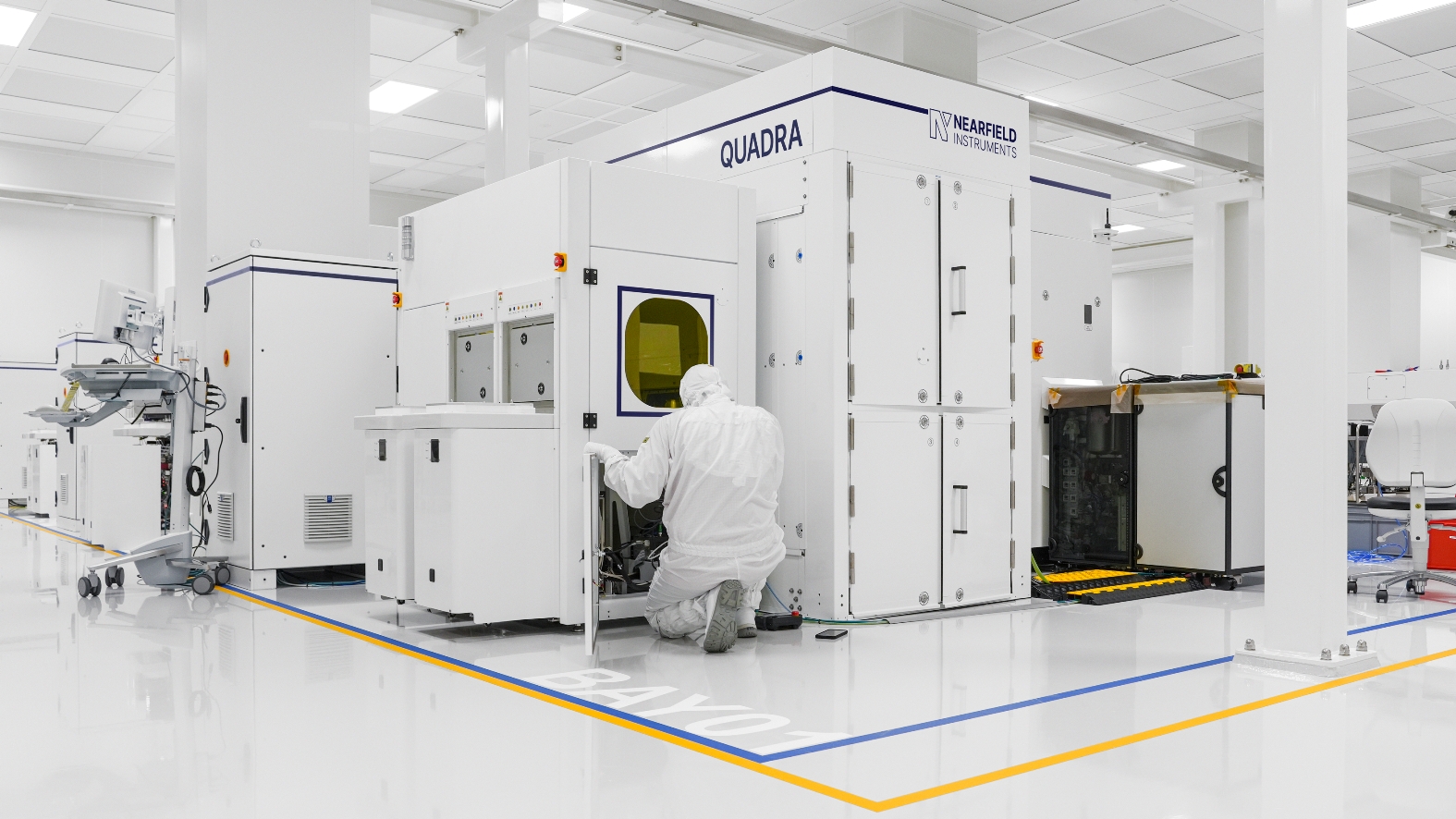
Sovereignty has emerged as one of the defining strategic preoccupations in Europe today, intersecting with almost every aspect of national resilience — from energy independence and warfare autonomy, to the digital infrastructure that underpins how governments communicate and operate. But it’s every bit as applicable to critical hardware, and nowhere is that more consequential than in semiconductors — the foundational technology of much of the modern world.
Against that backdrop, Rotterdam-based Nearfield Instruments, a spin-off of Dutch research institute TNO that develops quality control equipment for chip manufacturers, this week closed a $380 million Series D funding round at a $1.6 billion valuation — among the largest deep-tech raises in Dutch history. The round was led by Fidelity Management & Research Company, with new investors including the Qatar Investment Authority and M&G Investments, bringing together a mix of institutional money that signals an appetite for European semiconductor tooling companies.
To understand why that appetite exists, it helps to understand the scale of the problem. Writing in Resilience Media back in May, Jack Wang, a principal at European venture capital firm Project A Ventures, assessed Europe’s push for tech sovereignty, noting that meaningful progress had been made across the continent’s cloud infrastructure, with substantial investor interest now flowing into the space. But he pointed to a vulnerability that cloud investment alone can’t fix: even where European cloud services were legally and operationally localised, the underlying hardware — GPUs, chips, semiconductors — remained overwhelmingly dependent on foreign suppliers subject to export controls and geopolitical pressure. “Until Europe builds its own semiconductor capacity,” Wang wrote, “true sovereignty will remain an aspirational (and distant) goal.”
The European Chips Act (ECA) — a multi-billion euro effort to double the continent’s share of global chip production to 20% by 2030 — has already been found by the European Court of Auditors to be “very unlikely” to hit that target, with an independent forecast putting Europe’s actual share at around 11.7% by the end of the decade. Intel’s decision to scrap plans for two mega-chip factories in Germany — the costs too high, the local demand for advanced chips too thin — illustrated why. The US, too, is finding similar: TSMC’s flagship Arizona plants have faced repeated delays, and the political future of the CHIPS and Science Act has grown uncertain after President Trump called it a “horrible, horrible thing” and pushed for its repeal.
Outpacing Taiwan’s TSMC in the chip manufacturing race is, for now, beyond reach for any Western player.
But there’s another way to accumulate leverage in the semiconductor supply chain — not by building the chip factory, but by becoming indispensable to everyone who does. The Netherlands already demonstrated this logic with ASML, the Eindhoven-based company whose lithography machines are essential to advanced chip manufacturing. Nearfield Instruments is making a similar bet in a different part of the stack.
Seeing inside the invisible
As chips have grown more complex, the tools used to verify they are being built correctly have struggled to keep up. The industry’s traditional measurement systems — optical and electron beam tools — are fundamentally two-dimensional, and increasingly unable to measure the intricate three-dimensional structures that define the most advanced chips produced today.
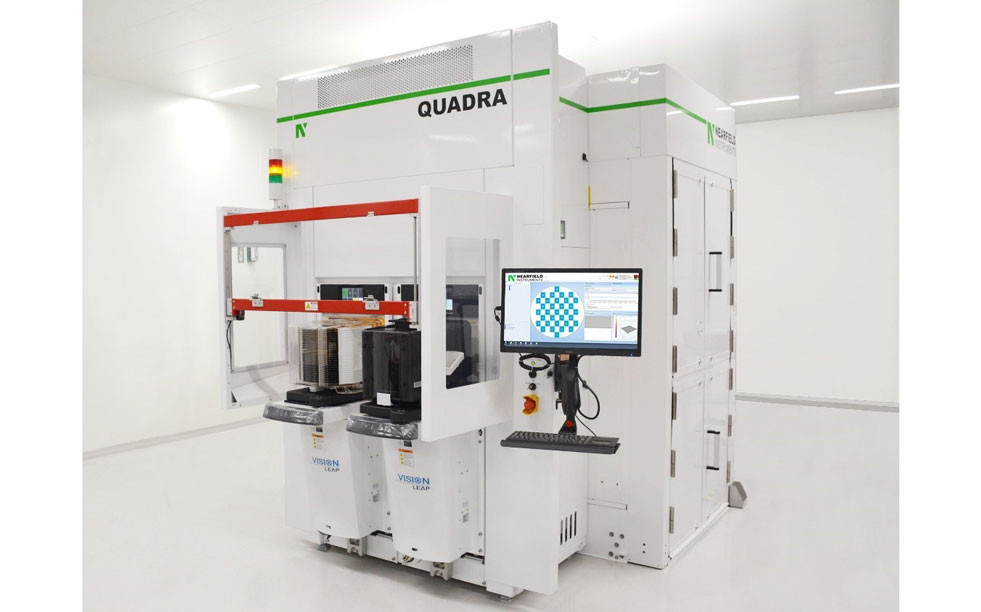
Nearfield’s answer is a rebuilt form of atomic force microscopy — a technique that uses a tiny physical probe to trace chip structures at nanometre scale. By miniaturising the probes and running multiple in parallel, the company has made it fast enough for a production line. Its QUADRA platform delivers non-destructive 3D measurements at the speed high-volume manufacturing demands, while a second product, AUDIRA, uses acoustic waves to detect buried defects invisible from the surface.
Samsung was an early customer, receiving its first QUADRA system in 2020.
Niranjan Sirdeshpande, global head of investment at M&G Investments, said that as semiconductor demand grows and chip architectures become ever more complex, the ability to verify manufacturing precision at each step has become a strategic necessity — one that existing tools are increasingly failing to meet. Nearfield’s platform, he added, directly addresses “a critical manufacturing bottleneck.”
Nearfield, for its part, has positioned itself squarely within Europe’s semiconductor sovereignty effort. The company is an approved participant in the EU’s IPCEI ME/CT programme — the flagship subsidy scheme under the Chips Act — and received Dutch government funding alongside ASML as part of a €230 million national package for semiconductor tooling. CEO Dr. Hamed Sadeghian says the raise reflects something beyond a funding milestone, pointing to “the growing strategic importance of metrology [the science of precise measurement] and inspection in the era of AI-driven semiconductor innovation.”
The fact of the matter is, Europe isn’t going to be out-manufacturing Taiwan any time soon, and Nearfield’s tools don’t change that. But as Resilience Media reported in May, France’s de facto ambassador to Taipei, Franck Paris, said that it’s “not a realistic project” for Europe to replicate the entire chip supply chain — what matters is becoming indispensable somewhere in the chain.
And so Nearfield supports that notion, showing that Europe might not need to win the manufacturing race to matter within it.