Thursday 25 June, 2026
[email protected]
Resilience Media
  • News
    • Events
    • Interview
    • Startups
    • Venture
    • Weekly Digest
  • Resilience Conference
    • Resilience Conference Warsaw 2026
    • Resilience Conference Copenhagen 2026
    • Resilience Conference London 2026
  • About
  • Guest Posts
    • Author a Post
  • Subscribe
No Result
View All Result
  • News
    • Events
    • Interview
    • Startups
    • Venture
    • Weekly Digest
  • Resilience Conference
    • Resilience Conference Warsaw 2026
    • Resilience Conference Copenhagen 2026
    • Resilience Conference London 2026
  • About
  • Guest Posts
    • Author a Post
  • Subscribe
No Result
View All Result
Resilience Media
No Result
View All Result

Copenhagen-based startup Acodyne lands €2.5 million pre-seed round for autonomous cargo drones

John BiggsbyJohn Biggs
June 25, 2026
in News, Startups
Share on Linkedin

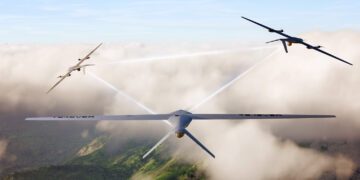
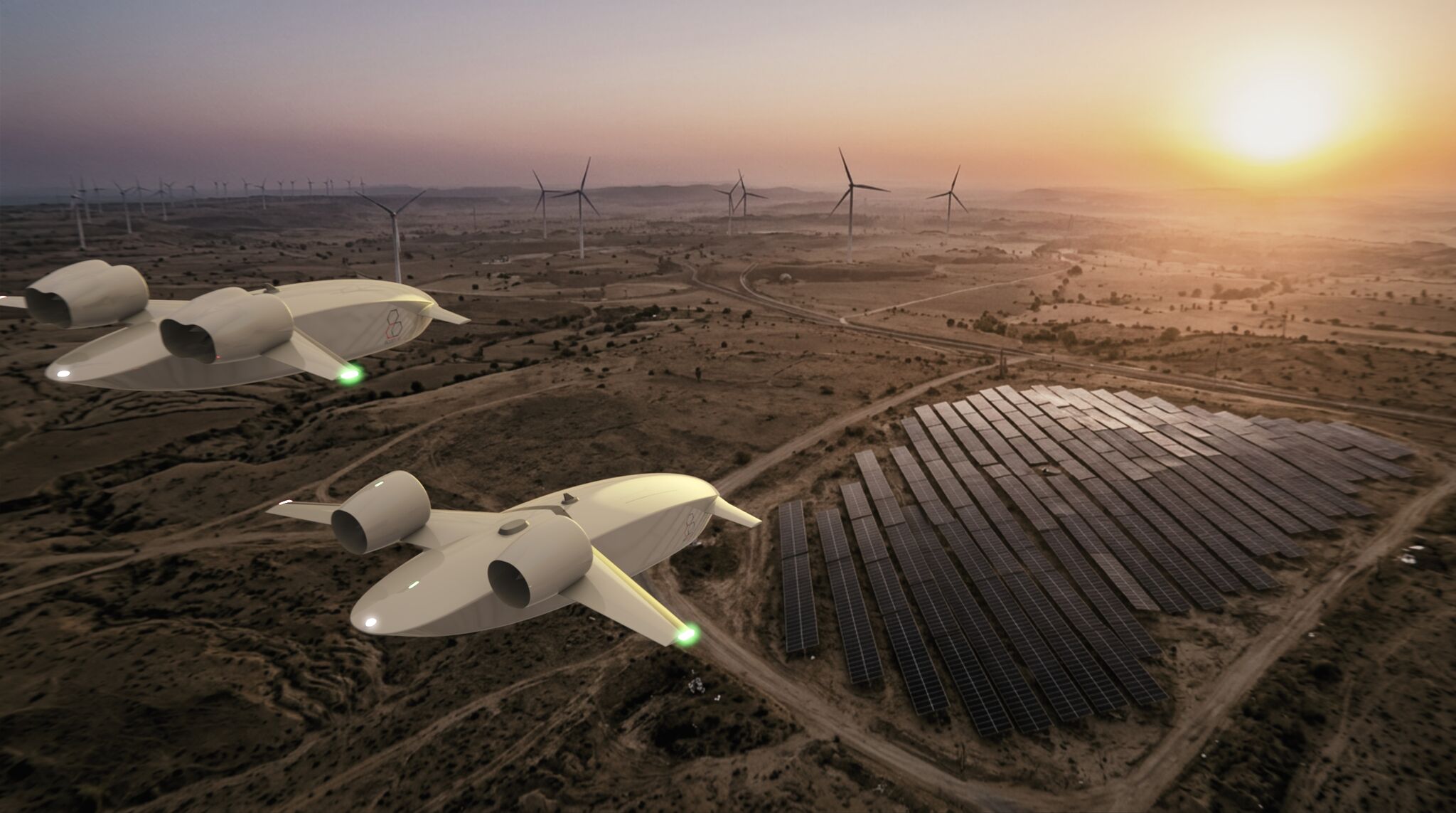
Copenhagen-based Acodyne announced it has raised €2.5 million in pre-seed funding to help build autonomous cargo aircraft designed for “heavy payload transport.” The aircraft will be able to carry “100–500 kg at speeds of up to 450 km/h,” according to an announcement by the founder.

You Might Also Like

Nearfield Instruments brings Europe’s sovereignty push to chip quality control

Irish space tech firm Ubotica raises $11M

Dutch semiconductor company is bringing secure, authenticated satellite positioning to handheld devices

Gungnir Capital, PSV Hafnium, EIFO, SAP9 Group, and GreenUp Syndicate IV backed the pre-seed round.

“This investment enables us to accelerate the development of our E100 prototype, advance full-scale flight testing, and grow our team of aerospace engineers, designers, and business builders. Today, we are just 10 passionate people working from Avedøre Airfield, united by a shared ambition to redefine how cargo moves,” said founder Mads Schnack. 

Acodyne’s systems are vertical take-off and landing, which means they don’t require a long runway to take flight.  Because they are battery-powered, the aircraft can fly for 75 minutes in one go with a range of about 500 kilometers.

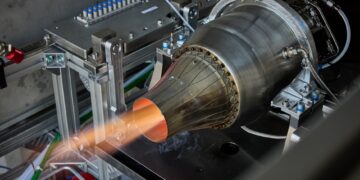
Interestingly, the company is using its own proprietary engines that come in electronic and hybrid versions. Their smallest aircraft, the E100, can carry a payload of about 100 kg while the largest UAV, the E500, can carry 500 kg and is about seven meters square.  The plane has removable wings for easier transport in standard containers.

The value of an autonomous cargo aircraft is clear, especially in the context of cross-border deliveries in both civilian and wartime situations. 

“The momentum behind autonomous aviation has never been stronger. Across defence, offshore operations, and logistics, we see growing demand from organizations that recognize the future of transportation will be autonomous, efficient, and increasingly airborne,” said Schnack.

Acodyne says the drones could replace crewed helicopters on short-range missions while reducing costs and risk. Future hybrid-electric versions are expected to double the range to 1,000 kilometres, and the company plans to integrate AI-assisted flight planning and autonomous operations. Flight testing is scheduled to begin by the end of 2026, with commercial operations targeted for 2028.


Tags: acodyneDronesuav
Previous Post

Nearfield Instruments brings Europe’s sovereignty push to chip quality control

John Biggs

John Biggs

John Biggs is an entrepreneur, consultant, writer, and maker. He spent fifteen years as an editor for Gizmodo, CrunchGear, and TechCrunch and has a deep background in hardware startups, 3D printing, and blockchain. His work has also appeared in Men’s Health, Wired, and the New York Times. He has written nine books including the best book on blogging, Bloggers Boot Camp, and a book about the most expensive timepiece ever made, Marie Antoinette’s Watch. He lives in Brooklyn, New York. He runs the Keep Going podcast, a podcast about failure. His goal is to share how even the most confident and successful people had to face adversity.

Related News

Nearfield Instruments

Nearfield Instruments brings Europe’s sovereignty push to chip quality control

byPaul Sawers
June 25, 2026

Sovereignty has emerged as one of the defining strategic preoccupations in Europe today, intersecting with almost every aspect of national...

Irish space tech firm Ubotica raises $11M

Irish space tech firm Ubotica raises $11M

byFiona Alston
June 24, 2026

Ubotica, the Irish space tech firm developing orbital AI for satellites, has raised $11 million to scale the commercialisation of...

Dutch semiconductor company is bringing secure, authenticated satellite positioning to handheld devices

Dutch semiconductor company is bringing secure, authenticated satellite positioning to handheld devices

byJohn Biggs
June 23, 2026

For years, authenticated satellite positioning has largely been reserved for expensive, power-hungry systems operating in defence, aviation, and other specialised...

Stark inks Virtus deal with NATO member in Northern Europe, one week after expanding to Sweden

Stark confirms monster €500M funding round, reportedly approaching a €3B valuation

byIngrid Lunden
June 23, 2026

It's another big news day for defence tech startups in Europe. Stark -- the company building air and surface attack...

a satellite satellite flying over the earth

Russia is jamming GPS from space

byPaddy Stephens
June 23, 2026

Russia can jam GPS across Europe, and as far west as Canada – and has been doing so for over...

The Fourth Law, RSI Europe to build drone factory in Lithuania

The Fourth Law, RSI Europe to build drone factory in Lithuania

byJohn Biggs
June 23, 2026

Ukrainian defence company The Fourth Law (TFL) has signed a memorandum of understanding with Lithuanian defence technology firm RSI Europe...

helicopters and signal towers

From the battlefield to critical infrastructure, C-UAS are in the frame

byStanislaw Naklicki
June 23, 2026

To say that the anti-drone industry is booming may be an understatement. At the 2026 edition of Eurosatory in Paris,...

Frankenburg takes aim at a €100M Series B funding round

Frankenburg takes aim at a €100M Series B funding round

byFiona Alston
June 22, 2026

Frankenburg Technologies, the missile startup that aims to build lower-cost guided interceptor systems in Europe, has taken aim at something...

Load More

Most viewed

InVeris announces fats Drone, an integrated, multi-party drone flight simulator

Uforce raises $50M at a $1B+ valuation to build defence tech for Ukraine

Auterion, the drone software startup, eyes raising $200M at a $1.2B+ valuation

Palantir and Ukraine’s Brave1 have built a new AI “Dataroom”

Twentyfour Industries emerges from stealth with $11.8M for mass-produced drones

Senai exits stealth to help governments harness online video intelligence

Resilience Media is an independent publication covering the future of defence, security, and resilience. Our reporting focuses on emerging technologies, strategic threats, and the growing role of startups and investors in the defence of democracy.

  • About
  • News
  • Resilence Conference
    • Resilience Conference Copenhagen 2026
    • Resilience Conference Warsaw 2026
    • Resilience Conference 2026
  • Guest Posts
  • Subscribe
  • Privacy Policy
  • Terms & Conditions
  • Mission Statement & Code of Practice
  • Press

© 2026 Resilience Media

No Result
View All Result
  • Home
  • About
  • Subscribe
  • Events
  • Guest Posts
  • Interview
  • News
  • Resilience Conference London 2026
  • Resilience Conference Copenhagen 2026
  • Resilience Conference Warsaw 2026

© 2026 Resilience Media

This website uses cookies. By continuing to use this website you are giving consent to cookies being used. Visit our Privacy and Cookie Policy.