Russia can jam GPS across Europe, and as far west as Canada – and has been doing so for over five years.
That’s the revelation from a new research paper from The University of Texas at Austin and Stanford University. Analysing the data from 165 reference stations across Europe, Greenland and Canada, the team had previously identified 75 significant instances of interference between 2019 and 2026, without being able to identify the satellites responsible. Their most recent piece of research seems to have found the culprit – with startling results.
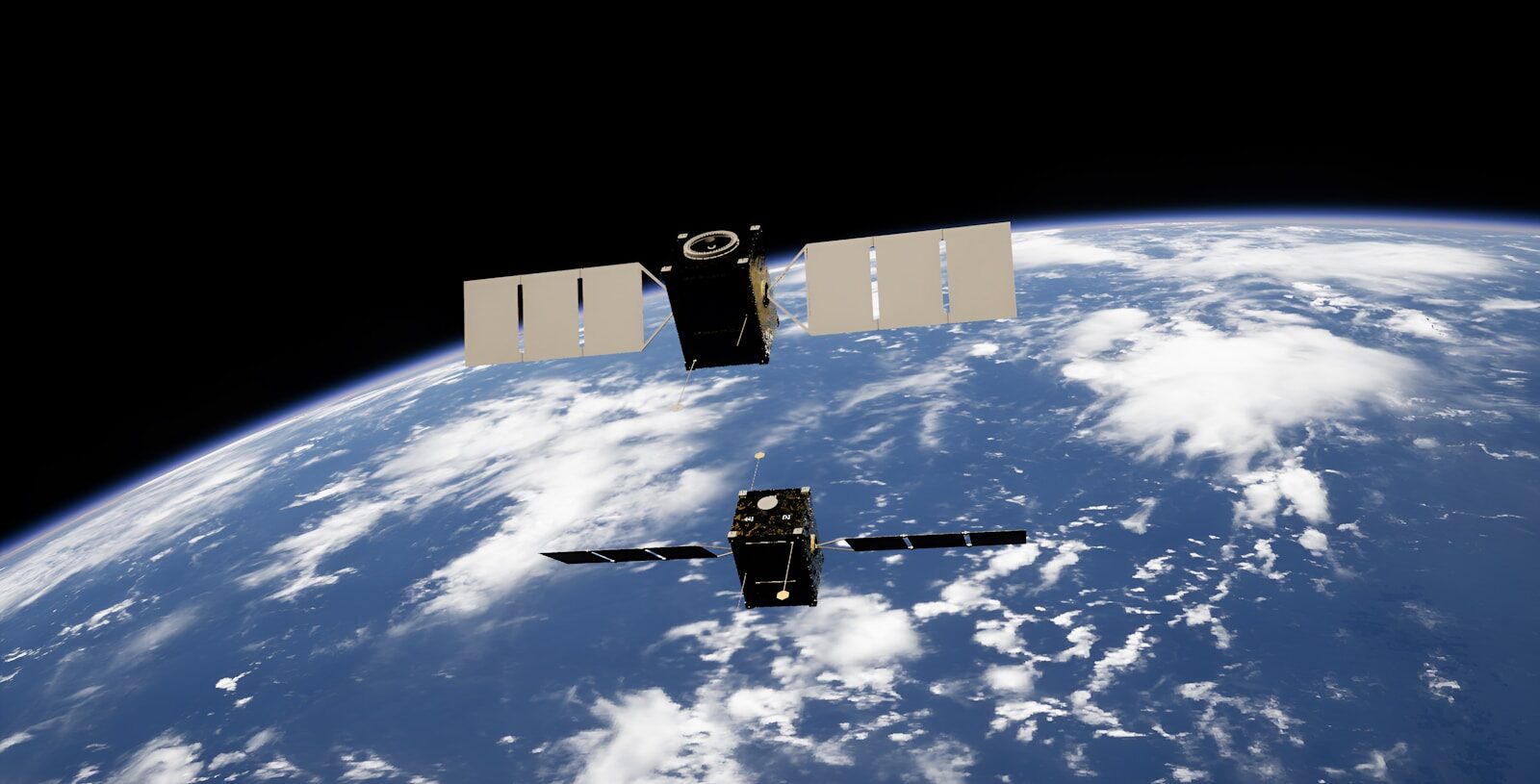
The researchers identified “with high confidence” satellite Cosmos 2546 – which belongs to the Russian EKS missile early warning constellation – as one source of the interference. Further analysis showed that in the other instances when Cosmos 2546 could not have been responsible, in every case other EKS satellites were at the elevation necessary to cause such interference across that specific area (the contiguous US is not at the right latitude to target through that constellation).
Previously, areas most affected by Russian jamming have been those bordering Russia or the Baltic Sea, which are heavily disrupted by ground-based jammers in Kaliningrad and around St Petersburg. But conceivably, now the US, Canada, the UK and elsewhere also can be targeted using the same technique.
“We have seen GPS disrupted so much now over the past four years,” said Juliana Suess, associate for Space Security at the Stiftung Wissenschaft und Politik (SWP) in Berlin. “This is a new level for sure.”
GPS is widely used, not just in navigation but also in critical infrastructure that requires timing synchronisation: rail networks, financial systems, grid infrastructure and telecoms. Sustained GPS interference therefore has the potential to cause enormous disruption. In October 2023, a UK government analysis put the cost of losing GNSS for just 24 hours at £1.42 billion.
“Even my local pub is dependent on GPS: to get its deliveries, and as a timing source for payment terminals,” said Dr Thomas Withington, a RUSI Associate Fellow and expert on electronic warfare.
Militaries generally have access to a secure encrypted form of GNSS that is not as vulnerable to this kind of jamming because it only detects a certain encrypted signal, which changes every 24 hours. But the rollout of receivers for the new military M-code for the US military has been delayed, while the older P(Y) Code it replaces can be held at risk by jamming.
Could it be accidental?
“The pattern is far too consistent for this to be accidental,” said Todd Humphreys, whose team led the research for the paper. “In fact, our data shows it has to be intentional.” The interference has only been recorded on weekdays and, unlike a typical equipment malfunction, the incidents are transient and irregular rather than periodic or continuous.
But while the jamming observed seems intentional, the satellites may not have been deliberately designed with that capability.
Because of the expense of launch, jamming from space incurs significant extra cost over jamming from the ground or air – requiring Russia to invest in resources at a time when its budgets are under strain because of the war with Ukraine. But space has benefits. Jammers in space are hard to target, offer plausible deniability, and can jam over a huge area.
Cosmos’ burst transmissions led to interference in the L1 GNSS channel, something “they must have realised by accident,” said Withington. “I don’t think that was a design aspect of the Cosmos constellation.”
That does not make it less concerning. “It’s now become a feature of the system, which Russia could then basically turn into a deliberate capability, should they choose to do so,” said Dr John Sheldon, a founding partner at AstroAnalytica.
“We already know Russia is doing wide area jamming of GPS in the Baltics, the high north, and of course across the eastern flank of NATO. It’s not too much of a stretch to imagine that, especially if a crisis becomes more heated, or God forbid we get into a hot war, that they can basically just completely jam the entire GPS system across the North Atlantic,” he added.
Though it can jam over an enormous area, the disruption that could be caused by jamming from the EKS constellation at present is limited.
GNSS satellites broadcast a precise timing signal in different bands within a certain frequency range. GPS jamming works by drowning out the faint GPS timing signal so that the receiver cannot ‘hear’ it.
Cosmos is able to do this on part of the frequency band (known as L1), said Withington.
“Any satellites transmitting on that signal at the moment, the receiver simply won’t pick it up. If you’re trying to hear L1 as it is coming down on that frequency at that time, you won’t be able to, because the Cosmos signal is much more powerful.”
But GPS satellites also broadcast in L2, a different frequency band. The result on the ground is that, while there could be significant lags in signal where L2 signals are less clear, and potential disruption for services such as Uber, “I don’t think it’s necessarily going to blank out global GPS reception,” said Withington. “I would term it as a disruptive annoyance.”
The EKS satellites are probably only able to disrupt this part of the spectrum with the radio payload they have on board, said Withington.
Additionally, there are limits to how long the EKS satellites can sustain jamming. Its satellites are in egg-shaped orbits around the earth, meaning a given satellite can only jam for a short period while it is close enough to the Earth. Meanwhile, if the satellites are using their transmission channel for jamming, that stops it being used for its original purpose of communicating with the Russian authorities about potential threats.
That limits the potential impact on critical infrastructure, depending on the specifics of the system. Some systems have their own internal timing systems which can ‘drift’ from an accurate time if not regularly calibrated with a highly accurate timing signal from a GNSS signal. The internal timing may drift during periods of jamming, but then be resynchronised during gaps in it.
The EKS system is therefore limited in its ability to cause disruption. But it has proven the concept – and how difficult it is for the West to respond.
“This doesn’t switch off GPS, but it can cause problems. The concern is that the Russians would think: how can we scale that up to something worse?” worries Withington. “What you may see is the Russians thinking of building a space-based EW system that could do GNSS jamming using that architecture.”
So how can policymakers respond?
The new generation of GPS satellites transmit over wider channels, meaning that a single jamming signal at a certain frequency will not be able to drown out all of the signal across a given channel, making them harder to jam.
There are some technological solutions that can reduce the impact of jamming more broadly. For example, control pattern reception antennas identify where a jamming signal is coming from and ignore the jamming signal from that direction.
But the best option is to develop backups for GNSS in critical infrastructure.
“Russia and China have terrestrial systems to back up and complement GNSS that minimize the impact of interference, regardless of the source,” Dana Goward, founder of the Resilient Navigation and Timing Foundation, wrote in Space News. This gives them huge tactical and strategic advantages over the U.S. and the West.”
South Korea, which faces relentless GNSS interference from its northern neighbour, uses an eLORAN system as a backup to provide Position, Navigation and Timing (PNT) across the country. It is high-power and low-frequency, making it extremely difficult to jam.
In November 2025, the UK government invested £71 million in an eLORAN programme; France has announced it will partner with the UK on providing this for northern Europe.
While boosting resilience at home, Western countries have to keep up the political pressure on Russia.
“You just have to keep up the pressure on Moscow, you have to say that this is an irresponsible way to behave,” said Withington. “What they’re doing is potentially affecting navigation safety. It’s going to cause disruption, it’s going to cause accidents.”