Tuesday 23 June, 2026
[email protected]
Resilience Media
  • News
    • Events
    • Interview
    • Startups
    • Venture
    • Weekly Digest
  • Resilience Conference
    • Resilience Conference Warsaw 2026
    • Resilience Conference Copenhagen 2026
    • Resilience Conference London 2026
  • About
  • Guest Posts
    • Author a Post
  • Subscribe
No Result
View All Result
  • News
    • Events
    • Interview
    • Startups
    • Venture
    • Weekly Digest
  • Resilience Conference
    • Resilience Conference Warsaw 2026
    • Resilience Conference Copenhagen 2026
    • Resilience Conference London 2026
  • About
  • Guest Posts
    • Author a Post
  • Subscribe
No Result
View All Result
Resilience Media
No Result
View All Result

Dutch semiconductor company is bringing secure, authenticated satellite positioning to handheld devices

John BiggsbyJohn Biggs
June 23, 2026
in News, Startups
Share on Linkedin

For years, authenticated satellite positioning has largely been reserved for expensive, power-hungry systems operating in defence, aviation, and other specialised sectors. Meanwhile, the devices most exposed to spoofing and signal manipulation, asset trackers, wearables, drones, and IoT sensors, have largely been left without practical protection.

You Might Also Like

Stark confirms monster €500M funding round, reportedly approaching a €3B valuation

Russia is jamming GPS from space

The Fourth Law, RSI Europe to build drone factory in Lithuania

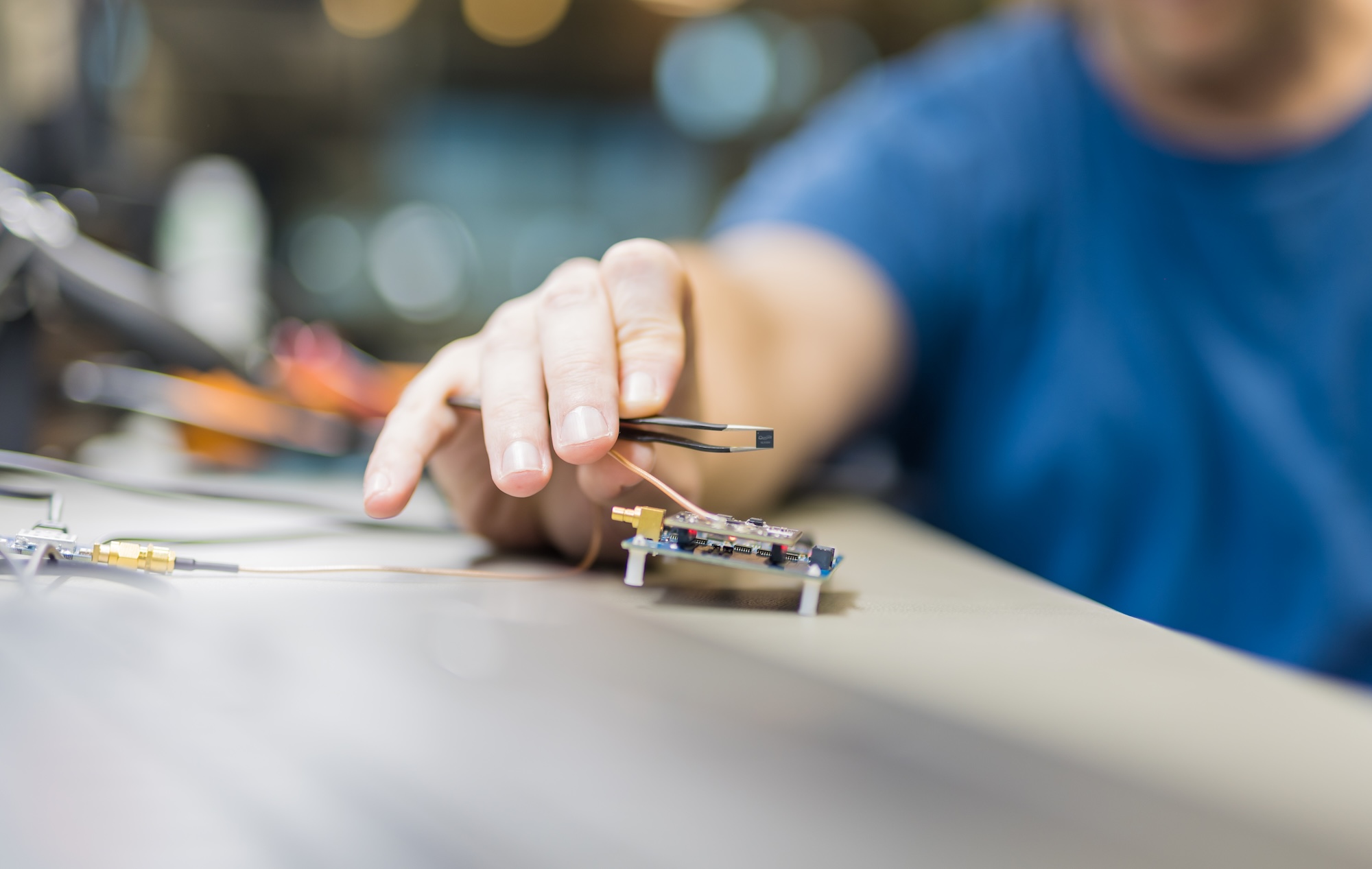
To remedy that, Dutch semiconductor company Qualinx has announced that its new QLX3Gx Series GNSS receiver now supports Galileo’s Open Service Navigation Message Authentication (OSNMA), making it the first ultra-low-power GNSS platform designed to provide authenticated positioning as a standard feature.

Galileo’s Open Service Navigation Message Authentication (OSNMA) works by adding a digital signature to navigation signals transmitted by Galileo satellites. This allows a receiver to verify that the positioning data it is receiving comes from the satellite network and has not been altered or spoofed by an attacker. Qualinx has integrated this authentication capability directly into the hardware of its ultra-low-power QLX3Gx GNSS chip, allowing small battery-powered devices to confirm the authenticity of their location data without significantly increasing power consumption. The result is a new layer of protection against spoofing attacks, which can trick receivers into reporting false positions.

The move comes as concerns over GPS and GNSS spoofing continue to grow across both civilian and military environments. Interference with positioning signals has become increasingly common around conflict zones, critical infrastructure, and transportation networks, highlighting the need for trusted location data far beyond traditional defence applications.

Qualinx plans to begin mass production of the QLX3Gx in the second half of 2026. If adoption follows expectations, authenticated positioning could soon become a standard feature across millions of devices that have historically operated without any meaningful defence against spoofing.

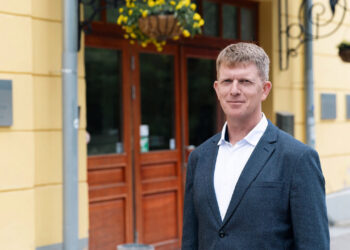
“Authenticated positioning has for too long been out of reach for the devices that need it most,” said Qualinx CEO Tom Trill. “By building OSNMA support into the QLX3Gx at the hardware level from day one, we’re making trusted positioning the default, not a premium option, for the wearables, asset trackers, and IoT devices that make up the bulk of the GNSS market.”

What makes the announcement notable is not simply the addition of OSNMA support, but where it is being deployed.

Historically, authenticated GNSS has required greater processing power and energy consumption, limiting adoption among battery-powered devices. Qualinx says its Digital Radio Frequency architecture enables the QLX3Gx to consume up to ten times less power than conventional GNSS receivers while integrating authentication directly into the chip’s hardware.

The result is a platform that can provide trusted positioning without imposing a meaningful penalty on battery life, a critical requirement for asset tracking, wearable technology, and industrial IoT deployments.

The development was carried out with support from the European Union Agency for the Space Programme (EUSPA), which has been pushing wider adoption of Galileo’s security features.

“OSNMA represents one of Galileo’s most important contributions to positioning security, and our mission is to see it adopted as widely as possible,” said Florent Koné, SatCom Market and Innovation Manager at EUSPA. “Qualinx has demonstrated that authenticated GNSS is no longer confined to high-power applications.”

As positioning data becomes increasingly important to logistics, autonomous systems, consumer electronics, and connected infrastructure, the ability to verify that location data is genuine is likely to become a baseline requirement rather than a specialised capability.


For Europe, the announcement also reflects a broader effort to strengthen technological sovereignty around critical positioning infrastructure. Galileo has steadily expanded its capabilities beyond navigation accuracy, with resilience and authentication becoming increasingly important as electronic warfare and signal interference move from military concerns into everyday commercial applications.

Previous Post

Stark confirms monster €500M funding round, reportedly approaching a €3B valuation

John Biggs

John Biggs

John Biggs is an entrepreneur, consultant, writer, and maker. He spent fifteen years as an editor for Gizmodo, CrunchGear, and TechCrunch and has a deep background in hardware startups, 3D printing, and blockchain. His work has also appeared in Men’s Health, Wired, and the New York Times. He has written nine books including the best book on blogging, Bloggers Boot Camp, and a book about the most expensive timepiece ever made, Marie Antoinette’s Watch. He lives in Brooklyn, New York. He runs the Keep Going podcast, a podcast about failure. His goal is to share how even the most confident and successful people had to face adversity.

Related News

Stark inks Virtus deal with NATO member in Northern Europe, one week after expanding to Sweden

Stark confirms monster €500M funding round, reportedly approaching a €3B valuation

byIngrid Lunden
June 23, 2026

It's another big news day for defence tech startups in Europe. Stark -- the company building air and surface attack...

a satellite satellite flying over the earth

Russia is jamming GPS from space

byPaddy Stephens
June 23, 2026

Russia can jam GPS across Europe, and as far west as Canada – and has been doing so for over...

The Fourth Law, RSI Europe to build drone factory in Lithuania

The Fourth Law, RSI Europe to build drone factory in Lithuania

byJohn Biggs
June 23, 2026

Ukrainian defence company The Fourth Law (TFL) has signed a memorandum of understanding with Lithuanian defence technology firm RSI Europe...

helicopters and signal towers

From the battlefield to critical infrastructure, C-UAS are in the frame

byStanislaw Naklicki
June 23, 2026

To say that the anti-drone industry is booming may be an understatement. At the 2026 edition of Eurosatory in Paris,...

Frankenburg takes aim at a €100M Series B funding round

Frankenburg takes aim at a €100M Series B funding round

byFiona Alston
June 22, 2026

Frankenburg Technologies, the missile startup that aims to build lower-cost guided interceptor systems in Europe, has taken aim at something...

Aurochs 2 and TEC800 demonstrated by the French military, Eurosatory

Less crew, more ground: UGVs dominate Eurosatory lineup

byStanislaw Naklicki
June 22, 2026

Drones may be the technology that is dominating most conversations about defence tech today, but when it comes to what...

Iceye, the Finnish satellite startup, nabs €1B at a €10B valuation amid growing demand for space intel

The New Defence Technology Stack: Orqa and NXP Leaders Join Resilience Conference London

byLeslie Hitchcock
June 22, 2026

The future battlefield will be defined not only by platforms, but by the technologies powering them—from autonomous systems and edge...

Ukrainian MOD launches TrophyLab for partners to study captured Russian tech

Ukrainian MOD launches TrophyLab for partners to study captured Russian tech

byLuke Smith
June 19, 2026

While Ukraine is expanding the reach of its home-produced UAVs, it is also learning from the enemy. The Ministry of...

Load More

Most viewed

InVeris announces fats Drone, an integrated, multi-party drone flight simulator

Uforce raises $50M at a $1B+ valuation to build defence tech for Ukraine

Auterion, the drone software startup, eyes raising $200M at a $1.2B+ valuation

Palantir and Ukraine’s Brave1 have built a new AI “Dataroom”

Twentyfour Industries emerges from stealth with $11.8M for mass-produced drones

Senai exits stealth to help governments harness online video intelligence

Resilience Media is an independent publication covering the future of defence, security, and resilience. Our reporting focuses on emerging technologies, strategic threats, and the growing role of startups and investors in the defence of democracy.

  • About
  • News
  • Resilence Conference
    • Resilience Conference Copenhagen 2026
    • Resilience Conference Warsaw 2026
    • Resilience Conference 2026
  • Guest Posts
  • Subscribe
  • Privacy Policy
  • Terms & Conditions
  • Mission Statement & Code of Practice
  • Press

© 2026 Resilience Media

No Result
View All Result
  • Home
  • About
  • Subscribe
  • Events
  • Guest Posts
  • Interview
  • News
  • Resilience Conference London 2026
  • Resilience Conference Copenhagen 2026
  • Resilience Conference Warsaw 2026

© 2026 Resilience Media

This website uses cookies. By continuing to use this website you are giving consent to cookies being used. Visit our Privacy and Cookie Policy.