
It’s another big news day for defence tech startups in Europe. Stark — the company building air and surface attack drones and the systems that are used to control and coordinate them — has just confirmed that it has closed a funding round of €500 million ($570 million) from investors that include Sequoia Capital, Founders Fund, the NATO Innovation Fund, Project A, Air Street Capital, 201 Ventures, Advent and Döpfner Capital. The bulk of the money will be going towards R&D and ramping up production
Resilience Media has contacted the company to confirm a valuation. In May, when the round was rumoured to be in the works, Stark was reportedly raising €300 million at a valuation of around €2.5 billion. Extrapolating from that, this round could value the company at around €2.7 billion.
This brings the total raised by the company to €640 million.
The funding comes at a time when Europe still faces challenges supporting later-stage and larger startups with larger, growth funding rounds.
This is especially important in defence tech, which requires startups to punch above their weight to produce their technology at industrial scales similar to those of bigger and older defence prime contractors. That leads some startups to partner with those primes; another route is to raise large rounds like Stark has here.
In startups’ favour has been the current set of geopolitical circumstances. The wars in Ukraine and in the Middle East have been clear signals of how warfare is evolving: AI and a new generation of weapons led by lower-cost drones are underpinning how sides are fighting more effectively, and so countries are scrambling to re-arm accordingly. That is helping companies like Stark open doors, sell equipment and find willing backers.
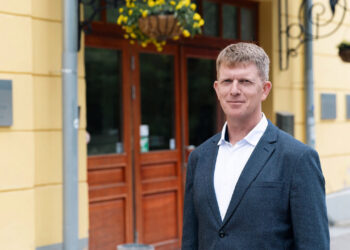
“The challenge facing Europe is no longer whether we can innovate, it’s whether we can scale,” said Uwe Horstmann, a founder and CEO of Stark, in a statement. “This financing is a €500 million commitment to Europe’s defence industrial base — funding the engineers, factories and technologies that Europe needs now.”
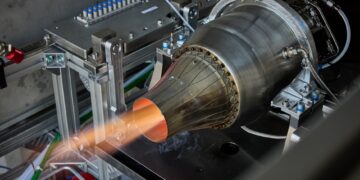
The company today offers a range of systems: Virtus is its flagship long-range loitering munition, precision strikes up to 130km and autonomy to bypass GPS-denied environments; Cascade is its tube-launched effector; Gambit is a 6kg man-portable quadcopter delivering ISR and precision strikes; Minerva is its command and control software stack; Vanta is its unmanned surface vessel; and R-Zero is described as “low-cost electronic warfare system.”
The startup said it will be using most of the funding — some 80% — for R&D and to expand production; the rest will be used for the more nebulous purpose of “sovereign defence.” R&D will focus on Electronic Warfare (EW), Stark noted in a statement, while production out of its systems will go up to thousands of units per month.
Stark was one of the recipients, along with Helsing, of a major contract from the German military. Stark’s framework deal, if exercised to its full capacity, could be worth as much as €2.86 billion. Helsing is also on the cusp of a major fundraise, which may well be announced very soon now that its arch rival has confirmed its raise.
This is a huge leap for the company, which originally started as a spin out from Quantum Systems, the reconnaissance drone company, to focus specifically on loitering munitions. Since spinning out in 2024, it has expanded into nautical systems and build out a geographic footprint that also includes the United Kingdom, Ukraine, Sweden and Greece.
It’s also had its share of controversy, specifically it found itself in the spotlight in 2025 when its devices, during a test alongside Helsing and Anduril in Kenya, failed to work as planned. The company faced up to the bad press, and pressed on.
It was clearly just a blip in the larger trajectory for investors.
“When we first invested in Stark, we backed an exceptional team with a bold vision for European defence. In less than two years, they have gone from an idea to delivering systems across multiple domains, winning major programmes and building industrial capacity across Europe,” said Luciana Lixandru, the partner at Sequoia Capital leading the deal for the firm. “Few companies execute at this speed. We’re excited to triple down and support the next phase of growth.”
NIF is also returning as a backer in this round.
“We’re proud to be doubling down on Stark,” said Patrick Schneider-Sikorsky, a partner at NIF, in a statement. “The company has demonstrated an exceptional ability to move from concept to deployment, delivering technology that NATO nations actually need. Stark is proving that technology built in Europe can grow, scale, and compete across the region and beyond.”