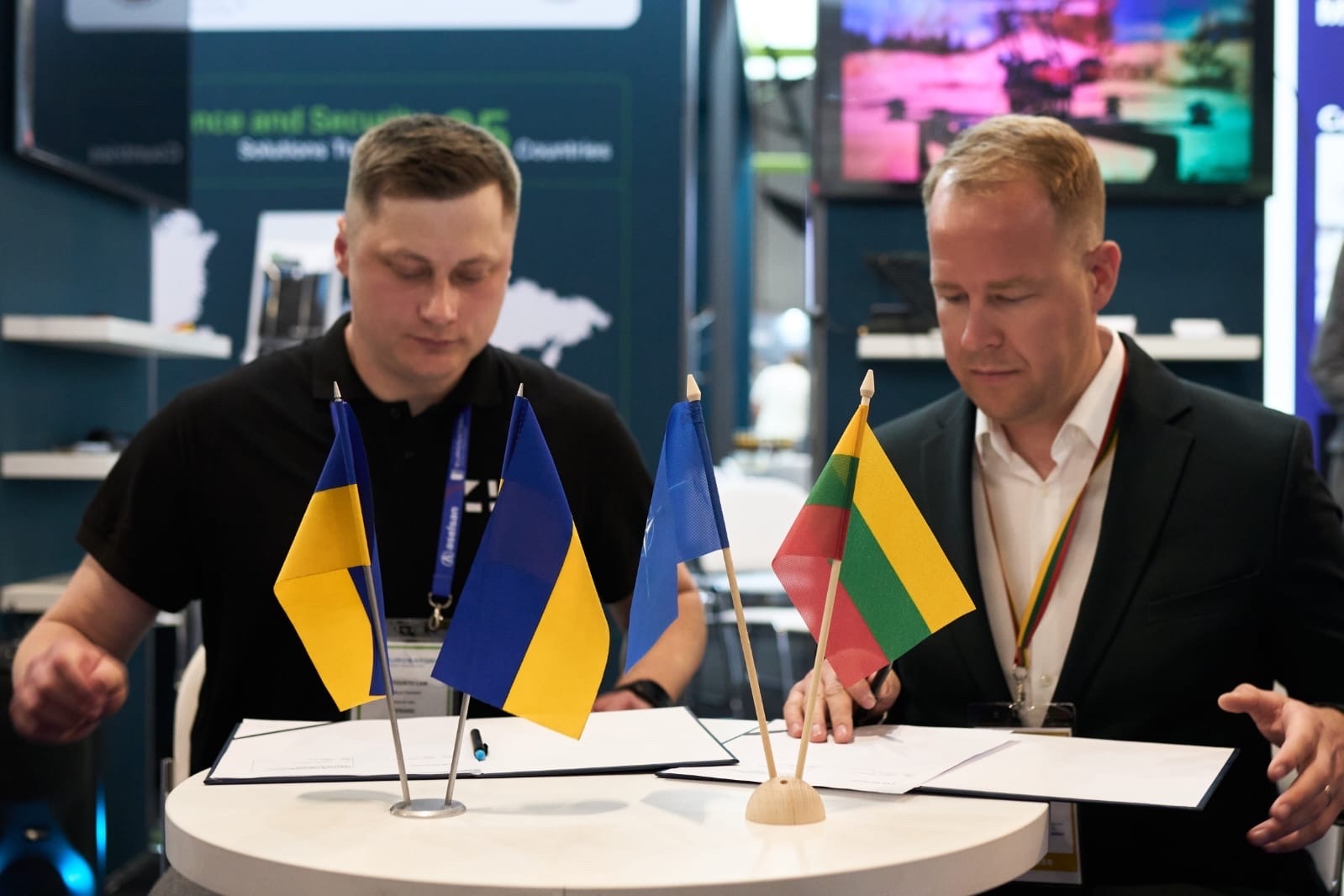
Ukrainian defence company The Fourth Law (TFL) has signed a memorandum of understanding with Lithuanian defence technology firm RSI Europe to establish drone manufacturing capacity in Lithuania, expanding Ukraine’s growing effort to move defence production beyond its borders while maintaining close links to battlefield innovation.
The agreement was announced at Eurosatory 2026 in Paris and forms part of Ukraine’s “Build with Ukraine” initiative, a programme designed to strengthen defence industrial capacity through international partnerships.
Lithuania has been in defence news recently with a number of funding rounds and new launch announcements, including a €2 million raise for PDKinematics.
Under the memorandum, RSI Europe will prepare manufacturing facilities in Lithuania and produce “thousands of drones.” The companies said Ukrainian citizens will receive priority consideration for manufacturing roles at the new facilities.
“This partnership under the ‘Build with Ukraine’ project is aligned with Ukraine’s national interests to strengthen defence technology supply chains for Ukraine and contribute to the security of Eastern Europe,” said Yaroslav Tkachuk, Director of TFL’s UAS Business Unit. “We are pleased to open a possibility to collaborate with a company that has already demonstrated its ability to produce high-quality defence technologies at scale and maintain constant contact with Ukrainian soldiers.”
The deal reflects a broader trend that has emerged during the war. As Ukrainian defence companies gain experience producing systems under wartime conditions, many are looking for ways to expand manufacturing capacity inside allied countries while maintaining direct access to battlefield feedback from Ukrainian operators.
“The partnership with TFL, leaders in the integration of computer vision and artificial intelligence into drone control, is important both for strengthening Ukraine’s combat capability and for developing the modern battlefield-ready capabilities of NATO’s eastern flank,” said RSI Europe co-founder and chief executive Tomas Milašauskas.
For TFL, that battlefield connection is one of its key advantages. The Kyiv-founded company specialises in autonomous robotics and scalable autonomy for defence applications. The firm has become known for integrating artificial intelligence and computer vision into drone operations, capabilities that are increasingly important as electronic warfare and contested environments make traditional drone operations more difficult.
The agreement goes beyond manufacturing alone. Under the proposed arrangement, TFL would provide drone production expertise and artificial intelligence technologies, while continuing to supply feedback gathered from Ukrainian combat units. The companies say that continuous battlefield feedback will help ensure that systems remain relevant as battlefield requirements evolve.
That feedback loop has become a defining feature of Ukraine’s defence technology ecosystem. Drone manufacturers routinely receive input from frontline operators, allowing them to update designs and software far more rapidly than traditional defence procurement cycles typically allow.
For Lithuania, the agreement also highlights the growing role of Baltic and Nordic countries in supporting Ukraine’s defence industrial base. Rather than simply purchasing equipment, governments and investors across the region are increasingly looking for ways to bring Ukrainian defence innovation into European manufacturing networks.