Large-scale quantum computers remain an elusive goal, but with multiple nations hustling to be the first to build and use quantum computing to their advantage, the race to find a breakthrough remains strong and urgent — translating into significant funding for startups contributing compelling work to the field.
In one of the latest examples, Quantum Motion, the UK startup building ‘full-stack’ quantum computers based on standard silicon processors, has raised $160 million.
Spanish venture capital (VC) firm Mundi Ventures (by way of its €1 billion Kembara fund) and US-based VC firm DCVC are co-leading the Series C, with participation also from British Business Bank (BBB) and Oxford Science Enterprises, along with strategic investors Porsche and Bosch Ventures. The valuation has not been disclosed; we will update this post as we learn more.
Quantum Motion is based in the UK and has been seeing some milestone activity in the country. Namely, in September 2025 installed the first silicon-based quantum computer in the UK’s National Quantum Computing Centre (NQCC). Mundi’s participation in the funding lines up with how the startup is expanding elsewhere. Earlier this year, Quantum Motion opened a new office in San Sebastián, Spain, to grow its research and engineering footprint in Europe. It’s also been active in the US, where it’s been involved in a benchmarking project with DARPA.
Quantum leap
Governments and technology companies have been pouring billions of dollars into AI infrastructure and high-performance computing (HPC). Concerns are growing, however, over the energy, space and cost demands of these next-generation data centres. Quantum computing doesn’t appear to solve that particular issue. In fact, it is expected to intensify those pressures further, with some concepts requiring large-scale bespoke infrastructure and substantial power consumption to operate at useful scale, by one estimate potentially 35 times as much.
The approach taken by Quantum Motion offers a significant reduction in resources. Founded in 2017 by researchers Professors John Morton and Simon Benjamin from UCL and Oxford University respectively, Quantum Motion is building quantum computers using silicon-based components. The approach aims to use the same manufacturing processes that underpin modern semiconductor chips, rather than relying on more specialised hardware that could be more costly and energy intensive to make and operate. In contrast, other companies are pursuing approaches based on superconducting circuits, trapped ions and photonics, each with different trade-offs around scalability, stability and infrastructure requirements.
Like other quantum computing companies, Quantum Motion is developing systems built around qubits — quantum bits capable of representing multiple states simultaneously — which can allow certain types of problems to be explored far more efficiently than classical systems. Want to model new drug compounds, optimise global logistics networks, or build (or break) harder encryption models? That’s where quantum computing could step in.
Quantum Motion’s bet is that silicon offers a more optimal path to scaling those systems. The company argues that using silicon transistors — the same underlying technology used in conventional chips — could reduce the cost, footprint and energy demands associated with quantum computing, while allowing systems to fit inside standard data-centre racks rather than purpose-built facilities.
The company claims its architecture could reduce cost and space requirements by up to 100-fold, while lowering energy consumption by as much as 1,000-fold compared with alternative approaches.
“Quantum computing will only achieve its full potential if it can be built on a platform that scales, and we believe silicon is the strongest route to achieving that,” Dr. James Palles-Dimmock, CEO of Quantum Motion, said in a statement issued to Resilience Media.
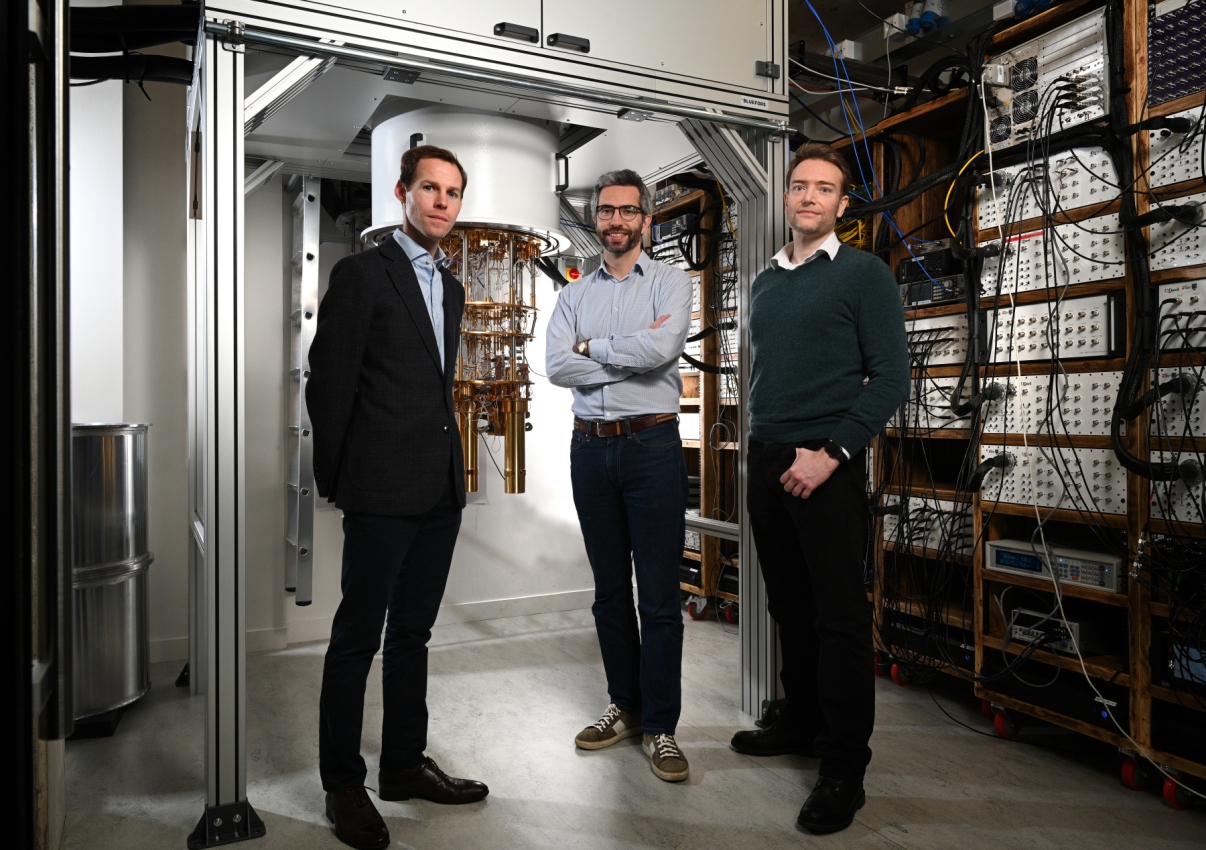
The company has already delivered a working machine, installing what it describes as the first full-stack quantum computer built using standard silicon CMOS chip fabrication — the same transistor technology used in conventional computers — at NQCC. That deployment places the company inside a government-backed testbed, where different hardware approaches are being assessed side by side. The system integrates the processor, control electronics and software into a compact setup, with a footprint of three standard 19-inch server racks housing the dilution refrigerator and integrated control systems.
Quantum Motion says auxiliary equipment can sit separately, allowing the system to fit inside conventional data-centre environments while supporting future upgrades to larger processors without increasing its physical footprint.
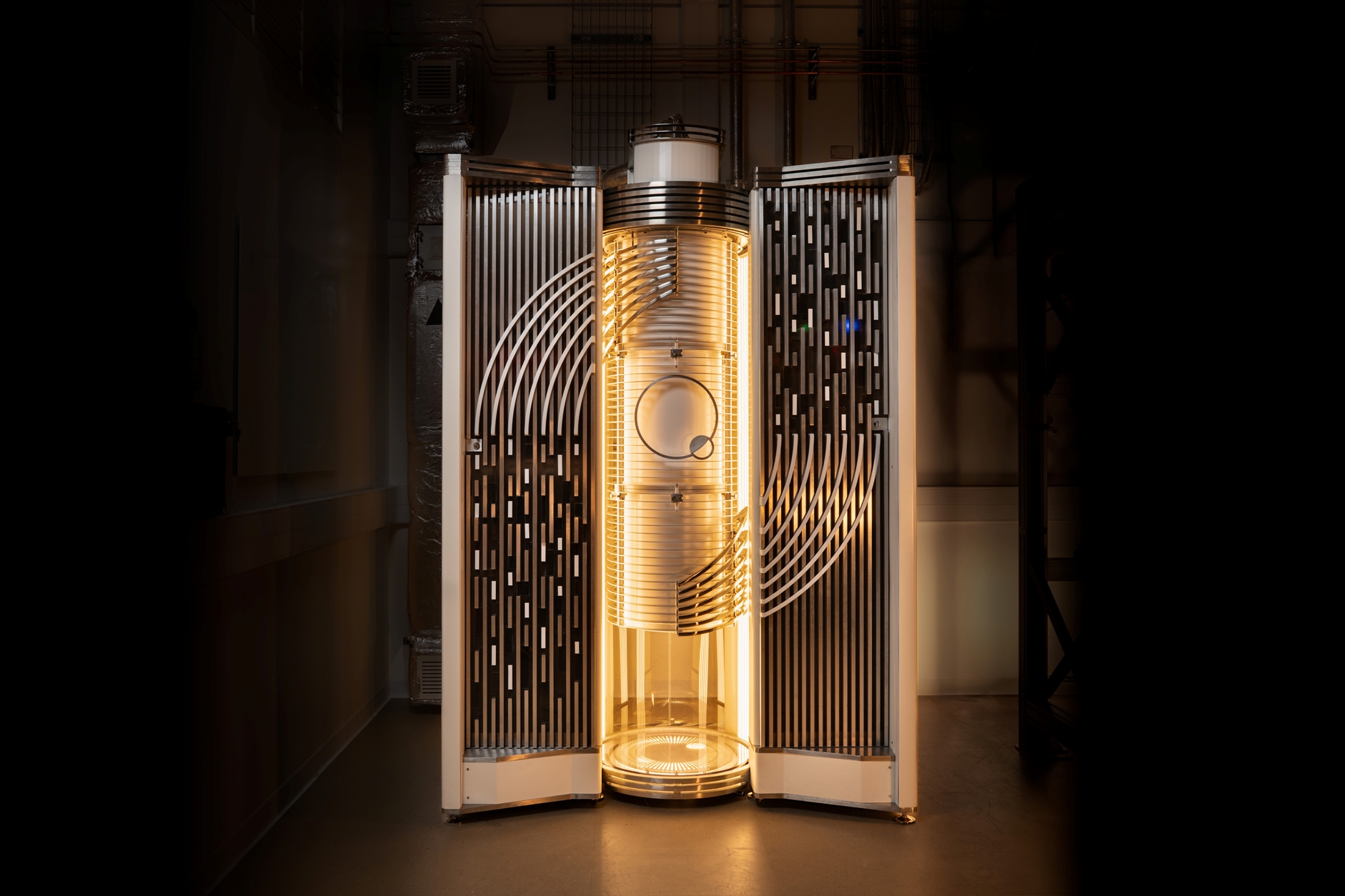
Separately, Quantum Motion is also participating in the US Defense Advanced Research Projects Agency’s (DARPA) Quantum Benchmarking Initiative (QBI), a programme designed to assess the performance of competing quantum systems under standardised conditions.
Collectively, these programmes hint at where the quantum industry currently sits: systems are being poked and prodded in controlled environments, with governments acting as early users and evaluators of the technology.
Public capital
Quantum Motion had previously raised more than $70 million in funding, including a $50 million equity investment in 2023, which ushered in a mix of strategic and government-backed investors. This included Bosch Ventures (RBVC), the venture arm of Bosch, and the UK government’s National Security Strategic Investment Fund (NSSIF).
This time around, the lead investor is Mundi Ventures, which is making its inaugural investment from its recently announced €1 billion Kembara fund. That fund is backed by public institutions including the European Investment Bank (EIB) as well as Spain’s industrial investment arm CDTI, alongside a roster of private investors.
For Mundi Ventures, the investment reflects a view that silicon-based approaches may offer a more viable route to scaling quantum systems beyond laboratory environments and into mainstream computing infrastructure.
“If you believe quantum computing is going to be world-changing, as we do, then the obvious next question is which of the many ways of building one will actually work at scale?,” Yann de Vries, partner and co-founder of Mundi Ventures’ Kembara fund, said in a statement. “This investment signals our strong belief in where the answer lies.”
At the same time, Quantum Motion has established a presence in San Sebastián, with plans to base up to 50 staff there. The Basque region has built a strong base in advanced manufacturing and research, supported by industrial clusters and technology centers — the Basque government recently set up a 50 million VC fund for startups in the region.
That expansion comes as governments increasingly treat quantum technologies as strategic infrastructure tied to computing, semiconductor capability and national security. China, for example, has laid out a long-term quantum strategy aimed at building domestic capability across the sector, while the UK recently committed up to £2 billion to accelerate quantum development over the coming decade.
Quantum Motion’s segue into Spain, backed by public and institution-linked funding, reflects a wider effort across Europe to build computing and semiconductor capabilities within its own borders. Put simply, rather than relying entirely on US or Asian infrastructure, governments are increasingly supporting both the companies and the locations where that work happens.
For the British Business Bank, the UK government’s economic development bank, Quantum Motion’s attempt to combine quantum computing with silicon manufacturing processes gives it a “distinct global edge.”
“The race for a fully scalable quantum computer is one of the defining technological challenges of our time,” Charlotte Lawrence, managing director of direct equity at at British Business Bank, said. “We are no longer just theorizing about quantum computing but are actively starting to build the platforms to deliver it here in the UK.”
Out of the labs
Quantum Motion is just one of a swathe of companies attempting to move the field towards deployment.
French quantum company Pasqal recently announced financing of “at least” €340 million ahead of a planned public listing. Elsewhere in Europe, Ireland’s Equal1 raised $60 million for quantum servers already used by the European Space Agency, while Finland’s IQM is pursuing a Nasdaq listing at a $1.8 billion valuation.
Despite that momentum, the commercial case for quantum computing remains unproven. Many of the most cited applications are still being tested, with few examples of systems being used outside controlled environments.
For now, defence agencies, national labs and publicly funded research centres continue to provide both funding and demand, effectively acting as early markets while the technology matures. Quantum Motion’s deployment at the National Quantum Computing Centre and its tie-up with DARPA suggest the company is moving closer to real-world deployment.
With another $160 million in the bank, Quantum Motion is well-positioned to push towards larger-scale quantum systems designed to operate inside conventional data-centre infrastructure.
The full list of investors for its Series C round included Mundi Ventures, DCVC, British Business Bank, Firgun, Oxford Science Enterprises, Inkef, Bosch Ventures, Porsche Automobil Holding SE and Parkwalk Advisors.