
A Swedish startup is preparing to build one of the first new TNT production facilities in Europe in decades, after winning approval from Sweden’s Land and Environmental Court this week.
Swebal says that it plans to begin construction in 2026, with full-scale production expected by 2028 – a timeline that intersects with a broader NATO push to expand ammunition output after years of underinvestment in production and supply.
In a July interview with the New York Times, NATO Secretary General Mark Rutte said Russia was “reconstituting itself at a pace and a speed which is unparalleled in recent history,” adding that it was producing three times as much ammunition in three months as the entire NATO alliance produced in a year. Fast forward to November, and Rutte said in a speech at the NATO-Industry Forum in Bucharest that the gap was beginning to narrow, with allies opening new production lines and expanding existing ones.
To help narrow that gap, NATO countries are working to rebuild ammunition production capacity across the alliance, including the less visible upstream materials that underpin every shell, creating an opening for companies such as Swebal.
The TNT choke point
Trinitrotoluene, or TNT as it’s more commonly known, is a chemical compound central to the production of modern munitions used in artillery shells, aerial bombs, and mines.
While NATO has focused much of its recent effort on expanding final ammunition assembly, access to explosives like TNT has emerged as a quieter but critical constraint. Some reports and industry estimates have put Russia’s explosives output at a level equivalent to around 50,000 tonnes of TNT per year, which is orders of magnitude above what Europe can reliably source at home.
Europe effectively has a single NATO-standard TNT producer: Nitro-Chem in Poland, a facility where TNT production dates back to 1948. Public reporting has pegged the plant’s capacity at up to 12,000 tonnes per year, with a significant share already committed under long-term contracts, including supplies to the United States — leaving European manufacturers dependent on imports from Asia to make up the shortfall.
Swebal, for its part, has spent the past 14 months since its inception laying the groundwork — from permitting and early engineering to initial fundraising — to bring new TNT capacity online in Sweden. With the environmental permit now secured, the remaining steps before construction appear largely procedural, with few obvious obstacles left to clear.
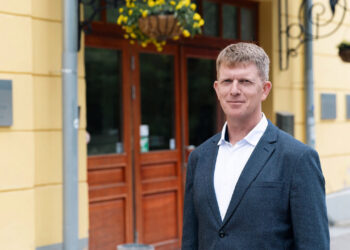
“The final permit required to start construction is the development/building permit which is expected in the first quarter of 2026,” Swebal co-founder and CEO Joakim Sjöblom explained to Resilience Media. “To ensure complete financing, there are a few customer conversations that will need to be finalized but outside of that, the now-executed contracts for machinery and engineering gives a lot of comfort towards the timeline.”

Prior to Swebal, Sjöblom founded subscription management company Minna Technologies, which Mastercard acquired in 2024. He said the timing of that exit coincided with Sweden’s accession to NATO, prompting him to spend time with politicians, military officials, and manufacturers to better understand where Europe’s defense production capacity was falling short.
“One of the major bottlenecks of increasing production rates of large-caliber ammunition, was the access to explosives, which brings us to where we are today – attacking a bottleneck to make Europe a safer place to live,” Sjöblom said.
To date, Swebal has raised €3 million ($3.5 million) in early-stage funding from a group of private investors that includes EQT co-founder Thomas von Koch, former Swedish army chief Karl Engelbrektson, and Pär Svärdson, founder of online pharmacy Apotea. The company is using the capital to address that bottleneck at industrial scale.
To start with, Swebal is targeting an annual output of up to 4,500 tonnes of TNT by 2028, a level Sjöblom describes as a balance between Europe’s near-term needs and what can realistically be financed and absorbed by the market.
“The long-term volume requirements are hard to forecast,” he said. “We ended up with a production capacity that is the balance of what is commercially feasible to sell, where we can confirm the requirements, and with a related capital investment that can be funded on sustainable terms. Hopefully, we can repurpose any future positive cash flow to contribute even more to Europe’s defense.”
Once operational, the facility is expected to run around the clock, using a production process known as “continuous nitration.” Swebal says the plant will employ roughly 50 people, while much of the required materials and equipment are expected to be sourced within a radius of around 550 kilometres, concentrating the supply chain around the Baltic Sea.
“To achieve true security of supply, we must bring every part of the chain, not just assembly, back inside Europe and inside NATO territory,” Sjöblom said. “Today’s decision means Sweden can now build the TNT capacity that makes that possible. We’re ready to break ground and take the next major step toward a stronger, more resilient and self-reliant Europe.”
A race to rebuild
Swebal isn’t alone in its efforts to revive Europe’s defence industrial base. Across the continent, governments and private companies are ramping up ammunition manufacturing capacity that atrophied after the Cold War, as the war in Ukraine and new NATO spending targets expose how thin domestic supply chains have become.
In Estonia, authorities recently selected several companies to establish production facilities at a new defence industry park in Pärnumaa, including firms set to make mines, explosives, and later components of ammunition — with government officials aiming to attract large-calibre production such as 155 mm artillery rounds to the country as part of that build-out.
But for all the renewed momentum, rebuilding Europe’s ammunition supply chain has proven slower and more uneven than policymakers may have hoped. Much of the recent surge in activity has focused on defence technology — software, sensors, and systems — rather than the heavy industrial manufacturing required to produce energetics (e.g. explosives and propellants) and ammunition at scale.
Sjöblom argues that this imbalance helps explain why earlier attempts to revive Europe’s explosives capacity struggled to gain traction — and why, in his view, the conditions are now beginning to change. By way of example, NATO allies recently agreed a defence spending target equivalent to at least 3.5% of GDP on core military requirements over the coming decade.
“There are many new players in the defence tech landscape, while there are very few new initiatives towards large-scale manufacturing,” Sjöblom said. “Until recently, the ambition to rebuild energetics and ammunition has not received the required political backing nor the order volumes by the different armed forces to present a financial investment with an acceptable risk profile. Now we can see that both the political direction and the spending patterns [are] providing comfort to carry the financial risk.”
Timing, however, is only part of the equation. Sjöblom also points to Swebal’s ownership structure as a differentiating factor, arguing that being privately held allows the company to pursue long-term industrial projects without the pressure of quarterly reporting cycles or public market expectations.
“We can work with a higher risk profile compared to a larger, publicly-listed, incumbent company,” he said.