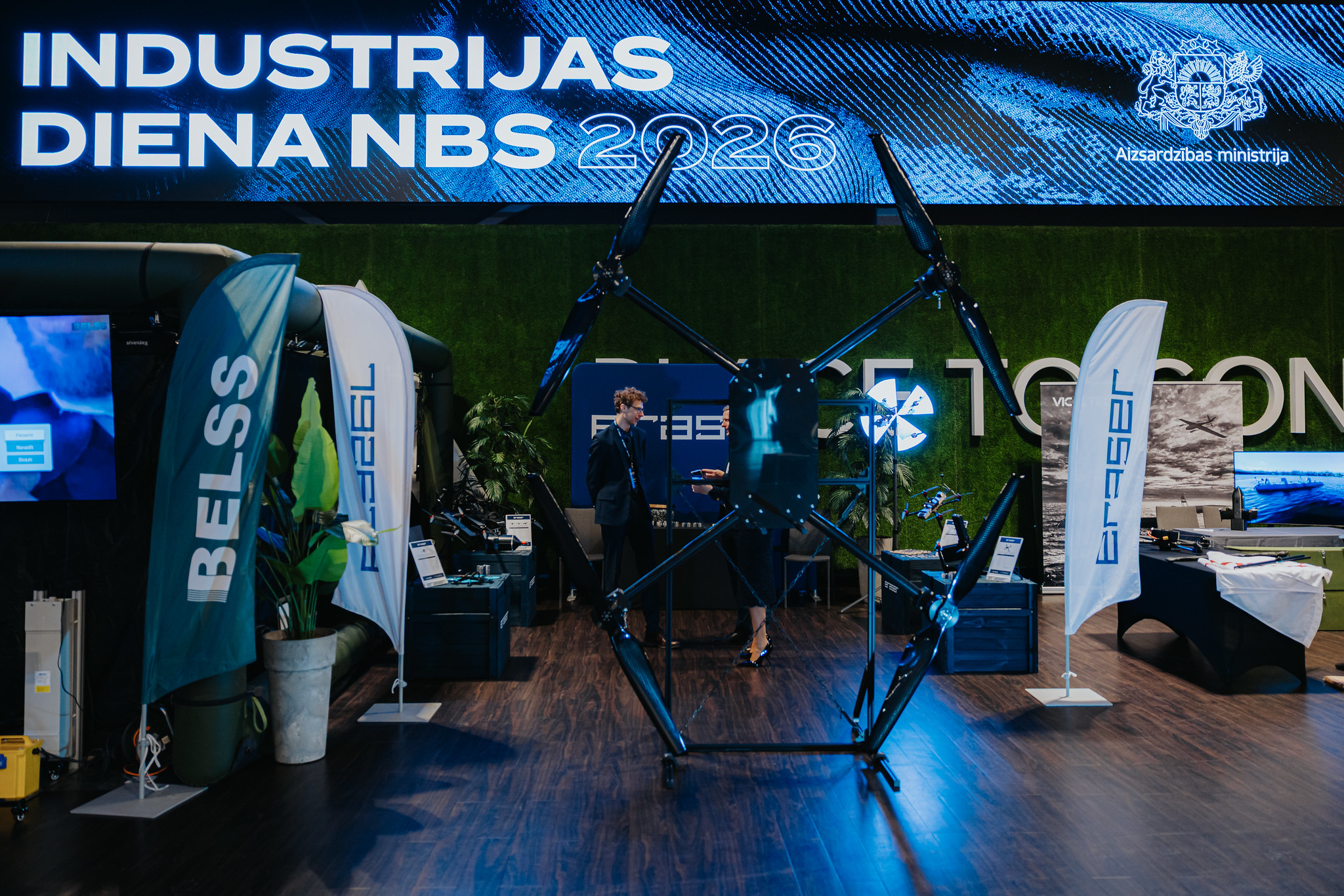
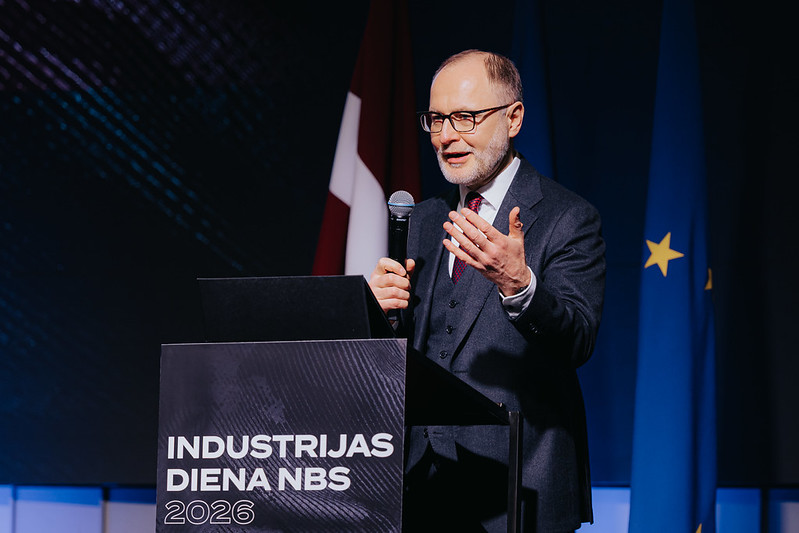
The Latvian defence tech industry is taking geopolitical threats very seriously. That was the stance displayed at length this week at the Latvian Armed Forces Industry Day – an event bolstered by being held in parallel with demos from the first-ever Latvia-based cohort of the NATO DIANA accelerator.
The armed forces event focused on the many facets of resilience: real-life preparation, technology, industry collaboration, deterrence – and, in the worst-case scenario, tools for defending Latvian territory. Frank discussions and presentations did not shy away from calling a spade a spade, and it was clear that the industry is taking steps equal to the present threat.
“We don’t have a limitation to be able to shoot across borders, but we won’t be the first to shoot,” said Deputy Commander of the NATO multinational brigade, Ilmars Lejins. “And we will not hesitate, not one second, to respond.”
A major focus was placed on industry collaboration. Citing the Latvian proverb, “One alone isn’t a fighter,” Lejins emphasised that a small country like Latvia can only succeed through industry and allied-power collaboration.
“Outward collaboration is new to us,” he continued. “Up until 2014, the National Armed Forces were very lonely. All of a sudden, we’re in a reality where we’re expected to collaborate, to be open, to share. This does not happen automatically, it will require a mindset shift.”
He outlined a few options to address the implementation of open collaboration with industry, an important way to drive more innovation. Ukraine has become a template for countries like Latvia, which will now aim to create more initiatives to encourage collaboration and innovation, such as in the recently-launched Drone Competence Center. More simply, innovation has been identified as a more general goal within the armed forces.
To the same end, Minister for Defence Andris Sprūds laid out a promising trajectory. Currently, 1.5% of the country’s defence budget, working out to €30 million annually, is already earmarked for “innovations,” and Sprūds said he hopes to grow this figure to 3% over time. This is about more than just national security, he added: the projection is that this 3% will also be how much the defence sector will contribute to Latvia’s GDP over time.
But speed will be critical. Procurement needs to be carried out safely and securely, but it nevertheless has to be accelerated, he added.
NATO DIANA supersizes
The NATO DIANA accelerator – providing an environment to fast-track innovations in support of the defence industry – is a good-case example of successful industry collaboration. It’s perhaps a sign of the times that this year’s programme is doubled in size, with 150 teams in total making it the largest-ever, said the accelerator’s project manager, Heather Buisman.
Rasmus Basilier, one of the accelerator’s lead mentors, reminded the audience of how DIANA provides unique access to military contacts, initially for feedback and eventually – potentially – for contracts. For founders who are approaching entrepreneurship from a military background, DIANA provides the business know-how. Especially since the programme is very competitive – this year’s cohort had an acceptance rate of just 4% – just getting in becomes a stamp of approval for future interactions.
The teams in this year’s Latvian cohort were all part of the “extreme conditions” challenge programme. Basilier said that the teams, which are not necessarily from Latvia, were assigned this country’s programme because of how they aligned with that theme.
Latvia is a good base to build for “extreme conditions.” A number of startups in the cohort are drone-based: they can work on their tech across Latvia’s multiple drone testing environments. Alongside that, there is also the availability of a nearly-full range of telecoms spectrum, and Latvia has especially harsh winters – useful for building better communications tooling and products that can be ruggedised for bad weather. In fact, one of the first activities was to brave -15 degree temperatures to gain first-hand experience of cold-weather survival.
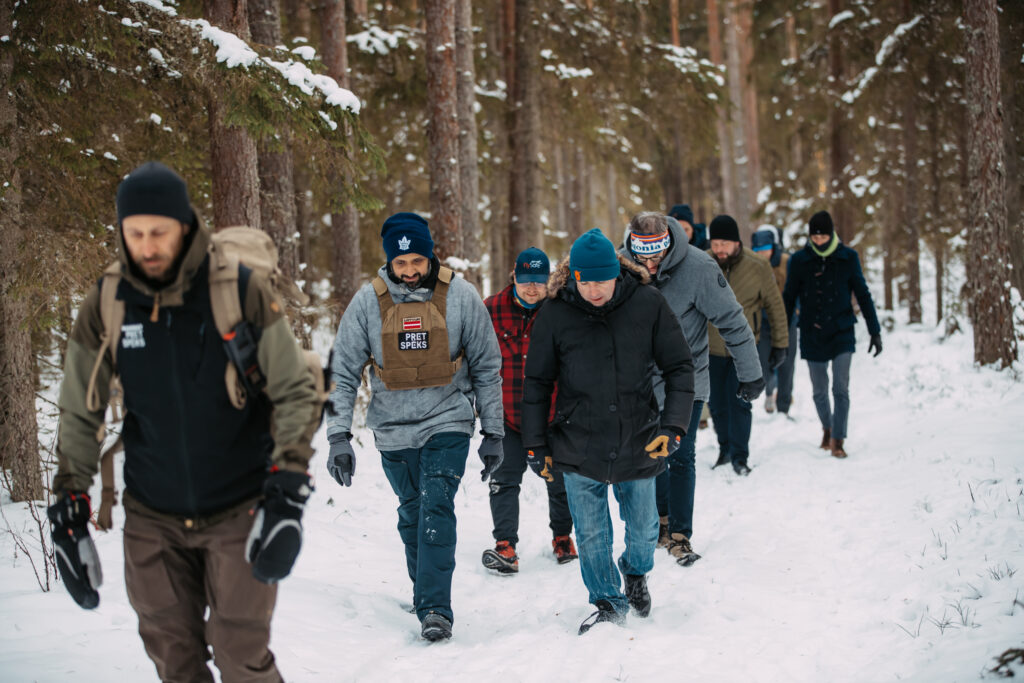
The Latvian cohort is run by UniLab Defence, an accelerator created by the major universities with support from the country’s Ministry of Defence. Its overarching goal is to foster regional growth and resilience in the face of global security challenges.
“For Latvia, this is an opportunity to attract top-level defence and military industry experts from around the world and to offer its ecosystem for the development of innovative technologies,” says Andris Baumanis, head of UniLab Defence.
More than anything, the event demonstrated a true desire from all sides to foster increasingly close ties between industry and national defence units, supported by real-life initiatives, programmes, defence environments, grants, and collaborations.
Khanjan Desai, CEO of Alchemy – which hails from Canada but has been part of the DIANA accelerator in Latvia – told Resilience Media that the environment has definitely shaped his company’s product, a nanoparticle solution to mask thermal signatures.
“Right now I’m in Latvia, and in Latvia I’m hearing all about drones. So now I’m thinking about how to apply a nanoparticle layer to drone components,” he said. “In Canada, we were talking about textiles.”
Alchemy indeed already has contracts with Canadian military organizations to develop prototypes for military textiles. But he hopes to use the DIANA accelerator as a launchpad for developing business cases that meet industry needs more specific to Europe.