Hypersonic weapons — seen for years as a long-shot in defence — have been put back into the frame as adversaries like Russia advance their work and use their own versions of super-fast, long-range hypersonics in live battle. Now, a German/UK startup called Hypersonica believes it can help Europe in its own sovereign hypersonic efforts with the first specialised missiles built in and for the region.
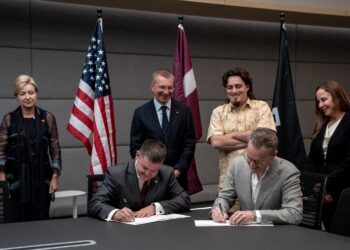
This week, Hypersonica is announcing two significant milestones in aid of that: a successful test flight of its missile prototype, and the closing of a Series A of €23.3 million (just under $28 million) to continue growing its business.
Plural — the London VC that has made a name backing deep tech and defence tech companies (its portfolio includes Helsing and Proxima Fusion, among others — is leading the round, with strategic participation from SPRIND (Germany’s Federal Agency for Breakthrough Innovation), General Catalyst and 201 Ventures. General Catalyst — the US VC that is also shaping up as a significant defence tech investor — also led Hypersonica’s previous €2.5 million seed round.
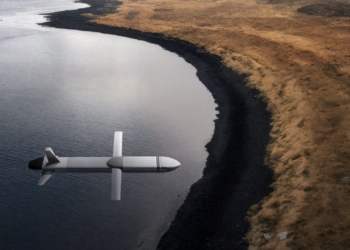
Hypersonica said that this month’s test flight, carried out at Andøya Space in Norway, is the first successful test of a hypersonic missile from a privately-backed European defence company. The missile prototype, which has a range of over 300 km, accelerated past Mach 6 (>7,400 km/h), and its systems operated “nominally” in its ascent and descent.
The new funding will help Hypersonica with the next part of its plan. It wants to to expand that prototype into a full-scale missile for tests later in Q1.
In the world of missile development, this is fast, and very far from a normal timeframe, explained Philipp Kerth, the CEO and co-founder of the company.
That accelerated pace is largely due to two factors that are not uncommon in the world of defence tech.
‘We don’t have 20 years’
The first is a major shift in the world order.
After years of economic and political interconnectivity, countries — or blocs of countries, as in the case of Europe — are all working on improving their sovereign resilience, creating systems that make them less reliant on cooperation with others when it comes to energy, technology and defence.
This theme — one that is likely to be explored this week at the Munich Security Conference — has opened the door to investment and an appetite for a new wave of cutting-edge companies that in the past might have been seen as costly moonshots, but now are viewed as opportunities to give their home countries an edge in the sovereignty race.
“Usually missile development programmes can take 10 or 20 years, or even more,” Kerth said in an interview with Resilience Media. “But we don’t have 20 years in Europe.”
And Hypersonica is not a Prime, or even a Neo-Prime, and so it also doesn’t have €20 billion to spend on such a programme, he added. Indeed, its €23 million is a very modest sum: other hypersonic missile efforts in Europe to-date have been led by deep-pocketed large primes, working in government-backed consortia. Even other startups in the space, inside and outside of Europe, tend to have significant financial wiggle room: witness Castelion in the US raising a $350 million Series B in December 2025 to fuel its hypersonic dreams; and Destinus in The Netherlands, which is working on hypersonic aircraft and defence applications and has raised over $400 million and is valued at more than $1.7 billion, per PitchBook data.
What Hypersonica may not have in hard cash, it is making up for with urgent motivation and support.
“We are responding to a very clear demand signal from several European countries and from NATO,” he said. “They have made it very clear that they want European States to have and build hypersonic capability.”
Hypersonica is the brainchild of Kerth and Marc Ewenz (CTO), two German scientists who met while working on their PhD’s at Oxford, where they found both their academic pursuits and their world views aligning.
Hypersonics interested them because of the difficulty of the problem and the beauty of solving it. “Flying that fast is simply a very attractive capability,” Kerth said.
But solving the problem of how to build a hypersonic missile also had a deeper, more existential angle for the two of them. It is a classic case of “credible deterrence,” as Plural partner Ian Hogarth told Resilience Media.
“We realised there is a very good reason why adversaries are working hard on this technology,” Kerth said. To let Europe continue to be Europe — prosperous, democratic, “and such a great place to live” — the need for the region to have the same technology as its adversaries, he said, “is crucial.”
So in 2024, after the two were finished with their PhDs, they started Hypersonica, headquartered in Munich with a key subsidiary in London. The startup currently employs 50 people.
‘The topic of the hour’
The second factor that has helped Hypersonica iterate quickly has to do with how technology has developed and the approach the startup is taking.
“The thing that is remarkable, the core theme, is software-enabled mass hardware,” said Jeannette zu Fürstenberg, president and MD at General Catalyst, in an interview. “That is the topic of the hour.” These smaller, agile systems, she added, mean that it’s easier and less expensive to adjust how something operates.
This is something that Kerth — who zu Fürstenberg described as a “total outlier” — said that Hypersonica has been applying to how it’s been building its missiles, too. Research and development cost less, he said, because engineers have more opportunities to de-bug the system and simulate how equipment works before live tests.
The company is not sharing details on actual costs per missile or how much cheaper its method is, but Kerth claimed its approach represents “significant price drops” compared to more traditional approaches.
It still remains to be seen how well Hypersonica — and others working on hypersonic missiles — will transition from tests to commercial launches. Investors agree that the approach and team are sound so far.
“What I like a lot about Hypersonica’s approach is that, rather than starting on something extremely difficult, maybe very capital intensive, they are being iterative,” said Hogarth. Making a bet on something that doesn’t exist yet does not faze him. It was the same with Helsing and other deep tech startups. “If I wasn’t comfortable with investing in unproven technologies, I shouldn’t be doing my job.”