Wednesday 15 April, 2026
[email protected]
Resilience Media
  • About
  • News
  • Resilience Conference
    • Resilience Conference Warsaw 2026
    • Resilience Conference Copenhagen 2026
    • Resilience Conference London 2026
  • Guest Posts
    • Author a Post
  • Subscribe
No Result
View All Result
  • About
  • News
  • Resilience Conference
    • Resilience Conference Warsaw 2026
    • Resilience Conference Copenhagen 2026
    • Resilience Conference London 2026
  • Guest Posts
    • Author a Post
  • Subscribe
No Result
View All Result
Resilience Media
No Result
View All Result

Drones Instead of Tanks: A New Vision for European Defence

A guest post by Jeffrey Katz, Founder, DAF - Deutsche Autonome Flugsysteme GmbH

Resilience MediabyResilience Media
February 24, 2025
in Guest Posts, News
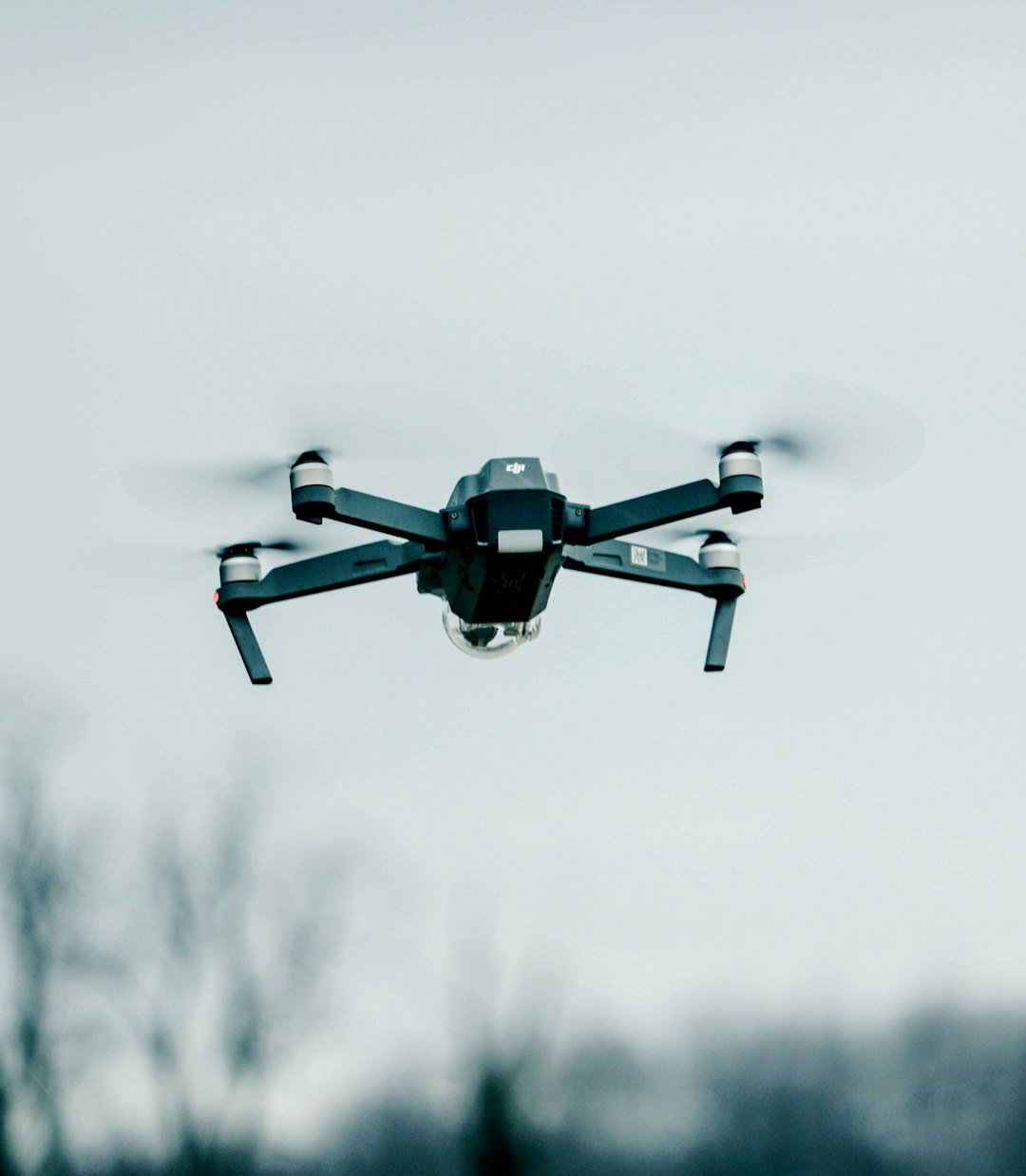
Photo by Kaleb Kendall on Unsplash

Photo by Kaleb Kendall on Unsplash

Share on Linkedin

Europe’s security landscape is undergoing a profound transformation. As the continent reassesses its defence priorities in response to growing geopolitical tensions, one thing is becoming increasingly clear: traditional military procurement strategies—centred around tanks, fighter jets, and heavily armored divisions—are proving outdated. The conflicts of today and tomorrow demand a different approach, one that emphasises agility, adaptability, and technological superiority.

You Might Also Like

Klaus Hommels of Lakestar talks about defence consolidation and the future of procurement

To infinity and back: the opportunity for reusable hardware in space

Danish startup Sapient Perception raises €2M to widen UAV vision for real-time battlefield decisions

Germany, as Europe’s largest economy and a central pillar of the EU’s security framework, provides a useful case study. Despite its historical reluctance to embrace defence modernisation, it has begun making massive investments in traditional military hardware, including new tanks and a fleet of American F-35 fighter jets. But is this really the most effective way to enhance Europe’s defence capabilities?

A growing body of evidence suggests that the future of European security may lie not in legacy systems from the Cold War era, but in the widespread adoption of drone technology and autonomous warfare systems. And while Western European nations—Germany, France, and the UK—continue to focus on conventional force structures, countries on the EU’s eastern flank, including Poland and the Baltic states, are demonstrating a much more forward-thinking approach.

Recent conflicts, particularly in Ukraine, have provided real-world proof of how rapidly the nature of war is changing. While armoured vehicles and air superiority still play a role, they are increasingly vulnerable to precision drone strikes, electronic warfare, and asymmetric tactics.

Countries like Estonia, Latvia, and Finland—long aware of the threat posed by a potential aggressor—have embraced this new reality, prioritising flexible, cost-effective solutions over legacy systems. Poland, in particular, has taken decisive steps, integrating large numbers of reconnaissance and strike drones into its defence posture, leveraging AI for battlefield intelligence, and focusing on electronic warfare capabilities.

Meanwhile, Western European countries have largely stuck to the traditional procurement model, committing to expensive, long-term projects that do not necessarily align with the changing nature of modern warfare. Germany’s decision to invest in additional heavy tanks and long-range fighter jets reflects a mindset that is more suited to a hypothetical large-scale land war of the past rather than the hybrid, technology-driven conflicts of today.

Europe’s security strategy must evolve. Instead of doubling down on costly, slow-to-deploy weapons systems, a smarter approach would be to prioritise a rapid, adaptable defence architecture based on drones, AI-driven targeting, and decentralised operational capabilities.

Drones offer significant advantages:

  • Cost Efficiency: A fleet of advanced drones costs a fraction of a single fighter jet or modern battle tank. Instead of investing in a few high-value assets that are easily targeted, European militaries could deploy hundreds of networked autonomous systems, making them much harder to counter.
  • Operational Flexibility: Drones can be used for surveillance, precision strikes, and even electronic warfare, providing real-time intelligence and disrupting enemy operations without risking human lives.
  • Resilience Against Asymmetric Threats: Modern warfare increasingly involves cyberattacks, electronic warfare, and precision-guided munitions. Large, slow-moving military assets like tanks and aircraft carriers are particularly vulnerable. A decentralised, drone-based defence system is harder to neutralise and can respond more dynamically to emerging threats.

For Germany—and Europe as a whole—this means shifting focus. Instead of primarily funding massive, industrial-era procurement projects, resources should be directed toward developing and integrating drone technologies, supporting homegrown European defence startups, and fostering AI-driven combat systems.

If Europe wants to build a credible and future-proof defence posture, it needs a cohesive strategy that aligns with modern threats. This means learning from the more forward-thinking approaches of Poland and the Baltic states rather than simply mirroring outdated NATO procurement patterns.

Germany, as the economic leader of Europe, has both the responsibility and the opportunity to spearhead this transformation. By investing in scalable drone programs, AI-driven reconnaissance systems, and decentralised battlefield management platforms, it could not only enhance its own security but also contribute to a stronger, more resilient European defence network.

The time for a strategic pivot is now. The wars of tomorrow will not be won by larger tanks or faster fighter jets, but by the nations that best integrate technology, automation, and rapid decision-making into their military strategy. Europe’s security depends on its ability to recognise this reality—and to quickly act accordingly.


Jeffrey Katz is an entrepreneur and engineer with experience in both startups and large companies, turning new ideas into real products. He is a founder of DAF – Deutsche Autonome Flugsysteme GmbH, a German startup developing a software-defined ecosystem that helps the West build autonomous drone applications more easily and at lower cost. Drones equipped with DAF are already in use with front-line units in Ukraine.


Tags: Deutsche Autonome FlugsystemeGermanyJeffrey Katz
Previous Post

Dispatches from Brave1’s Defence Tech Innovations Forum in Kyiv

Next Post

The New Economics of Defence: The Financial Barriers Holding Back Defence Innovation

Resilience Media

Resilience Media

Start Ups. Security. Defense.

Related News

Klaus Hommels of Lakestar talks about defence consolidation and the future of procurement

Klaus Hommels of Lakestar talks about defence consolidation and the future of procurement

byJohn Biggs
April 15, 2026

Investor and entrepreneur Klaus Hommels, founder of Lakestar, sees a new era of European defence spending and investment. His comment?...

To infinity and back: the opportunity for reusable hardware in space

To infinity and back: the opportunity for reusable hardware in space

byResilience Media
April 15, 2026

Germany's Atmos Space Cargo is opening an office in Poland focused on defence capabilities, announced CEO Sebastian Klaus during a...

Danish startup Sapient Perception raises €2M to widen UAV vision for real-time battlefield decisions

Danish startup Sapient Perception raises €2M to widen UAV vision for real-time battlefield decisions

byCarly Page
April 15, 2026

A Danish startup promising to give drones a much wider field of view without sacrificing detail has raised €2 million...

Daimler Truck and ARX Robotics Team Up to Bring AI and Autonomy to Military Vehicles

ARX Robotics secures British Army contract

byLuke Smithand1 others
April 15, 2026

ARX Robotics has secured its first British Army contract, delivering UK-manufactured Gereon uncrewed ground vehicles for Recce-Strike experimentation through Task...

Airship startup Kelluu raises €15M from NATO, its first investment in Finland

Airship startup Kelluu raises €15M from NATO, its first investment in Finland

byIngrid Lunden
April 14, 2026

Defence is a multi-modal concept, and today a startup focused on building a stronger pipeline of intelligence data from a...

Rheinmetall and Destinus to ‘bridge the gap’ with new joint venture

Rheinmetall and Destinus to ‘bridge the gap’ with new joint venture

byFiona Alston
April 13, 2026

The CEO of German defence prime Rheinmetall may have stepped out into the spotlight as an outspoken critic of Ukraine's...

Refute report finds coordinated election interference targeting European voters and diaspora

Refute report finds coordinated election interference targeting European voters and diaspora

byJohn Biggs
April 10, 2026

UK-based Refute has published a new report examining foreign interference in recent European elections, drawing on data from Romania, Moldova,...

Tiberius to link Ukraine-validated defence tech with UK manufacturing through GRAIL platform

Tiberius to link Ukraine-validated defence tech with UK manufacturing through GRAIL platform

byJohn Biggs
April 10, 2026

Tiberius Aerospace said it will make Ukrainian battlefield-validated technology available for manufacturing in the United Kingdom through its GRAIL platform,...

Load More
Next Post
The New Economics of Defence: The Financial Barriers Holding Back Defence Innovation

The New Economics of Defence: The Financial Barriers Holding Back Defence Innovation

The Role of Startups: Why Defence Tech Must Rethink Manufacturing and Investment

Most viewed

InVeris announces fats Drone, an integrated, multi-party drone flight simulator

Uforce raises $50M at a $1B+ valuation to build defence tech for Ukraine

Auterion, the drone software startup, eyes raising $200M at a $1.2B+ valuation

Senai exits stealth to help governments harness online video intelligence

Palantir and Ukraine’s Brave1 have built a new AI “Dataroom”

Twentyfour Industries emerges from stealth with $11.8M for mass-produced drones

Resilience Media is an independent publication covering the future of defence, security, and resilience. Our reporting focuses on emerging technologies, strategic threats, and the growing role of startups and investors in the defence of democracy.

  • About
  • News
  • Resilence Conference
    • Resilience Conference Copenhagen 2026
    • Resilience Conference Warsaw 2026
    • Resilience Conference 2026
  • Guest Posts
  • Subscribe
  • Privacy Policy
  • Terms & Conditions

© 2026 Resilience Media

No Result
View All Result
  • About
  • News
  • Resilence Conference
    • Resilience Conference Copenhagen 2026
    • Resilience Conference Warsaw 2026
    • Resilience Conference 2026
  • Guest Posts
  • Subscribe
  • Privacy Policy
  • Terms & Conditions

© 2026 Resilience Media

This website uses cookies. By continuing to use this website you are giving consent to cookies being used. Visit our Privacy and Cookie Policy.