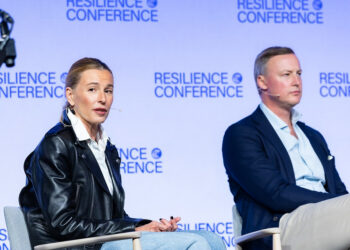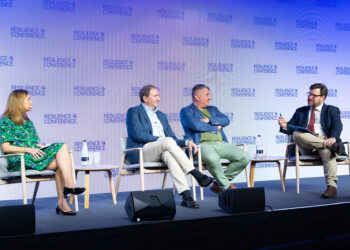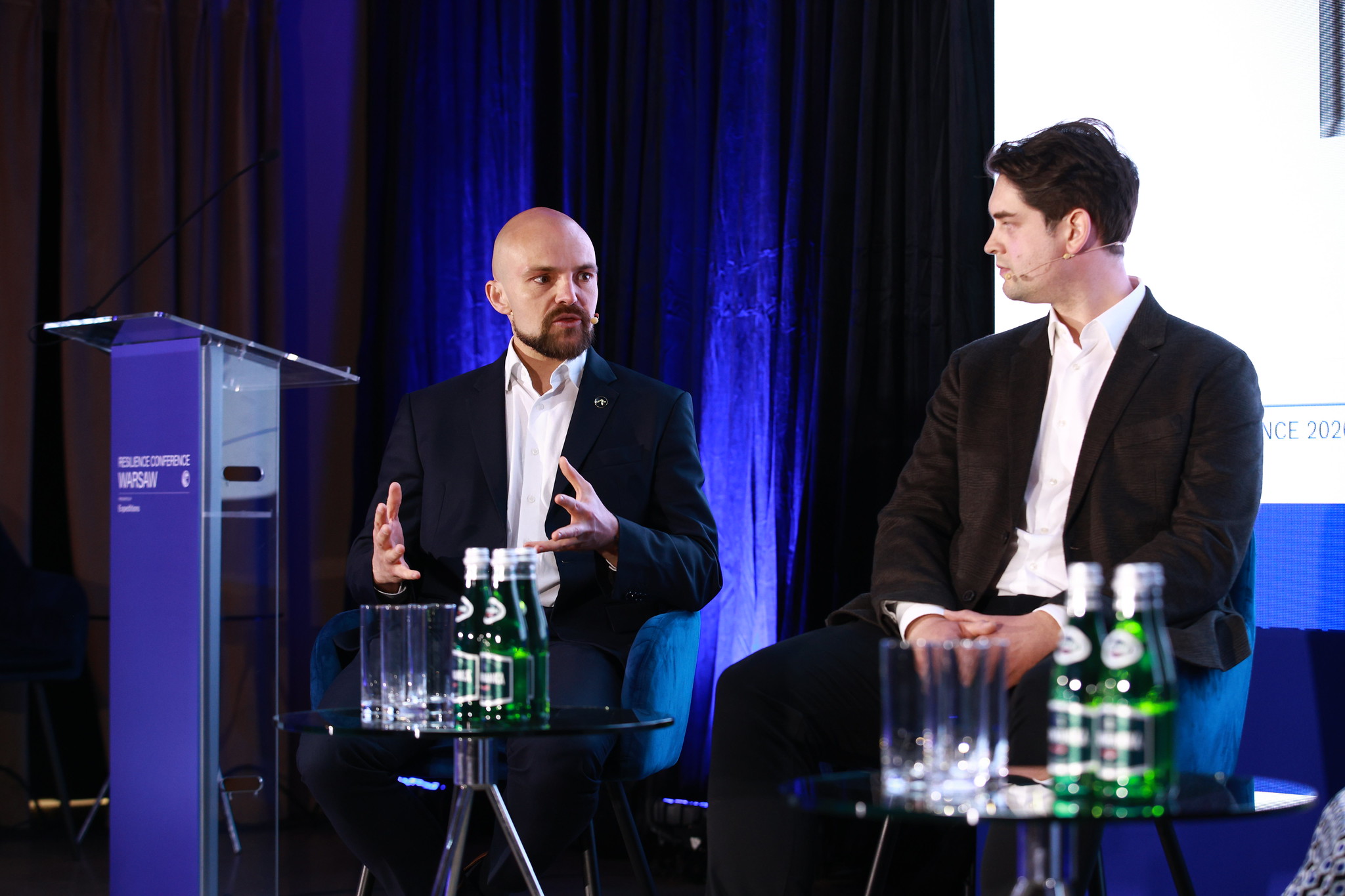
Germany’s Atmos Space Cargo is opening an office in Poland focused on defence capabilities, announced CEO Sebastian Klaus during a panel on Resilience Conference in Warsaw. The news comes on the heels of the German startup ramping up production to focus serving ministries of defence, which are focusing on extending defence capabilities that incorporate the space domain.
Atmos develops reusable spacecraft to deliver any type of cargo from space, promising controlled and precise return capability, on-orbit operations when in space, and subsequent return to Earth. Re-entry technology is crucial for life sciences and biotech research, as well as industrial materials development, and increasingly it also has military applications.
“When you’re in space, you can pretty much reach any place on earth within 60 minutes” said Klaus.
Atmos is still very much an early-stage startup. The company has to date only had one launch into space — ridesharing on a SpaceX rocket to gather research data to develop its commercial product a year ago.
But Klaus said that the company has a roster of several more launches planned for the next couple of years. And he also claimed that the company is further along in its capabilities in its labs. From a technical perspective, he said, Atmos could support rapid responses capabilities, such as strike capacities, “in two to three years.” What is ultimately deployed remains a political question.
Atmos spacecraft use inflatable decelerators that look a little like round rafts, technology that was originally developed by NASA in the US and has been refined by the startup for its purposes. The material and design of the decelerators are meant to help preserve its payloads during re-entry so that they can be re-used in future.
Klaus said that Atmos is “the very first company in Europe to use this type of technology,” adding that their solution is “more scalable, even more lightweight and therefore more cost efficient than what NASA is doing.”
The company launched its first capsule into space last year, with the next one, PHOENIX 2, due to take off in 2027.
Atmos has received funding from a pan-European group of investors and has raised about $20 million to date, per PitchBook data, and we understand it is in the process of raising more than this. Aleksander Dobrzyniecki from Balnord, one of the company’s backers, joined Klaus on the panel.
Dobrzyniecki remarked that space sector investors should prepare for unexpected delays and changes, which are an inherent part of space innovation.
“It’s very important to have alignment between the founding team and the investor base,” said Dobrzyniecki.
Atmos collaborates with a number of other space tech companies, and it recently inked a strategic partnership and MOU with US space technology company Voyager.
The companies said that Voyager Europe will serve as Atmos’ integration and implementation partner, and Atmos will provide its free-flying orbital vehicles to Voyager. Both companies will “mutually refer customers and mission opportunities across their networks,” they added. But while Voyager has a stated mission of M&A, acting as consolidator across the space tech landscape, that may not net in Atmos: Klaus categorically ruled out acquisitions by any American companies.
Klaus underlined that in a conflict scenario, there is an urgent need for sovereign European solutions in space. “It’s extremely important that we develop our own space transportation capabilities.”