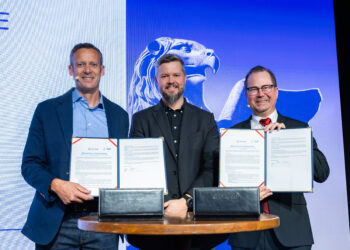
Red Cat Holdings has acquired Québec-based Quaze Technologies, adding wireless charging capability to its growing portfolio of autonomous systems. The companies will target one of the biggest limitations in UAVs: keeping drones and uncrewed robots powered in the field without human intervention.
“Autonomous systems are only as effective as their ability to stay in the fight,” said Red Cat CEO Jeff Thompson. “Quaze gives us a critical advantage by removing one of the biggest operational constraints, which is how systems recharge in the field.”
The company will continue operating independently inside Red Cat while integrating its technology into the holding company’s expanding “Family of Systems.”
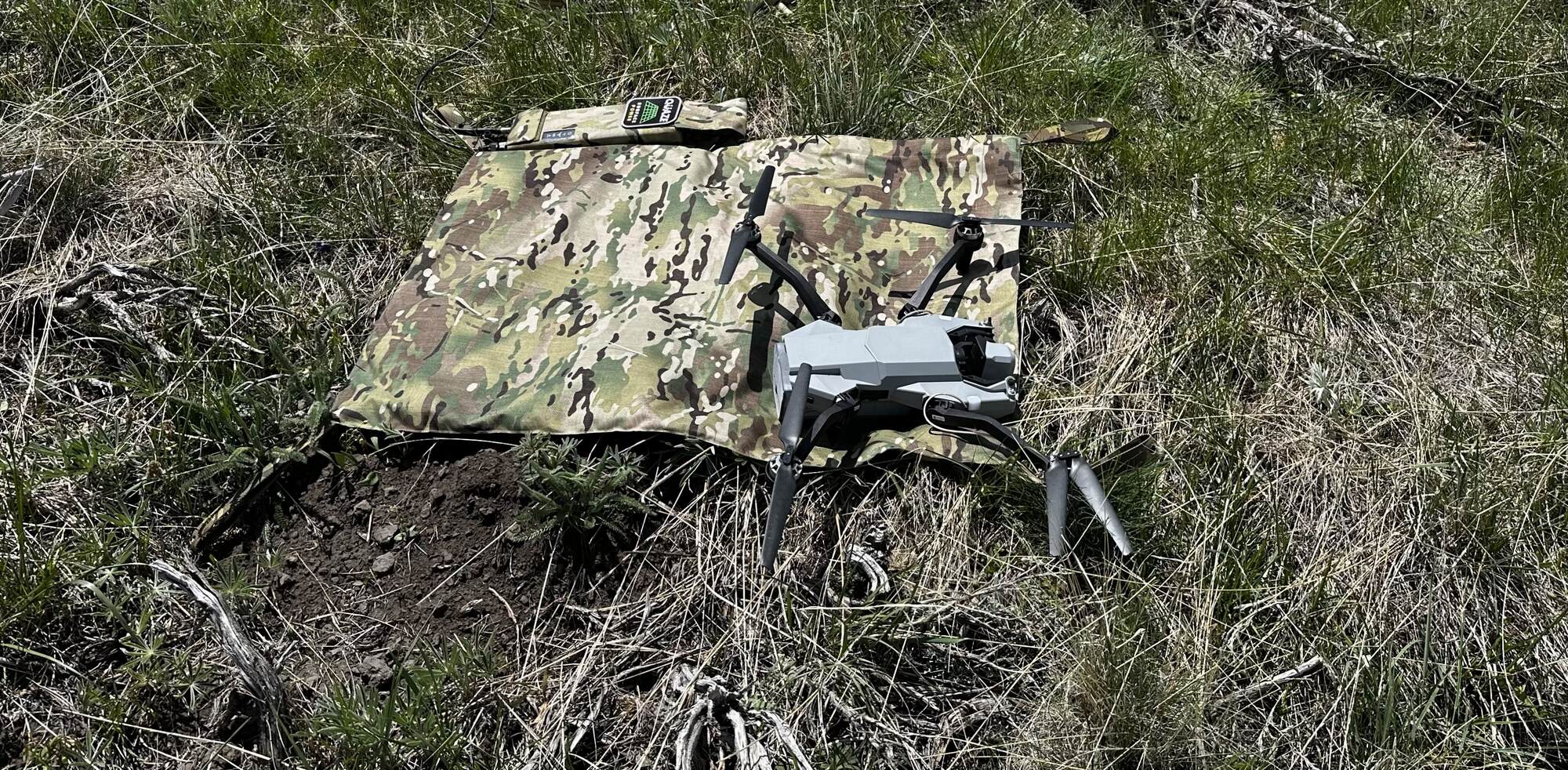
The core of the acquisition is Quaze’s QU6 architecture, a wireless energy mat that turns large surfaces into charging zones. Unlike conventional docking systems, the platform does not require precise alignment or physical connectors. Systems can recharge even in dirty or wet environments, including sand, ice, snow, or debris-covered terrain. Essentially, the QU6 is an all-terrain covering that lets drones land, charge, and take off at will.
Battery management remains one of the least glamorous but most important bottlenecks in autonomous warfare. Drones can navigate autonomously, identify targets, and coordinate in swarms, but many still depend on operators to physically swap batteries or reconnect charging systems. In contested environments, that creates delay and failure points.
Quaze’s systems can be integrated into drone-in-a-box deployments, unmanned surface vessels, fixed infrastructure, and even underwater charging stations. Red Cat says the technology could support “mothership” charging systems, distributed charging networks, and long-duration ISR missions where autonomous systems remain active for extended periods with limited human involvement while coming home to “roost” on Quaze mats.
Quaze will continue selling its technology to third-party OEMs, giving Red Cat exposure to systems it does not manufacture directly. In practice, the company is betting that wireless power infrastructure could become a common layer across autonomous platforms in the same way standardized fueling systems shaped traditional military logistics.
“Robotics has made major advances in autonomy and intelligence, but energy has remained a limiting factor,” said Xavier Bidaut, Co-founder of Quaze. “Our goal is to make power as accessible and reliable as fuel is for traditional vehicles and something every drone or robot can tap into, anywhere, without friction. By joining Red Cat, we can accelerate that vision and help establish a common power infrastructure for autonomous systems across industries.”
The acquisition lands as defence companies increasingly focus on persistence rather than isolated drone performance. The challenge is no longer simply getting autonomous systems into the field. Instead, the goal is to manage autonomous systems that can stay on the field indefinitely and Quaze has one part of the solution.