Wednesday 27 May, 2026
[email protected]
Resilience Media
  • News
    • Events
    • Interview
    • Startups
    • Venture
    • Weekly Digest
  • Resilience Conference
    • Resilience Conference Warsaw 2026
    • Resilience Conference Copenhagen 2026
    • Resilience Conference London 2026
  • About
  • Guest Posts
    • Author a Post
  • Subscribe
No Result
View All Result
  • News
    • Events
    • Interview
    • Startups
    • Venture
    • Weekly Digest
  • Resilience Conference
    • Resilience Conference Warsaw 2026
    • Resilience Conference Copenhagen 2026
    • Resilience Conference London 2026
  • About
  • Guest Posts
    • Author a Post
  • Subscribe
No Result
View All Result
Resilience Media
No Result
View All Result

UK’s intelligence chief eyes Russia and China as the major cyberthreats of our time

Thanks to AI advances, "We are in a new era of radical uncertainty," warns Anne Keast-Butler, Director GCHQ

Ingrid LundenbyIngrid Lunden
May 27, 2026
in News
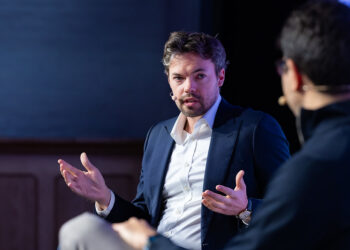
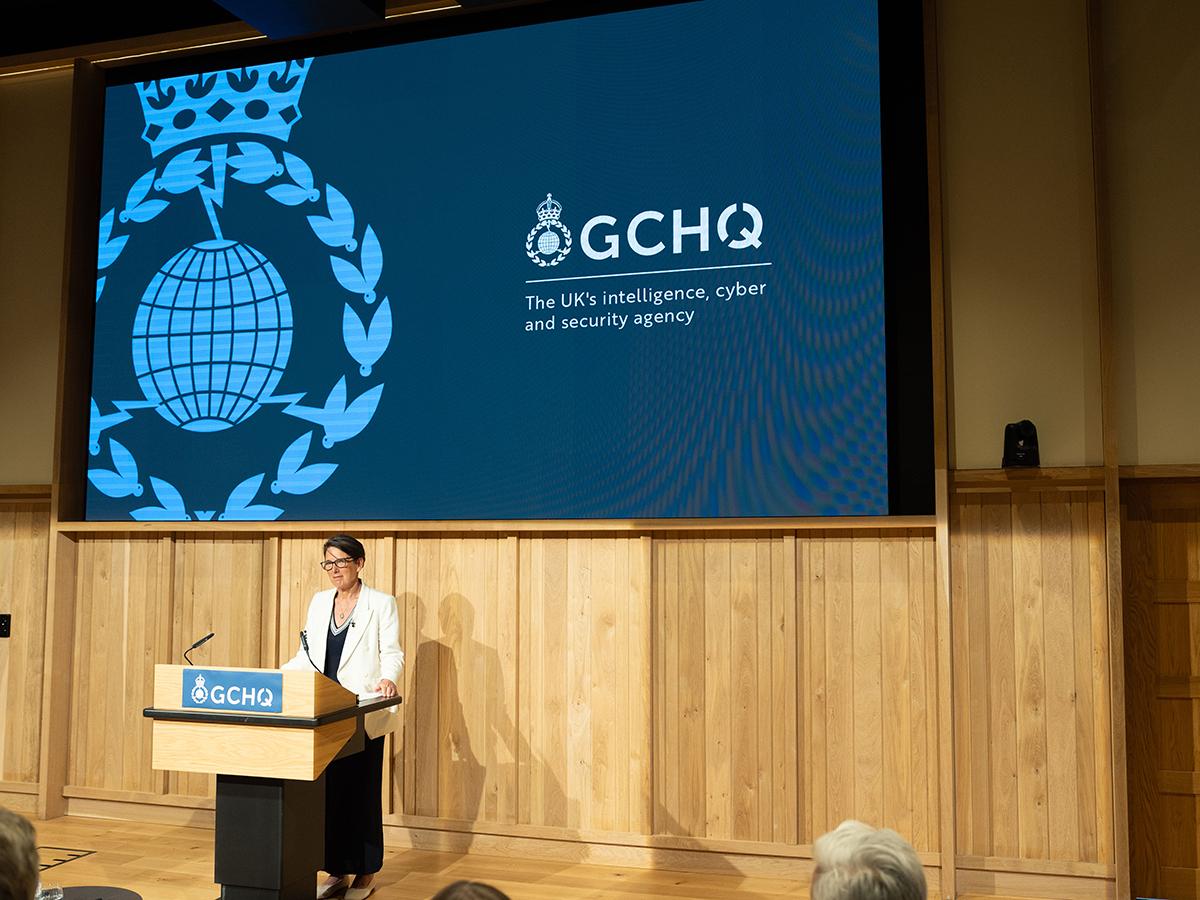
Anne Keast-Butler, Director GCHQ

Anne Keast-Butler, Director GCHQ

Share on Linkedin

While Russia continues its assault on Ukraine, it’s also developed an aggressive posture on the frontlines of a different war: the one playing out using technology in the “grey zone.” And China, a close ally to Russia, is coming fast around the corner as a threat in its own right, according to a speech delivered by one of the most senior people in British intelligence.

You Might Also Like

Quaze deal gives Red Cat wireless power for drones and robots

New cameras from Odd Systems are making drones faster, smarter, and more accurate

RevEng.AI lands $15M to defend against the unintended risks of AI

Anne Keast-Butler, the director of the UK intelligence agency GCHQ, warned today that Russia is using technology and “hybrid” tactics to extend its position as one of the most powerful threats to the UK and Europe. 

In a speech delivered to a room of government and national security officials, security experts, academics and the media, Keast-Butler described Russia as “relentlessly targeting critical infrastructure, democratic processes, supply chains and public trust.”

She said China, meanwhile, was a “science and tech superpower” that is applying “sophisticated capabilities across [its] intelligence, cyber and military agencies.”

Significantly, all of the advances are being propelled faster than ever before, thanks to AI. “The ground beneath our feet is shifting,” Keast-Butler said. We are in “new era of radical uncertainty” buffeted by “contested geopolitics and rapidly changing technology.” 

And she issued a strongly-worded warning to the room: “The risk of miscalculation is as high as I’ve ever seen it.”

Russia’s and China’s positions as tech-forward, grey-zone adversaries to the UK and other parts of Europe are not new. As far back as May 2024, GCHQ, and Keast-Butler specifically, identified the Russian cyber threat as “acute and globally pervasive”, and China as “the epoch defining challenge” of our time. Issues like Russia meddling in elections and cyberattacks have been in the air for years before that. In Europe more widely, drone incursions in countries on the Eastern Flank and beyond are regularly linked to Russia, too. 

Russia’s tactics may heavily leverage tech, but the targets are extending right now well beyond the virtual. Keast-Butler noted in her speech that that GCHQ’s efforts are aimed at stopping not just cyberattacks, but also smuggling, specifically of Western technology that is prohibited to be exported to Russia due to sanctions related to the war in Ukraine; critical industry sabotage; and unspecified assassination attempts. 

GCHQ said the lecture is the first of an an annual series. As such it provides a very public version of a pulse check — complete with themes and quotes released ahead of time to the media — of what the agency and the UK government are prioritising. 

It is being delivered at a key moment. Currently, all eyes are on the Middle East, and whether a settlement can be reached with Iran and Lebanon to end fighting. Iran continues to be a major force both in defence tech production (with its drone work) and in cybercrime. Further east, the lecture is coming in the wake of two important state visits to China, first from the US and then from Russia. Not only do both of these cut Europe out of the power equation, but they highlight a critical tension between the US and China, as well as a friendly connection between China and Russia.

The location of the speech is also significant. The speech is being delivered today at Bletchley Park, the site once made famous as the home of Allied Powers’ code breakers during the Second World War. These days, it is a symbolic centre for UK government-initiated technology imperatives. For example, the UK loftily convened the world’s first “AI Safety Summit” on its grounds back in 2023.

As with that AI summit, the speech today is a mark in time rather than a starting or end point. There remain a number of question marks over how current and future threats, and responses, will progress.

Ultimately, a lot will rely on partnerships with industry, including technologists, and buy-in from individuals and enterprises being more vigilant and secure, she said.

Кеаst-Butler even touched on the most granular version of vigilance: suggesting replacing passwords with more secure passkeys (linked to biometrics and/or unlocking with PINs), along with embedding more security into services and technologies — all in aid of “Making cybersecurity ten times more urgent.”

Tags: anne keast-butlerChinaCybersecuritygchqRussia
Previous Post

Quaze deal gives Red Cat wireless power for drones and robots

Ingrid Lunden

Ingrid Lunden

Ingrid is an editor and writer. Born in Moscow, brought up in the U.S. and now based out of London, from February 2012 to May 2025, she worked at leading technology publication TechCrunch, initially as a writer and eventually as one of TechCrunch’s managing editors, leading the company’s international editorial operation and working as part of TechCrunch’s senior leadership team. She speaks Russian, French and Spanish and takes a keen interest in the intersection of technology with geopolitics.

Related News

Quaze deal gives Red Cat wireless power for drones and robots

Quaze deal gives Red Cat wireless power for drones and robots

byJohn Biggs
May 27, 2026

Red Cat Holdings has acquired Québec-based Quaze Technologies, adding wireless charging capability to its growing portfolio of autonomous systems. The...

New cameras from Odd Systems are making drones faster, smarter, and more accurate

New cameras from Odd Systems are making drones faster, smarter, and more accurate

byJohn Biggs
May 27, 2026

https://youtu.be/-uqLiaA65Pk   Ukrainian defence startup Odd Systems is building a line of mission-specific camera systems designed for drones operating in...

turned on monitor displaying programming language

RevEng.AI lands $15M to defend against the unintended risks of AI

byCarly Pageand1 others
May 27, 2026

Organisations are ramping up their AI adoption, with more than two-thirds of respondents in a McKinsey survey noting pilots or...

Germany chooses EU analytics company over US-based Palantir

Germany chooses EU analytics company over US-based Palantir

byJohn Biggs
May 22, 2026

Germany's Bundesamt für Verfassungsschutz (BfV) has chosen the French company ChapsVision over Palantir for its analysis tools, pushing the American...

Ukraine unveils first domestically developed guided aerial bomb

Ukraine unveils first domestically developed guided aerial bomb

byJohn Biggs
May 22, 2026

Ukraine's DG Industry has built the country's first guided aerial bomb. Defence Minister Mykhailo Fedorov announced the bomb, called the...

Britain turns on Borealis orbital defence network amid growing space threats

Britain turns on Borealis orbital defence network amid growing space threats

byCarly Page
May 22, 2026

Britain has activated a new military orbital surveillance platform six months ahead of schedule as the government warned that “space...

German couple arrested on suspicion of spying for PRC

German couple arrested on suspicion of spying for PRC

byJohn Biggs
May 20, 2026

German police have arrested nationals named Xuejun C. and Hua S. on suspicion of spying for China. German authorities have...

UK awards 13 defence tech startups with £4M fast-track procurement deals

UK awards 13 defence tech startups with £4M fast-track procurement deals

byIngrid Lunden
May 19, 2026

The UK government is throwing its weight behind a list of defence tech startups and awarding a series of contracts...

Load More

Most viewed

InVeris announces fats Drone, an integrated, multi-party drone flight simulator

Uforce raises $50M at a $1B+ valuation to build defence tech for Ukraine

Auterion, the drone software startup, eyes raising $200M at a $1.2B+ valuation

Palantir and Ukraine’s Brave1 have built a new AI “Dataroom”

Twentyfour Industries emerges from stealth with $11.8M for mass-produced drones

Senai exits stealth to help governments harness online video intelligence

Resilience Media is an independent publication covering the future of defence, security, and resilience. Our reporting focuses on emerging technologies, strategic threats, and the growing role of startups and investors in the defence of democracy.

  • About
  • News
  • Resilence Conference
    • Resilience Conference Copenhagen 2026
    • Resilience Conference Warsaw 2026
    • Resilience Conference 2026
  • Guest Posts
  • Subscribe
  • Privacy Policy
  • Terms & Conditions
  • Mission Statement & Code of Practice
  • Press

© 2026 Resilience Media

No Result
View All Result
  • Home
  • About
  • Subscribe
  • Events
  • Guest Posts
  • Interview
  • News
  • Resilience Conference London 2026
  • Resilience Conference Copenhagen 2026
  • Resilience Conference Warsaw 2026

© 2026 Resilience Media

This website uses cookies. By continuing to use this website you are giving consent to cookies being used. Visit our Privacy and Cookie Policy.