Saturday 13 June, 2026
[email protected]
Resilience Media
  • News
    • Events
    • Interview
    • Startups
    • Venture
    • Weekly Digest
  • Resilience Conference
    • Resilience Conference Warsaw 2026
    • Resilience Conference Copenhagen 2026
    • Resilience Conference London 2026
  • About
  • Guest Posts
    • Author a Post
  • Subscribe
No Result
View All Result
  • News
    • Events
    • Interview
    • Startups
    • Venture
    • Weekly Digest
  • Resilience Conference
    • Resilience Conference Warsaw 2026
    • Resilience Conference Copenhagen 2026
    • Resilience Conference London 2026
  • About
  • Guest Posts
    • Author a Post
  • Subscribe
No Result
View All Result
Resilience Media
No Result
View All Result

The defence tech boom is creating a cybersecurity industry for machines

As autonomous drones and AI systems spread through defence, startups are racing to solve a new security problem: protecting machines from compromise, spoofing, and manipulation

Carly PagebyCarly Page
May 28, 2026
in News
text
Share on Linkedin

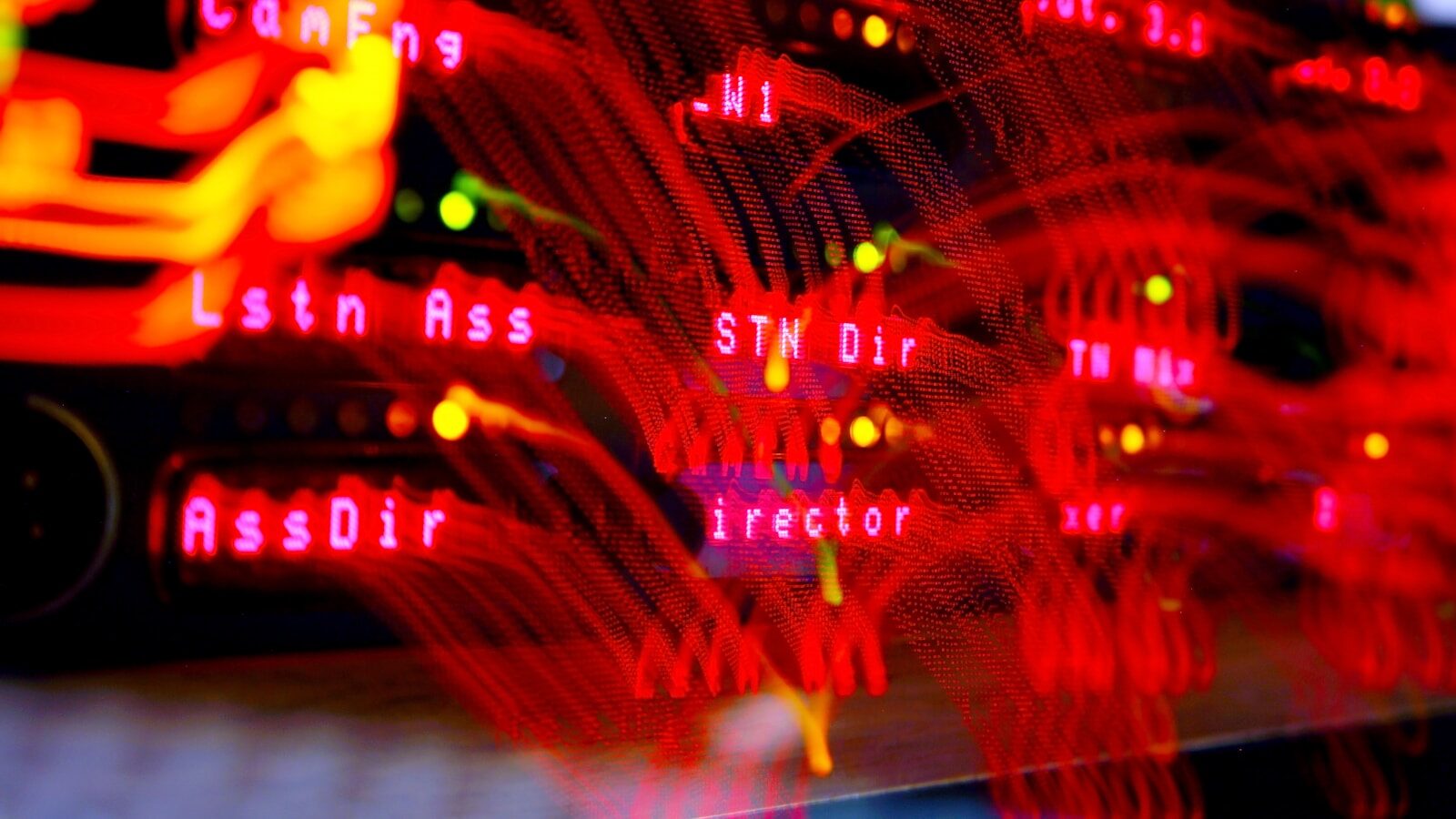
The defence tech boom is quietly spawning an entirely new category of cybersecurity startup, one less concerned with phishing emails and compromised laptops and far more interested in what happens when autonomous machines start talking to each other at scale.

You Might Also Like

NATO Innovation Fund appoints Nur Özdemir as its newest partner

Jarvis takes on MoD crisis as second minister resigns over defence spending

France moves to boost its military budget with €36B

Buried inside Resilience Media’s recent ‘100 Startups to Watch 2026’ list is a pattern that looks increasingly difficult to ignore.

A huge chunk of the companies attracting money across Europe and the US are not building traditional enterprise security products – they’re building software and infrastructure for drones, autonomous vehicles, satellite networks, AI systems, battlefield sensors, and machine-to-machine communications. 

In doing so, many are effectively creating a new kind of cybersecurity market almost by accident.

For a long time, the security industry largely revolved around protecting employees and corporate infrastructure. The attack surface was people clicking things they should not click, laptops connecting from coffee shops, and servers waiting to be patched. Even cloud security largely followed the same logic: protect the workforce, secure access, monitor behaviour, repeat.

But that model breaks down pretty quickly once the “users” are autonomous drones sharing data across jammed and contested networks.

A glance through the Top 100 list shows how quickly the market is shifting. Companies such as Helsing, Shield AI, Saronic and SWARMER are building increasingly autonomous military and defence systems powered by AI, sensor fusion, and machine decision-making. Others, including Auterion and Applied Intuition, focus on the software layers underpinning autonomous vehicles and robotic systems.

Alongside them sits a parallel ecosystem of startups tackling the security and trust problems those systems inevitably create.

Estonia’s Vegvisir and Latvia’s Origin both sit at the overlap between autonomy and cybersecurity, while Britain’s Arondite is building software designed to manage and orchestrate autonomous defence systems securely across complex operational environments. Reality Defender focuses on detecting synthetic media and AI-generated deception, which becomes increasingly important as autonomous systems rely heavily on machine-generated intelligence and communications.

Even companies that do not describe themselves primarily as cyber firms increasingly operate inside what looks like a security problem: Tekever builds autonomous surveillance drones and maritime intelligence systems; True Anomaly focuses on space security and orbital defence infrastructure; and Alpine Eagle develops airborne counter-drone systems designed to detect and intercept hostile autonomous aircraft. 

All three rely heavily on secure communications, resilient software, trusted sensor data, and systems capable of operating in contested environments where spoofing, jamming, and interference are routine.

The underlying problem is trust. Autonomous systems need to keep operating through GPS spoofing, jammed communications, manipulated sensor data, and hostile attempts to tamper with the software feeding updates into machines already deployed in the field.

That is pulling a much wider range of security and infrastructure companies into the defence ecosystem. British startup Post-Quantum focuses on quantum-resistant encryption, while Sitehop builds encrypted networking hardware for high-speed systems where reliability and latency matter. Both now sit alongside autonomous defence and drone companies because modern military systems increasingly depend on secure machine-to-machine communications.

Elsewhere, startups such as Augur and DefSecIntel Solutions focus on the growing mess that arises when AI systems start making decisions in real-world environments. Suddenly, the risks are no longer limited to someone tricking a chatbot into saying something stupid – the problems now include manipulated sensor feeds, poisoned data, AI deception, and autonomous systems making bad decisions at machine speed.

The result is a defence startup ecosystem that increasingly resembles a parallel cybersecurity industry.

That doesn’t mean the old security market disappears. Companies will still need endpoint protection, identity management, cloud security, and phishing defences for a very long time yet. Humans remain more than capable of clicking on catastrophic things without any assistance from AI.

But the centre of gravity is beginning to shift. The next major security battleground may not be employee laptops or corporate SaaS accounts. It may be fleets of autonomous systems making decisions independently across hostile networks while trying to determine whether the machine on the other side is friendly, compromised, or lying.
Tags: 100 startupsAICybersecuritymachine learning
Previous Post

UK’s intelligence chief eyes Russia and China as the major cyberthreats of our time

Next Post

Orbital Industries, an “AlphaFold” for materials science, raises $50M

Carly Page

Carly Page

Carly Page is a freelance journalist and copywriter with 10+ years of experience covering the technology industry, and was formerly a senior cybersecurity reporter at TechCrunch. Bylines include Forbes, IT Pro, LeadDev, The Register, TechCrunch, TechFinitive, TechRadar, TES, The Telegraph, TIME, Uswitch, WIRED, & more.

Related News

NATO Innovation Fund appoints Nur Özdemir as its newest partner

NATO Innovation Fund appoints Nur Özdemir as its newest partner

byIngrid Lunden
June 12, 2026

The NATO Innovation Fund, the $1 billion+ investment vehicle for NATO to back innovative startups in defence and resilience tech,...

Jarvis takes on MoD crisis as second minister resigns over defence spending

Jarvis takes on MoD crisis as second minister resigns over defence spending

byCarly Pageand1 others
June 12, 2026

The chaos sweeping over the United Kingdom's Ministry of Defence shows no signs of dying down. Just hours after John...

Eiffel Tower, Paris France

France moves to boost its military budget with €36B

bystanislaw naklicki
June 12, 2026

The United Kingdom Ministry of Defence is in meltdown right now, with the secretary of defence, one of his top...

Tytan Technologies

The primes and the upstarts: Counter-drone tech makes for fast friends at ILA Berlin

byPaul Sawers
June 12, 2026

Mercedes-Benz is pushing deeper into defence technology, announcing this week a partnership with a Munich drone-defence startup to mount counter-drone...

Helsing expands CA-1 platform with AI-powered Electronic Attack drone

Helsing expands CA-1 platform with AI-powered Electronic Attack drone

byJohn Biggs
June 11, 2026

Helsing, a leading European AI-infused weapons manufacturer, has announced the launch of the CA-1 Electronic Attack or CA-1EA, an uncrewed,...

Breaking: John Healey resigns as UK Defence Secretary in protest over funding shortfall

Breaking: John Healey resigns as UK Defence Secretary in protest over funding shortfall

byIngrid Lundenand1 others
June 11, 2026

The United Kingdom's long-delayed Defence Investment Plan has yet to be published, but it has already claimed a very serious...

a close-up of a money bill

Ukraine gets down to AI business

byThomas Macaulay
June 11, 2026

Ukraine is celebrated as a bottom-up laboratory for military innovation. The popular narrative casts its defence-tech scene as a landscape...

Orqa unveils hybrid tactical drone for jammed battlefields

Orqa unveils hybrid tactical drone for jammed battlefields

byJohn Biggs
June 11, 2026

Croatian drone manufacturer Orqa has announced the launch of their latest tactical drone, the MRM2-10AI, a hybrid Unmanned Aerial Vehicle...

Load More
Next Post
a computer chip with the letter a on top of it

Orbital Industries, an "AlphaFold" for materials science, raises $50M

Weekly Digest: Odd Systems’ new camera, RevEng.ai raises $15M Series A, Germany goes with ChapsVision over Palantir

Weekly Digest: Odd Systems' new camera, RevEng.ai raises $15M Series A, Germany goes with ChapsVision over Palantir

Most viewed

InVeris announces fats Drone, an integrated, multi-party drone flight simulator

Uforce raises $50M at a $1B+ valuation to build defence tech for Ukraine

Auterion, the drone software startup, eyes raising $200M at a $1.2B+ valuation

Palantir and Ukraine’s Brave1 have built a new AI “Dataroom”

Twentyfour Industries emerges from stealth with $11.8M for mass-produced drones

Senai exits stealth to help governments harness online video intelligence

Resilience Media is an independent publication covering the future of defence, security, and resilience. Our reporting focuses on emerging technologies, strategic threats, and the growing role of startups and investors in the defence of democracy.

  • About
  • News
  • Resilence Conference
    • Resilience Conference Copenhagen 2026
    • Resilience Conference Warsaw 2026
    • Resilience Conference 2026
  • Guest Posts
  • Subscribe
  • Privacy Policy
  • Terms & Conditions
  • Mission Statement & Code of Practice
  • Press

© 2026 Resilience Media

No Result
View All Result
  • Home
  • About
  • Subscribe
  • Events
  • Guest Posts
  • Interview
  • News
  • Resilience Conference London 2026
  • Resilience Conference Copenhagen 2026
  • Resilience Conference Warsaw 2026

© 2026 Resilience Media

This website uses cookies. By continuing to use this website you are giving consent to cookies being used. Visit our Privacy and Cookie Policy.