100 investors to watch 2026 100 investors to watch 2026 100 investors to watch 2026
Wednesday 7 October, 2026
[email protected]
Resilience Media
  • News
    • Events
    • Interview
    • Startups
    • Venture
    • Weekly Digest
  • Resilience Conference
    • Resilience Conference London — Oct 2026
    • Resilience Conference Copenhagen — May 2026 (PAST)
    • Resilience Conference Warsaw — Apr 2026 (PAST)
  • Launch
  • About
  • Guest Posts
    • Author a Post
  • Subscribe
No Result
View All Result
  • News
    • Events
    • Interview
    • Startups
    • Venture
    • Weekly Digest
  • Resilience Conference
    • Resilience Conference London — Oct 2026
    • Resilience Conference Copenhagen — May 2026 (PAST)
    • Resilience Conference Warsaw — Apr 2026 (PAST)
  • Launch
  • About
  • Guest Posts
    • Author a Post
  • Subscribe
No Result
View All Result
Resilience Media
No Result
View All Result

Ukraine’s military tells defence startups to get closer to the front line

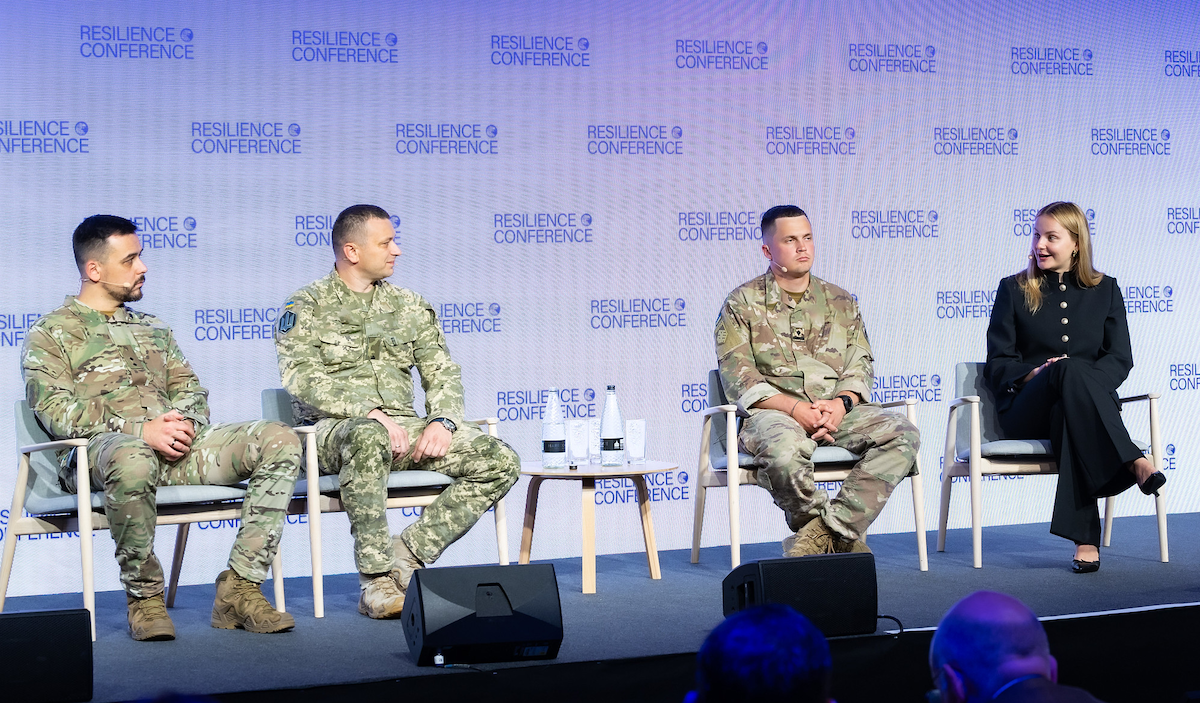
Three Ukrainian soldiers offered insights into their experiences on the battlefield

John BiggsbyJohn Biggs
October 7, 2026
in Events, News, Resilience Conference, Ukraine
Share on Linkedin

Defence companies looking to sell into Ukraine should stop treating the country’s military as a testing ground and start treating Ukrainian units as partners, military leaders told attendees at Resilience Conference London.

You Might Also Like

Airlogix opens UK production as Ukraine pushes defence industry west

NATO Innovation Fund and Finland’s DEFINE sign MoU

Buntar Aerospace raises $16M led by Freedom Fund

Speaking on stage, representatives of Ukrainian military units described a defence technology market in which products can become obsolete within months and companies can waste soldiers’ time by arriving with technology that does not address an immediate battlefield problem.

The names of the soldiers have been redacted for their own safety.

The panel began with a simple question: what separates companies that successfully work with Ukrainian forces from those that do not?

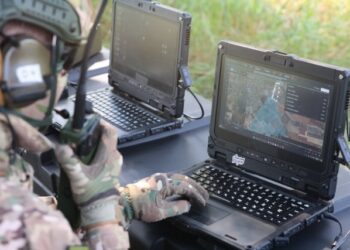
One Ukrainian soldier described a recent partnership with a domestic manufacturer developing an alternative reconnaissance drone for tactical operations at distances of up to 20 kilometres. Instead of arriving with a finished product and asking the military to test it, the company worked directly with the unit to develop the system around its requirements.

The result was a reconnaissance platform that the unit is now using on the battlefield. More important than the particular technology was the way the relationship worked.

“It started with empathy,” he said. The company cared about the military’s immediate problems and asked soldiers to help it build the right product.

That distinction came up repeatedly during the discussion. Ukrainian units are receiving large numbers of requests from defence companies that want their products tested under battlefield conditions. Providing that feedback, however, requires soldiers and military engineers to spend time away from fighting an active war.

“We only have so much resource to dedicate to helping you build your technologies,” one said.

Successful partnerships have included companies providing equipment for testing, paying for integrations and, in some cases, supplying other equipment that units need immediately, he said. The goal is a two-way relationship rather than simply extracting battlefield feedback.

The speed of technological change makes that relationship important. Companies can arrive with equipment that may have worked several months earlier only to find that Russian electronic warfare, tactics or countermeasures have already changed.

“The timing is critical,” one panellist said, arguing that the best form of cooperation involves company engineers working directly with Ukrainian military engineers on the ground. Sending sales representatives or establishing a presence in Ukraine is not enough.

That creates a different model for defence development from the long procurement cycles traditionally used by European militaries. One speaker pointed to FPV drones as an example. European countries are beginning to buy them, but by the time a polished system completes development and procurement, the frequencies, countermeasures and battlefield requirements it was designed around may already have changed.

Stockpiling large quantities of current-generation drones could therefore create its own problem. Equipment purchased today may offer little value in a future conflict if it is not continuously used, tested and updated.

The panellists also pushed companies to think less about individual technologies and more about battlefield problems.

One officer said the first question he asks a company is about its goal, not the specifications of its product. If a company can explain what military problem it solves and how the system would actually be used, his unit may work with it even at an early stage. A technically impressive system without a clear battlefield application is unlikely to get the same attention.

Autonomy was one area the panellists identified as increasingly important. Ukraine needs systems that allow fewer operators to control more platforms, particularly as militaries try to deploy unmanned systems at greater scale. The discussion also touched on cheaper missile systems and AI tools that can help military staffs process growing amounts of battlefield data and make decisions more efficiently. They are also looking for systems that can “penetrate through the ground.”

The real message for European defence companies was that Ukraine should not be viewed simply as a test bed. Real people are facing real danger and to come in, drone in hand, is not useful. One panellist asked companies to view Ukrainian forces as partners who can provide knowledge of how modern technologies perform against an enemy that is constantly adapting.

“The rules of warfare are written right now in Ukraine,” he said.

Tags: defenceDronesResilience ConferenceUkraine
Previous Post

Airlogix opens UK production as Ukraine pushes defence industry west

John Biggs

John Biggs

John Biggs is an entrepreneur, consultant, writer, and maker. He spent fifteen years as an editor for Gizmodo, CrunchGear, and TechCrunch and has a deep background in hardware startups, 3D printing, and blockchain. His work has also appeared in Men’s Health, Wired, and the New York Times. He has written nine books including the best book on blogging, Bloggers Boot Camp, and a book about the most expensive timepiece ever made, Marie Antoinette’s Watch. He lives in Brooklyn, New York. He runs the Keep Going podcast, a podcast about failure. His goal is to share how even the most confident and successful people had to face adversity.

Related News

Airlogix opens UK production as Ukraine pushes defence industry west

Airlogix opens UK production as Ukraine pushes defence industry west

byCarly Page
October 6, 2026

Ukrainian drone maker Airlogix has opened production in the UK, as Kyiv pushes for deeper integration between its defence industry...

NATO Innovation Fund and Finland’s DEFINE sign MoU

NATO Innovation Fund and Finland’s DEFINE sign MoU

byIngrid Lundenand1 others
October 6, 2026

The NATO Innovation Fund (NIF) and Defence Innovation Network Finland (DEFINE) have launched a new partnership to help NIF-backed startups...

Buntar Aerospace raises $16M led by Freedom Fund

Buntar Aerospace raises $16M led by Freedom Fund

byFiona Alston
October 6, 2026

Buntar Aerospace -- a Ukrainian company that has developed an intelligence, surveillance, and reconnaissance (ISR) platform and corresponding reconnaissance drone...

GCHQ head warns AI advances are exposing Britain’s legacy systems

GCHQ head warns AI advances are exposing Britain’s legacy systems

byCarly Page
October 6, 2026

Britain's legacy technology is already being exposed by rapid advances in AI, GCHQ director Anne Keast-Butler has warned, as the...

USEUCOM builds new ‘front door’ for European defence tech

USEUCOM builds new ‘front door’ for European defence tech

byCarly Page
October 6, 2026

US European Command is reshaping how it finds, tests and champions new technology in Europe, after acknowledging that startups have...

NATO can’t wait for a sovereign European AI stack

NATO can’t wait for a sovereign European AI stack

byCarly Page
October 6, 2026

NATO does not have time to wait for Europe to build a fully sovereign technology stack before preparing for a...

Auterion launches vendor-agnostic vertical drone launcher

Auterion launches vendor-agnostic vertical drone launcher

byJohn Biggs
October 6, 2026

German defence software company Auterion has introduced a modular vertical launch system designed to deploy several types of drones from...

Helsing’s chief scientist says defence startups can snag top tech talent

Helsing’s chief scientist says defence startups can snag top tech talent

byIngrid Lunden
October 5, 2026

The driving force of AI in defence tech has been well-documented: autonomy, predictive intelligence, systems used to break through (or...

Load More

Top stories

Dark digital map of north-western Europe
European Defence

State of Defence Tech 2026: European defence startup funding to quadruple to $10.5B

October 5, 2026
Matrix movie still
Cyber

Exclusive: Osavul snaps up $10M to expand its hybrid threat detector tech to more users

October 1, 2026
The London Defence Tech Week programme is here
Events

The London Defence Tech Week programme is here

September 17, 2026
USEUCOM builds new ‘front door’ for European defence tech
News

USEUCOM builds new ‘front door’ for European defence tech

October 6, 2026

Resilience Media is an independent publication covering the future of defence, security, and resilience. Our reporting focuses on emerging technologies, strategic threats, and the growing role of startups and investors in the defence of democracy.

  • About
  • News
  • Resilence Conference
    • Resilience Conference Copenhagen 2026
    • Resilience Conference Warsaw 2026
  • Guest Posts
  • Subscribe
  • Privacy Policy
  • Terms & Conditions
  • Mission Statement & Code of Practice
  • Press

© 2026 Resilience Media

No Result
View All Result
  • Home
  • About
  • Subscribe
  • Events
  • Guest Posts
  • Interview
  • News
  • Resilience Conference London 2026
  • Resilience Conference Copenhagen 2026
  • Resilience Conference Warsaw 2026

© 2026 Resilience Media

This website uses cookies. By continuing to use this website you are giving consent to cookies being used. Visit our Privacy and Cookie Policy.