US European Command is reshaping how it finds, tests and champions new technology in Europe, after acknowledging that startups have historically had no obvious route into the organisation.
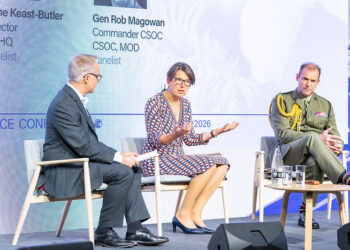
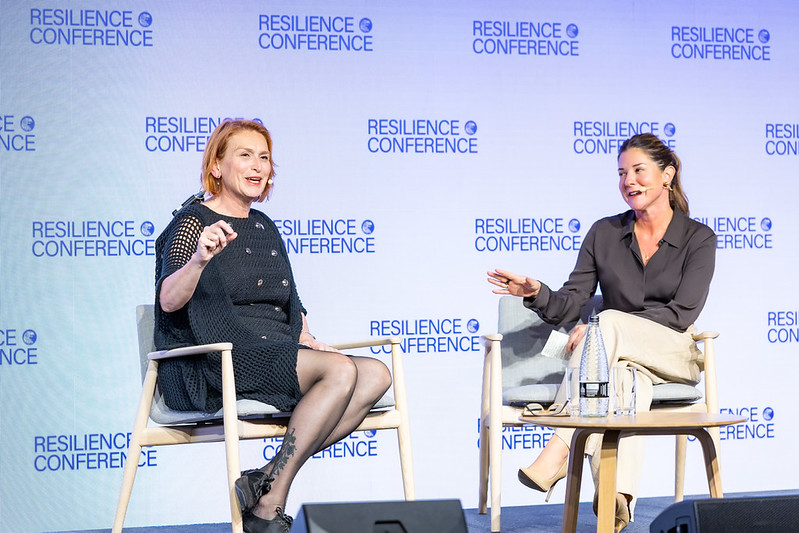
Speaking at the Resilience Conference this week, Sally Pfenning, director of Requirements and Resource Integration at USEUCOM, described how the command is building a more structured approach to working with industry, investors, and organisations such as NATO DIANA.
Pfenning, who joined USEUCOM in her current role around two and a half years ago, said one of the first questions she faced was who within the command was engaging with European industry and startups.
“I just looked at her and said, ‘I don’t know,’” Pfenning recalled. She then asked colleagues across the command the same question. “And the answer was, ‘I don’t know.’”
That prompted discussions across the Pentagon, including with the Defense Innovation Unit, about how USEUCOM could provide a clearer entry point for companies unsure where their technology might fit.
The command is now organising that work around four areas spanning mission engineering and analysis, requirements, experimentation and capability innovation.
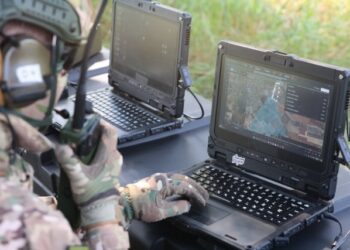
Part of the aim is to give USEUCOM better evidence when it takes capability requirements back to Washington. Pfenning said the command wants modelling and simulation tools that allow technologies to be assessed virtually before moving into physical experimentation.
“At the end of the day, what I want to do is I want to walk into the Pentagon and […] throw down a ‘you can’t say no to this solution’ on the table that makes sense to everybody,” she said.
Europe itself also offers an unusual environment for putting technology through its paces. Pfenning pointed to electronic warfare activity on Finland’s borders as one example, describing Europe as a “test experiment range that exists nowhere else in the world like this”.
But the answer is not simply to run more trials. Pfenning said USEUCOM wants to better understand and streamline experimentation already taking place across the theatre, recounting one conversation in which she was told: “We probably got into too many things, and maybe not the most valuable things.”
The command is also rethinking how it engages with investors. Pfenning admitted her initial reaction when somebody suggested doing so was: “I can’t do that. That’s impossible.”
“We had to kind of break through that mindset internally,” she said, noting that USEUCOM already routinely works with contractors and companies.
Rather than relying on large industry events, Pfenning said the focus should be on identifying specific technical problems and assembling smaller groups of relevant companies, investors and military operators to work through them.
That includes taking classified operational problems and, where possible, reducing them to a level that can be discussed with industry.
“How can we help you point you in the right direction for experiments?” Pfenning asked. “How can we help you if you think you’re onto something that we haven’t thought about?”
Getting successful technology through acquisition remains another challenge. Pfenning highlighted the US Army’s acquisition presence in Europe as a model she wants other services to follow.
On wider Pentagon acquisition reforms, however, she was more cautious. “I think with the PAEs versus PEOs, that still remains to be seen how much power those individuals will actually be given,” she said. “The theory is fantastic.”
For USEUCOM, the immediate task is more practical: make it clearer where companies should go, concentrate experimentation on the problems that matter, and build a stronger case when promising technology needs Pentagon backing.