Wednesday 15 July, 2026
[email protected]
Resilience Media
  • News
    • Events
    • Interview
    • Startups
    • Venture
    • Weekly Digest
  • Resilience Conference
    • Resilience Conference Warsaw 2026
    • Resilience Conference Copenhagen 2026
    • Resilience Conference London 2026
  • About
  • Guest Posts
    • Author a Post
  • Subscribe
No Result
View All Result
  • News
    • Events
    • Interview
    • Startups
    • Venture
    • Weekly Digest
  • Resilience Conference
    • Resilience Conference Warsaw 2026
    • Resilience Conference Copenhagen 2026
    • Resilience Conference London 2026
  • About
  • Guest Posts
    • Author a Post
  • Subscribe
No Result
View All Result
Resilience Media
No Result
View All Result

Klaus Hommels of Lakestar talks about defence consolidation and the future of procurement

John BiggsbyJohn Biggs
April 15, 2026
in European Defence, News, Resilience Conference
Share on Linkedin

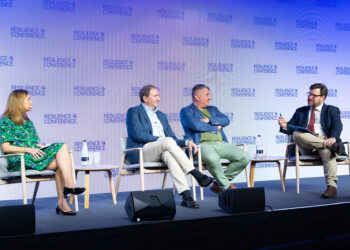
Investor and entrepreneur Klaus Hommels, founder of Lakestar, sees a new era of European defence spending and investment. His comment? That modern militaries need to start working like startup funders and that Key Performance Indicators or KPIs are now part of the conversation.

You Might Also Like

Expeditions leads €15M bet on European defence software startup Project Q

Helsing opens its first US factory, in West Virginia, to build more HX-2 drones

NATO DIANA selects ten innovators for its decision superiority challenge

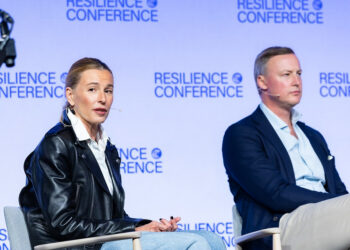
“This is the year of concentration and consolidation,” said Hommels at the Resilience Warsaw conference on April 15.

First, Hommels noted that the US Department of War is currently being run like a private market. After tapping financial experts from Goldman Sacs and JP Morgan, the organization chose a new set of “Neo-primes” including Andruil and Palantir.

This movement toward free-market thinking is now defining how Europe should look at defence investment. Interestingly, said Hommels, these European neo-primes like Helsing, Iceye, and Kraken are consolidating by buying smaller companies to fold into their defensive and manufacturing capabilities.

Further, the companies and their military sponsors are treating battlefield success like business statistics. For example, Ukraine is offering rewards for every Shahed drone shot down during the war. This focus on performance-based metrics is what will move slow-moving ministries into the 21st century.

“We need to introduce the cost-per-kill or cost for effect as a KPI,” said Hommels. “Then a military has no choice but to invest in new technology which is many times less expensive than the old technology.”

Hommels closed his talk by speaking about manufacturing and procurement. He sees needed improvement in three ares: visibility for successful companies, better incentives, and decentralized production. Instead of huge primes and slow ministries, he said, the future is in a free market that runs like a startup ecosystem.

Tags: andruildefenceICEYEPalantirprocurement
Previous Post

To infinity and back: the opportunity for reusable hardware in space

Next Post

ETSI pushes back on EU plan to freeze out ‘high-risk’ players from standards work

John Biggs

John Biggs

John Biggs is an entrepreneur, consultant, writer, and maker. He spent fifteen years as an editor for Gizmodo, CrunchGear, and TechCrunch and has a deep background in hardware startups, 3D printing, and blockchain. His work has also appeared in Men’s Health, Wired, and the New York Times. He has written nine books including the best book on blogging, Bloggers Boot Camp, and a book about the most expensive timepiece ever made, Marie Antoinette’s Watch. He lives in Brooklyn, New York. He runs the Keep Going podcast, a podcast about failure. His goal is to share how even the most confident and successful people had to face adversity.

Related News

Expeditions leads €15M bet on European defence software startup Project Q

Expeditions leads €15M bet on European defence software startup Project Q

byCarly Page
July 14, 2026

European defence software startup Project Q has raised €15 million in Series A funding less than a year after its...

Helsing opens its first US factory, in West Virginia, to build more HX-2 drones

Helsing opens its first US factory, in West Virginia, to build more HX-2 drones

byIngrid Lunden
July 14, 2026

In July 2025, the US government tested out Helsing drones for the first time during the Project Flytrap exercise in...

Deterrence lies in production capacity and cognitive warfare

NATO DIANA selects ten innovators for its decision superiority challenge

byJohn Biggs
July 13, 2026

NATO’s Defence Innovation Accelerator for the North Atlantic, or DIANA, has selected ten companies to take part in its Decision...

Silhouette of a drone in flight against a orange sunset sky.

Auterion to equip 50,000 Ukrainian strike drones with precision guidance tech

byPaul Sawers
July 13, 2026

Ukraine's drone war has always come down to volume and accuracy — get enough systems onto the battlefield, and get...

black corded electronic device

UK and allies warn defence sector over Russian campaign targeting internet-facing routers

byCarly Page
July 13, 2026

The UK and 18 international partners have warned organisations across the defence sector to strengthen the security of internet-facing network...

Helsing launches Area 9 research unit and unveils European robotics platform

Helsing is now Europe’s biggest defence tech startup, raising $1.8B at an $18B valuation

byIngrid Lunden
July 13, 2026

Helsing, the defence tech company out of Germany, today cemented its position as Europe's most valuable privately-held startup in the...

Kinetic disinformation and AI-scaled campaigns are the new faces of hybrid warfare

byStanislaw Naklicki
July 12, 2026

Disinformation components in kinetic Russian operations in Ukraine and Europe, along with the proliferation of AI capabilities, mean that the...

Nokia, NestAI combine 5G, AI, and sensing for constant battlefield connectivity

Nokia, NestAI combine 5G, AI, and sensing for constant battlefield connectivity

byJohn Biggs
July 10, 2026

Two Finnish companies, Nokia and NestAI, have announced the first products built through their 2025 partnership. The systems, which connect...

Load More
Next Post
waving flag

ETSI pushes back on EU plan to freeze out ‘high-risk’ players from standards work

Resilience Conference Warsaw: Startups, Air Defence, and the Future of European Security

Resilience Conference Warsaw: Startups, Air Defence, and the Future of European Security

Most viewed

InVeris announces fats Drone, an integrated, multi-party drone flight simulator

Uforce raises $50M at a $1B+ valuation to build defence tech for Ukraine

Auterion, the drone software startup, eyes raising $200M at a $1.2B+ valuation

Palantir and Ukraine’s Brave1 have built a new AI “Dataroom”

Twentyfour Industries emerges from stealth with $11.8M for mass-produced drones

Senai exits stealth to help governments harness online video intelligence

Resilience Media is an independent publication covering the future of defence, security, and resilience. Our reporting focuses on emerging technologies, strategic threats, and the growing role of startups and investors in the defence of democracy.

  • About
  • News
  • Resilence Conference
    • Resilience Conference Copenhagen 2026
    • Resilience Conference Warsaw 2026
    • Resilience Conference 2026
  • Guest Posts
  • Subscribe
  • Privacy Policy
  • Terms & Conditions
  • Mission Statement & Code of Practice
  • Press

© 2026 Resilience Media

No Result
View All Result
  • Home
  • About
  • Subscribe
  • Events
  • Guest Posts
  • Interview
  • News
  • Resilience Conference London 2026
  • Resilience Conference Copenhagen 2026
  • Resilience Conference Warsaw 2026

© 2026 Resilience Media

This website uses cookies. By continuing to use this website you are giving consent to cookies being used. Visit our Privacy and Cookie Policy.