The recent Strategic Defence Review by the UK MoD pointed clearly to the need for considerable improvement in defence innovation, and last week, the Ministry of Defence announced a long-expected appointment to support this.
Rupert Pearce was named as the new National Armaments Director. The appointment puts him in a key position to lead how the UK conceives of and procures its next generation of defence, matching priorities to what is needed, as well as how and from whom to get it.
The role of the NAD was discussed on our stage earlier this month during Resilience Conference in a panel that looked at the Strategic Defence Review four months after it was released. (You can see that panel and read about it here.)
Pearce, pictured below, is an interesting pick for NAD, not least because he is not from a strictly defence background but one in the commercial realms of telecoms and technology. His most prominent past role was CEO of the satellite provider Inmarsat; he’s also been a partner with a private investment firm in the US.
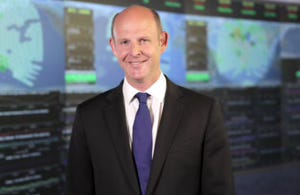
One takeaway from this is that Pearce is not an insider, and if anything, more an outsider. Will that give him the chance to shake up the MoD in a good way and bring new thinking to the role? Or will it spell challenges ahead as he grapples with a huge department and a lot of entrenchment? The reality is likely a blend of the two.
High flyer
Pearce trained as a lawyer and has spent a large part of his career in the corporate world. His most high-profile job on that front was working for 16 years at Inmarsat, starting as general counsel and working up to spend the last nine years as its CEO until leaving in 2021.
His past experience also includes leading energy storage company Highview Power for a year and two part-time positions as chairman of broadband service providers.
Leading a satellite company could be a good fit for someone working on procurement on behalf of a defence ministry. Inmarsat counts government as one of its target verticals, and space and satellite have become a key component of “resilience tech.” Militaries are building out communications and computing infrastructure high above the earth, and space exploration represents an important (if still largely unproven) target for finding and mining rare materials used in the building of weapons and other hardware.
Based on interviews Pearce gave during his time at the helm, however, defence and related resilience may not have been top of mind in the years when he led the company. Instead, the focus was more on how satellite could improve connectivity in areas like underdeveloped geographies, natural disasters, and smart cities; and in commercial deals with transportation providers operating in areas terrestrial fixed and mobile providers cannot reach.
“Whether to the cockpit or the cabin, [connectivity] is seen as mission critical by airlines, and I include passenger Wi-Fi now in that attribute,” he said in an interview in 2023 with Satellite Today. “Airlines know that if they don’t install passenger Wi-Fi, their passengers will go elsewhere. Aviation is also a global market, where wide area coverage matters… I think aviation is going to be one of the core competencies of Inmarsat going forward.”
Nonetheless, Pearce would be familiar with how satellite fits into current defence priorities, as well as with the suppliers’ position in any procurement conversation: that conversation in 2023 noted government and military among two growth areas for the satellite provider.
The MoD also touts Pearce’s experience as an investor. Since July 2021, he has been a partner at US-based Columbia Capital, a role that still appears to be active based on his LinkedIn bio. As with Inmarsat, the experience is potentially more adjacent rather than direct: Columbia appears to invest in privately-held companies in telecoms and tech, but not necessarily the kinds of defence and resilience startups that the MoD might want to work more closely with going forward.
The process of choosing Pearce
Observers we spoke to are generally positive on Pearce’s background and what he can bring to the role, but even more than that, they are happy to see the role getting filled at all after months of vacancy.
“Frankly, too much [had been] waiting on the appointment of the NAD, so to have [Pearce] appointed is good news,” one observer close to the process told Resilience Media. “I think his experience, on paper, is a good combination for the role. I hope they will get on with pushing some money out of the door to a more diverse set of suppliers – even with the tight money situation now, they need to make some moves to send the right signals.”
The MoD did face some bumps in the road in the process of arriving at Pearce as the new director. The post was first announced back in February, with the official job spec getting posted in March. The idea had been to have someone in place by the time that the SDR was published this past summer.
However, the SDR launch came and went, and the role was not filled. Sources say there were a few others who were tapped but that the process had fallen down over issues around the salary and other details.
Typical executive roles in defence can see annual remunerations of as much as eight figures; this role at most would have been in the region of £640,000 (including bonus). That might have deterred some from looking, and it begs the question of who would be interested, and why.
We have reached out to the MoD to request an interview with Pearce. In a statement provided when he was appointed, Pearce was clear on the significance of the work for the UK.
“I am deeply honoured to be appointed as the UK’s National Armaments Director. It is vital that our Armed Forces have cutting edge capabilities at their disposal to project an effective deterrent, both alone and in conjunction with NATO and our other allies,” he said. “To deliver this, we will transform MOD’s relationship with its industrial partners so that the UK defence industry becomes a strategic asset, innovating at wartime pace and driving economic growth. I look forward to working with all my new stakeholders to deliver on this vision.”
The job (and challenge) ahead
As for how Pearce will execute on that vision, the MoD notes that the role will be focused first and foremost on delivery, specifically speeding up and bringing other reforms to procurement cycles with the aim of building a new “arsenal.”
The Defence Industrial Strategy and Strategic Defence Review published this year provide top-line guidance on what the government’s priorities will be, and both underscore not just the defence needs, but how the whole process of identifying and fulfilling that need are up for reassessment.
To that end, Pearce has the chance to put his experience in the private sector and working with startups to the test, bridging the gap between the UK military and large and smaller vendors.
Sir Richard Barrons, the retired UK army commander who helped author the SDR, believes that the next generation of defence will be a blend not just of working with the larger primes who are able to supply weapons, software, and operational support at scale, but also the waves of startups that may be closer to the cutting edge of innovation, at a time when adversaries are also tapping the latest technological advances to gain an edge.
“That’s the defence you set out,” Sir Richard said in an interview with Resilience Media. “You need to access all of this in a new arrangement and connect it to the armed forces and at the heart of the room is the proposition that the armed forces must constantly evolve at the speed of innovation, which comes from the private sector.” He believes that will easily make up half of what the NAD will have to do.
That may be the aim, but the reality is that executing on it will be tough given current financial constraints.
“There are basic solid facts,” Sir Richard told RM. “The MoD is financially on its knees until 2027.”
The UK spent around 2.3% of its GDP on defence in 2023-2024, and the plan is to build that up to 2.6% by 2027 and 3% by the next Parliamentary election (which could be as late as August 2029).
All of these percentages are more than NATO recommends but are still significantly less than a country like the US, which typically allocates 3.4% of GDP.
Whether the government follows this plan, and what it works out to in real money, will also be dependent on how well GDP grows, what happens geopolitically that might require a faster and stronger response, and what the government might decide to prioritise as it balances defence spending against other priorities in the budget.
At the same time, Pearce will be tasked with moving a different kind of mountain. The MoD notes that currently it has no less than eight separate defence procurement budgets. Pearce is expected to consolidate that into one.
That’s a monumental task. At best, it would create more efficiency and lower costs by removing overlaps between departments. A smaller footprint might also be easier to secure.
At its most challenging, the MoD is expecting budget consolidation across a vast and entrenched operation that employs 250,000 armed forces personnel and civil servants; but also a vast range of defence, IT, personnel management, and other vendors, all working within the constraints that come with national security. Who decides what takes priority?
Merging all this in a way that remains secure and grows resilience, while still being more efficient, will be a tall order for someone coming from outside the ministry.
“Pearce has got to be aggressive in making changes,” Sir Richard said, noting that the uncertain and dangerous geopolitical climate could be what dictates whether his execution is the right one.
“Everyone knows the implementation of the SDR is taking too long to get going. It will get there in the end but it’s taken too long. If the world keeps going, [his success] will be driven by the speed of events. Will he be able to speed things up when the moment comes?”
You can watch our panel discussion about the SDR here.