Imagine the headline next week: “Trump seizes Cyprus, Chagos and Gibraltar from the UK.” Such is the ambiguity of Britain’s allegiance to Western values over international law, and the state of our armed forces to actually defend these strategic outposts, that this is not inconceivable. The UK now sits on the precipice of geopolitical and military irrelevance.
The First World War lasted four years and four months. By June, the war in Ukraine will become the longest continuous interstate military campaign in Europe in centuries. In the Middle East, we have seen a US Navy submarine sink the Iranian frigate IRIS Dena, the first time an enemy ship has been sunk since the HMS Conqueror sank the ARA General Belgrano during the Falklands conflict.
My, how far the UK has fallen since 1982. Where has Britain been whilst Iran has showered the Middle East and Mediterranean with loitering munitions and missiles? Ambiguous in our political response and impotent in our military response.
Our inability to defend Cyprus sends a damaging message to every ally and adversary about Britain’s woeful defence strategy. Admiral Lord West of Spithead, the former First Sea Lord, described the Royal Navy as being in the most “parlous state” in 60 years. Bluntly, it is unable to deliver what the nation demands.
This is a very British problem. We are rightly not willing to let go of world-power ambitions, but we are foolishly unwilling to fund them.
But we cannot just blame the fiscal situation or our political masters for this egregious act of self-harm. Those military officers and civil servants responsible for capability acquisition have tolerated a culture of risk aversion that has led to decision inertia. For all the talk of software defined defence, increasing fighting power etc, our single service headquarters enjoy the excuse of the delayed Defence Investment Plan (DIP) as a justification for their lack of decisive action. It is they who are equally accountable for the toothless state of our armed forces.
Take the Army. Exactly 14-days into the conflict, Iran had launched around 2,100 Shahed One Way Effectors at targets across the Middle East. Despite joint US-Israeli strikes on production facilities, reports suggest that they still have significant stockpiles and potential production capabilities, with estimates suggesting a total stockpile of up to 80,000 drones and production capacities of around 400 a day. The British Army has none.
In a perverse interpretation of the social values policy – the policy that virtuously seeks to make a market for Small and Medium sized Enterprises (SMEs) – the Army’s chosen provider of one way effectors (OWEs) is a tiny company from Wiltshire, which has so far failed to deliver a system that works. It is the ultimate irony that the Army has had to turn to BAE for a faster solution! Even then, the UK will have a fraction of the units required to have a meaningful impact in a time of war.
The UK is desperate to have a national defence tech champion and yet why would any venture capitalist in their right mind back a UK market entrant when they have so far failed to make a market worth investing in? Grace Cassy, part of the team behind the Strategic Defence Review (SDR), summed up the solution perfectly: “Capital follows contracts: if government buys meaningfully from a wider range of suppliers, private capital will flow to them.”
Investors and founders lack faith in the UK defence market. Just this week, Skycutter, a British company, turned to a foreign market to sell its OWE. Skycutter is currently topping the Pentagon’s Drone Dominance leaderboard for one-way attack drones after scoring the highest in Department of War trials, to win a contract worth tens of millions of dollars. UK defence is on the verge of both a capital and brainpower exodus.
Unlike military officers and civil servants responsible for capability acquisition, at least our political leaders have the teeth to make a decision when it’s needed – even if it’s a nonsensical one.
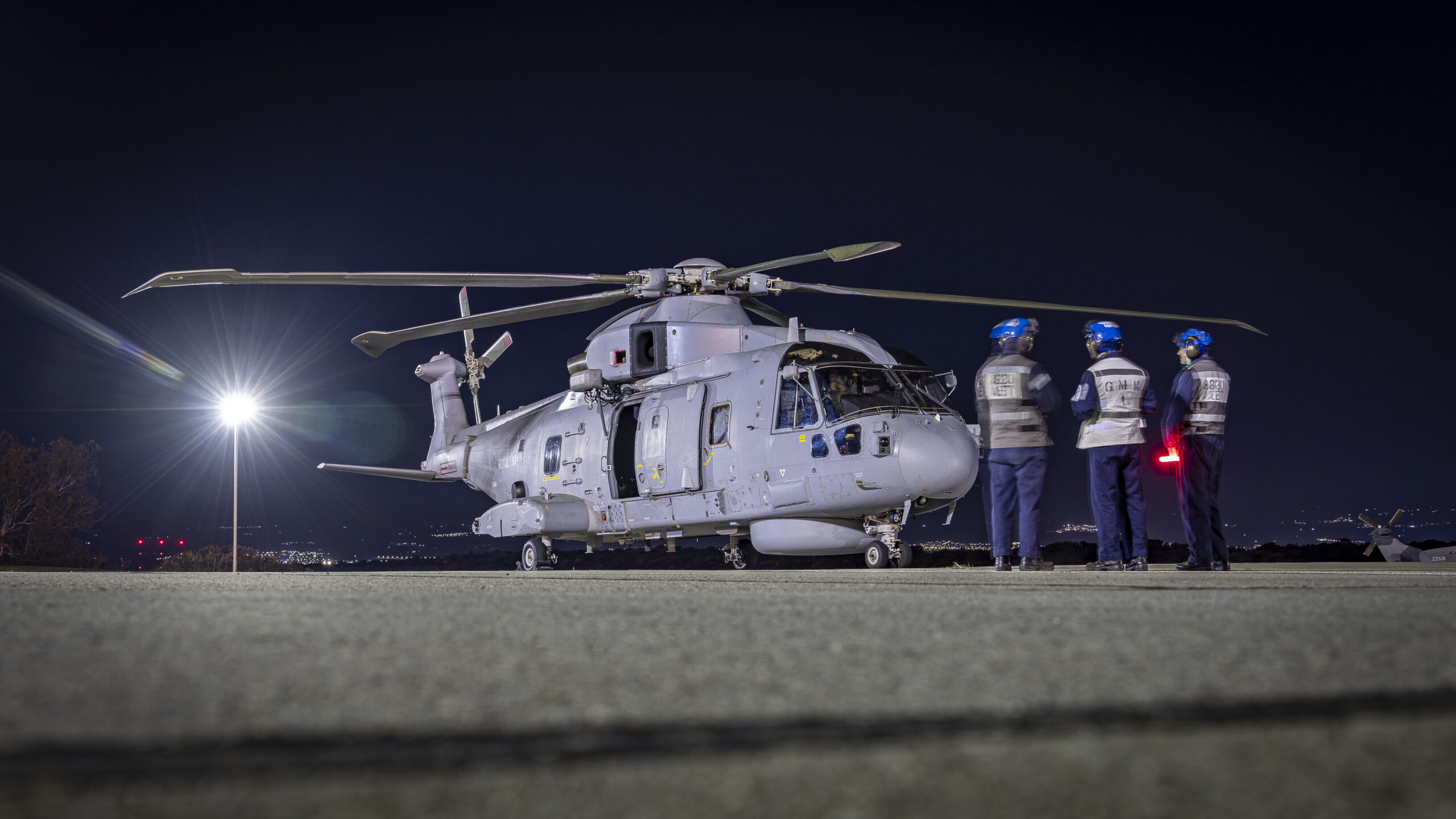
The award of a £1 billion contract to Leonardo for 23 medium-lift helicopters equates to a whopping £43.5 million per unit. For the same money, UK defence could have had 50,000 of Iran’s Shaheds, if the Islamic Republic were open to expanding their export market. Not only was the decision to award this contract in contradiction to the UK’s own strategy of moving the force make-up away from “exquisite” military capabilities and towards “consumable,” but when have we seen reports of helicopters having an impact on the battlefields of Ukraine or Iran?
In The Art of War, Sun Tzu says that “If he is in superior strength, evade him.” With the Armed Forces in their current state, the UK is unable to credibly deter adversaries. The responsibility for this perilous position is not just on the shoulders of our political leaders, but equally shared by our Admirals, Generals, and Air Marshals.