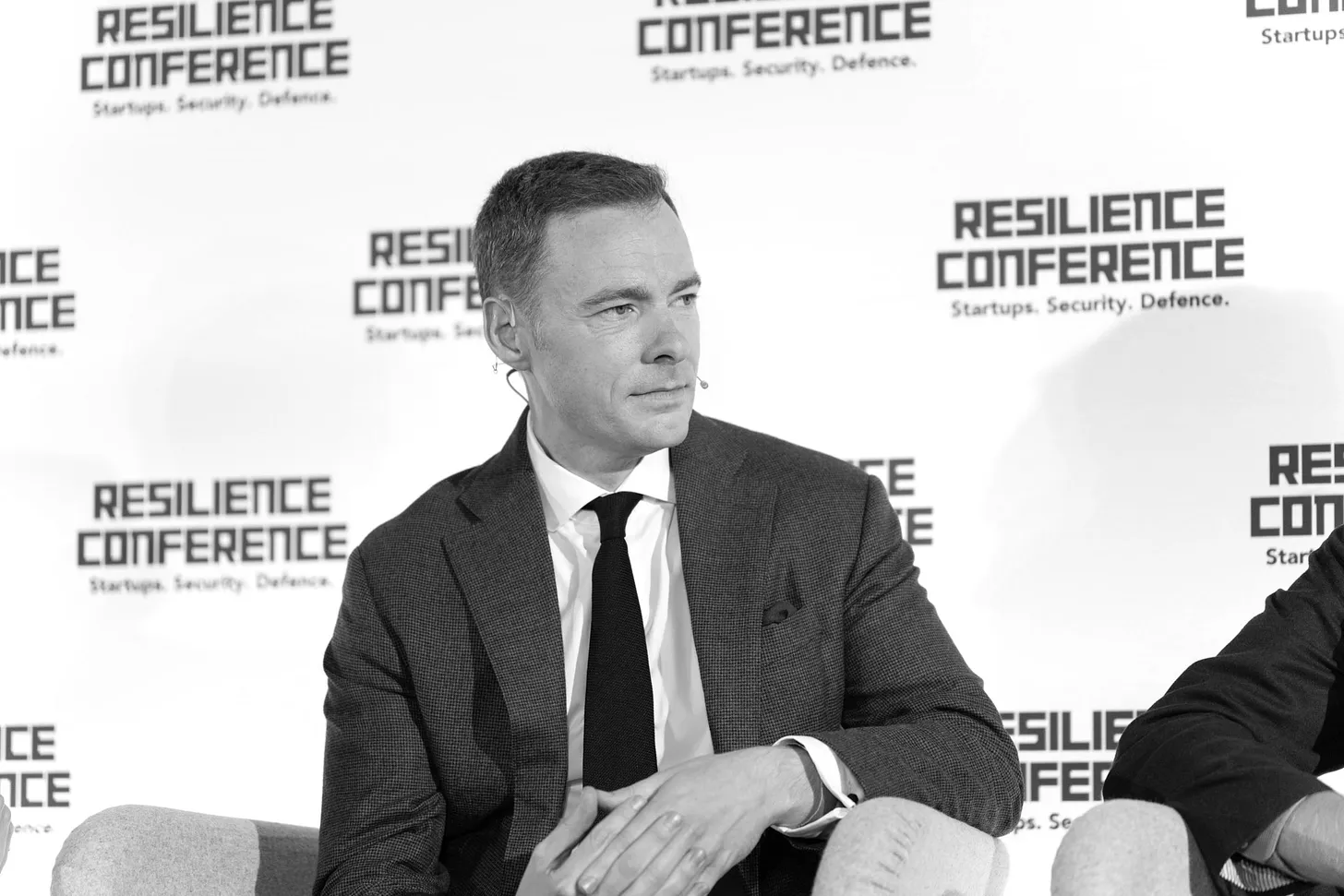
Sitting in the audience at the Resilience Conference in September, I found myself taken back to a mission I led in 2007, when I first deployed drones to Afghanistan with the British Army. As I guided my troops through foreign lands for training, liaised with embassy officials, negotiated with contractors, and finally led operations in the deserts of Helmand, I realised that our success hinged on one core principle: trust. We weren’t just relying on formal protocols or written agreements; we were building a web of connections, held together by shared risk and mutual understanding. In some of the most intense combat British forces had witnessed in decades, it was trust—not contracts or frameworks—that allowed us to operate effectively.
Fast forward to today’s national security landscape, and trust remains essential. But the landscape itself has changed dramatically. National security now relies on a complex web of governments, corporations, startups, academia, and investors, each with their own interests, cultures, and incentives. This diversity offers resilience but also brings fragmentation. Trust, which once grew through close, sustained relationships, is harder to establish and often diluted by formalities.
This environment raises a provocative question: could trust ever be formalised in today’s national security ecosystem? Could we, for instance, create a “trust rating”—an idea I’ve been considering as a way to evaluate the reliability, transparency, and alignment of potential partners, much like a credit score does for financial health? The appeal is clear: such a rating might make it easier to identify dependable partners in a high-stakes world. But trust is more than a quantifiable score – it’s a social glue, built on shared values, histories, and experiences—an organic force that shapes and is shaped by its environment. Rather than a single rating, trust requires active, ongoing cultivation across the entire ecosystem, where each sector plays a role.
Government: Leading Through Consistency and Transparency
In national security, governments have long held a unique form of capital as the authoritative bodies that set security priorities and oversee collaboration. But for this authority to be trusted, government actions must align with expectations—and this isn’t always the case. Corporations, for example, often report frustrations with inconsistent requirements or contract delays, signalling gaps between policy and practice.
To sustain trust, government agencies could focus on building consistency and transparency. By communicating project timelines, expectations, and funding commitments consistently, they could create a sense of predictability that reinforces their authority and reliability. This isn’t merely a bureaucratic measure; it’s a way of signposting accountability, a quality that reinforces social bonds in high-stakes partnerships. A stable, predictable environment enables government agencies to leverage their authority as trusted leaders within the ecosystem.
Corporations: Embedding Ethics in a World of Complex Stakeholders
For corporations, trust in the national security ecosystem depends on more than simply meeting contractual obligations. Corporations control the technologies and infrastructure that underpin national security, but to gain the confidence of both governments and citizens, they must visibly uphold ethical standards that align with broader security values. Acting as “intermediary institutions,” corporations translate between the state and the market, bridging official policies with commercial demands.
For these companies, trust is a delicate balance of transparency and accountability.
Initiatives like Future Forces, which connects startups with defence primes, play a vital role in this context. By fostering collaboration across company sizes and cultures, Future Forces enables emerging innovators and established industry players to align on shared objectives. Such programs reinforce corporations’ role as trusted integrators within the ecosystem, building a stronger foundation for security partnerships.
Startups: Building Credibility Through Transparency and Alignment
Startups bring disruptive innovation to national security, but as new players, they lack the established “social capital” of larger, more entrenched institutions. For startups, credibility isn’t granted by history; it must be earned, often through transparency and demonstrable alignment with security goals. They’re the “cultural entrepreneurs” of the ecosystem, challenging traditional models and driving innovation, but also tasked with proving their reliability without the advantage of legacy relationships.
One approach for startups to build credibility is to be transparent about their funding sources—particularly if foreign investors are involved—to demonstrate alignment with national interests. Additionally, startups can build trust by openly sharing project milestones and engaging advisory boards that include seasoned national security professionals. These steps convey their commitment to the ecosystem’s shared values, transforming them from newcomers into credible participants, able to attract partnerships with governments, corporations, and investors.
Platforms like Mission Link, which bring together startups, government officials, and investors, offer essential venues for these relationships to grow. By fostering connections across sectors, Mission Link enables startups to become more integrated in the ecosystem, reinforcing trust through dialogue and shared objectives.
Academia: Bridging the Gap Between Theory and Practice
Universities are vital knowledge custodians, providing foundational research and training for future leaders. But the challenge lies in translating this knowledge into actionable insights. In national security, universities often work on research with significant implications, but if these insights remain siloed within academia, their impact is muted.
To build trust and make a practical impact, academia could prioritise initiatives that bridge theory with practice. For example, universities could hold “mission briefings” where academics present relevant research insights to government and industry stakeholders, translating theory into actionable recommendations. Establishing co-located labs, where university researchers work directly with government and industry teams, would enable faster, iterative collaboration, demonstrating academia’s commitment to advancing national security. By actively engaging with real-world challenges, academia builds trust with potential partners, moving from the abstract to the concrete.
Investors: Supporting Stability and Responsible Innovation
In the national security ecosystem, investors often play the role of resource allocators, providing the financial capital that fuels innovation. However, they, too, must navigate a web of regulatory and reputational risks, sometimes facing scepticism from government stakeholders who fear that profit motives could conflict with security priorities.
To build trust, investors could adopt responsible investment principles that align with national security goals. The European Defence Investor Network, for instance, provides a platform that connects investors, corporations, and governments, supporting responsible innovation in the defence sector. Additionally, creating a “National Security Investment Council,” where investors and government leaders meet regularly, could foster alignment on shared priorities and reduce ambiguity. By actively demonstrating a commitment to stability and long-term objectives, investors reinforce their role as stewards of responsible innovation within the ecosystem.
Floating the Trust Rating as an Exploratory Concept
My idea of a trust rating remains exploratory, but it’s worth considering as one of many tools in a complex ecosystem. Much like a credit score, a trust rating could serve as a baseline, offering an initial measure for assessing reliability, transparency, and alignment in high-stakes partnerships. But trust is relational and constantly evolving. It cannot be reduced to a single metric. Any rating system, if developed, should be seen as one tool among many—a starting point for engagement, rather than a replacement for the active, relational work that trust demands.
Toward a Cohesive, Trust-Based Ecosystem
Initiatives like Mission Link, the European Defence Investor Network, Future Forces and Resilience Conference are already taking steps to foster trust across the national security ecosystem. These community-led efforts provide platforms for industry, government, academia, entrepreneurs and investors to connect, share knowledge, and build relationships that go beyond formality. They reinforce the idea that trust isn’t simply an abstract ideal; it’s a practical asset that grows through consistent, meaningful engagement.
Reflecting on my experience in Afghanistan, I’m reminded that the success of that first drone deployment was grounded in trust—trust among my troops, trust in our partners, and trust that we shared a common purpose. Today, as the national security landscape grows more complex, the same principle applies, but at a far larger scale. Each part of the ecosystem has a role to play in fostering trust, moving beyond bureaucratic formality to embrace shared mission.
Governments can lead with transparency, corporations can reinforce accountability, startups can build credibility, academia can bridge research and practice, and investors can support responsible innovation. In a world defined by unpredictable threats, trust may well be our most resilient asset. By balancing structured frameworks with relational strategies, we can create a cohesive, agile ecosystem prepared to face tomorrow’s challenges, united by mutual trust and purpose.
From his early days as a high school dropout to a British Army Officer, the Head of Innovation at NATO, and a Professor at Johns Hopkins University, Rob Murray has consistently embraced risk, driving him to pioneer military robotics breakthroughs and create key initiatives like NATO’s DIANA and the 1 Billion Euro NATO Innovation Fund.