Tuesday 17 March, 2026
[email protected]
Resilience Media
  • About
  • News
  • Resilience Conference
    • Resilience Conference Warsaw 2026
    • Resilience Conference Copenhagen 2026
    • Resilience Conference London 2026
  • Guest Posts
    • Author a Post
  • Subscribe
No Result
View All Result
  • About
  • News
  • Resilience Conference
    • Resilience Conference Warsaw 2026
    • Resilience Conference Copenhagen 2026
    • Resilience Conference London 2026
  • Guest Posts
    • Author a Post
  • Subscribe
No Result
View All Result
Resilience Media
No Result
View All Result

Ukraine is working with SpaceX and Elon Musk to prevent Russia from using Starlink connectivity to guide its drones

John BiggsbyJohn Biggs
January 30, 2026
in News
Share on Linkedin

Ukraine is working directly with SpaceX to prevent Russian forces from using Starlink terminals to guide long range drones, according to Ukrainian officials posting on LinkedIn. The effort follows repeated discoveries of Starlink equipment attached to Russian drones recovered after attacks inside Ukraine. Kyiv says the issue has moved from isolated incidents to a recurring operational problem.

Ukraine’s defence minister, Mykhailo Fedorov, said the government has been in contact with SpaceX leadership and credited the company with responding quickly once the evidence was shared.

“The Ministry of Defence, together with SpaceX, is already addressing the issue of Starlink use on Russian UAVs,” said Fedorov.  “Within hours of reports that Russian drones equipped with Starlink connectivity were operating over Ukrainian cities, the Ministry of Defence of Ukraine team promptly contacted SpaceX and proposed concrete ways to resolve the issue.”

“I am grateful to SpaceX President Gwynne Shotwell and personally to Elon Musk for their swift response and for immediately beginning work on a solution,” he wrote.

Polish Deputy Prime Minister and Minister of Foreign Affairs Radosław Sikorski called for Musk to stop allowing Starlink access to Russian drones in a post on X.

“Hey, big man, Elon Musk, why don’t you stop the Russians from using Starlinks to target Ukrainian cities. Making money on war crimes may damage your brand,” he said.

The Institute for the Study of War wrote that Russia’s drones were benefiting from Starlink’s tracking and networking capabilities, thereby allowing them to fly further into Ukraine, Poland, and the rest of Europe.

“Russian forces are increasingly using Starlink satellite systems to extend the range of BM-35 strike drones to conduct mid-range strikes against the Ukrainian rear,” they wrote on X.

“The reported 500-kilometer range of Starlink-equipped BM-35 drones places most of Ukraine, all of Moldova, and parts of Poland, Romania, and Lithuania in range of these drones if launched from Russia or occupied Ukraine,” the group wrote. “ISW has observed reports of Starlink-equipped Shahed long-range strike drones beginning in September 2024 and of Rubikon equipping Molniya strike drones with Starlink systems beginning in December 2025. The threat of Russian mid-range strikes underscores Ukraine’s urgent need for point-defence air defence systems to down drones, as electronic warfare (EW) systems are likely insufficient to defend Ukraine’s critical infrastructure from such a geographically pervasive threat.”

Image

You Might Also Like

100 Startups to Watch in 2026

How Ukraine is transforming its battlefield data into a world-first AI training hub

US and UK ballistic missile defence capabilities brought into focus as Iran lashes out against region

The drones are being used to target civilians deep within Ukraine and experts have ascribed a recent attack on a Ukrainian passenger train to a BM-35 equipped with Starlink technology.

SpaceX has denied selling or shipping Starlink terminals to Russia and has stated publicly that it does not conduct business with the Russian government or military. Musk himself said that the company was not selling to Russia stating in February 2024:

“A number of false news reports claim that SpaceX is selling Starlink terminals to Russia. This is categorically false. To the best of our knowledge, no Starlinks have been sold directly or indirectly to Russia,” he wrote.

Starlink has played a central role in Ukraine’s battlefield communications since early 2022, after SpaceX activated service in the country following Russia’s invasion. Ukrainian units use large numbers of terminals to keep command and control working at the front, and to support some drone operations. The main advantage is simple, it keeps a steady link in areas where networks get knocked out or jammed, and standard electronic warfare has a hard time cutting it off.

According to Serhiy Beskrestnov, a newly appointed adviser to the defence ministry, technical countermeasures from Ukrainian forces alone are unlikely to solve the issue.

“The complexity of this process lies in the fact that Starlink cannot be suppressed by electronic warfare systems and even their position in flight cannot be detected by electronic reconnaissance equipment. Therefore, we initially realized that the main solution to the problem lies in organizational matters,” he wrote. “We already have hundreds of confirmed cases of UAV attacks on Starlink satellites not on military targets, but on peaceful rear and frontline cities. Including residential buildings. In fact, this is terrorism using modern peaceful communication technologies. We are preparing a comprehensive solution, both quick and temporary, and more systematic and long-term.”

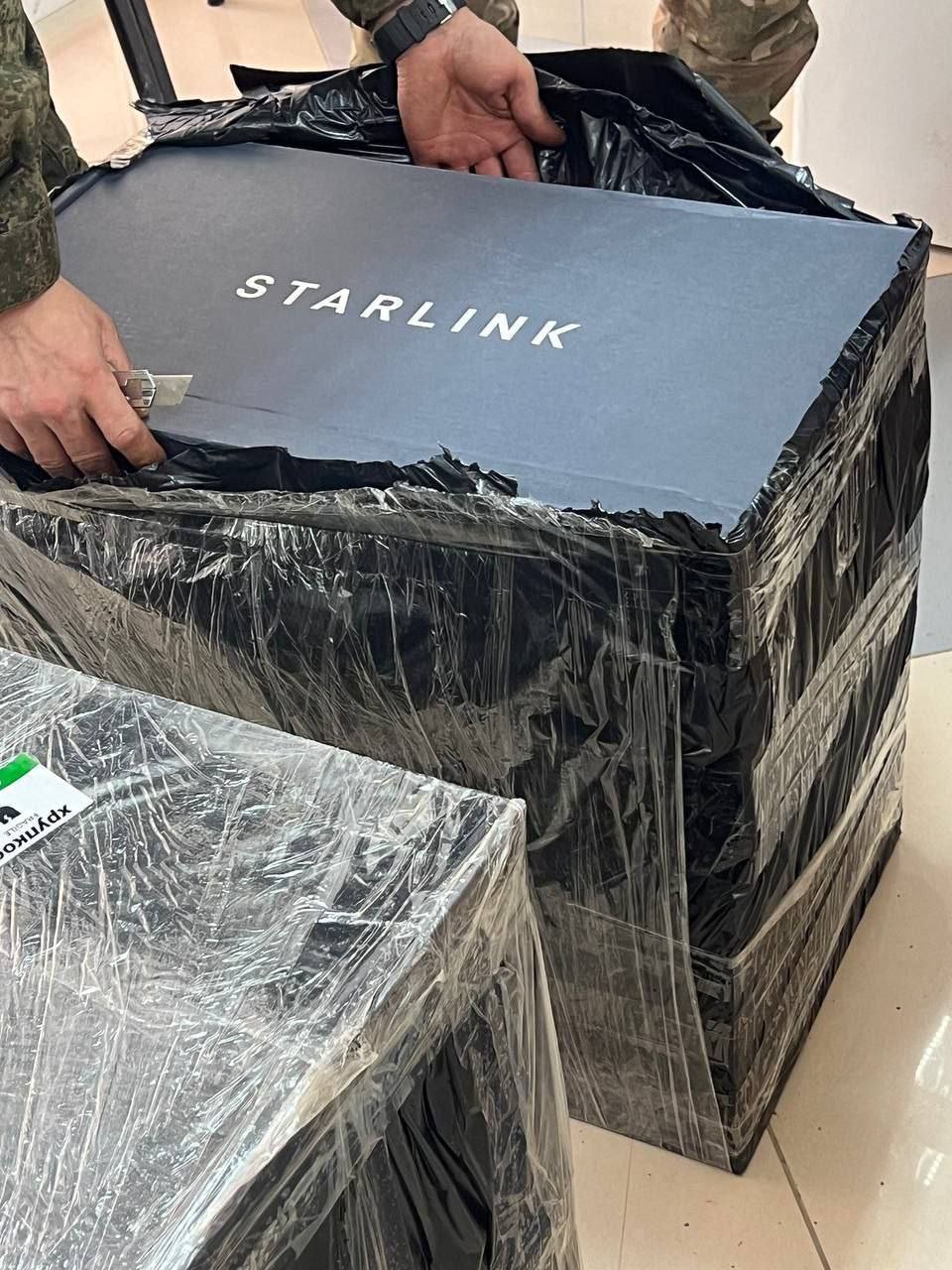
Today he also posted an image of an alleged broken Starlink device removed from a crashed Russian drone.

The situation highlights a recurring tension in modern warfare. Commercial systems designed for civilian connectivity are increasingly embedded in military operations, often faster than governance frameworks can adapt. Ukraine’s collaboration with SpaceX is an attempt to contain that risk without losing access to a system it still depends on for its own defence.


Tags: DronesRussiaspacexstarlinkUkraine
Previous Post

Europe’s cloud future is about collaboration

Next Post

Move fast — but never break trust: Inside Lakestar’s defence retreat in St. Moritz

John Biggs

John Biggs

John Biggs is an entrepreneur, consultant, writer, and maker. He spent fifteen years as an editor for Gizmodo, CrunchGear, and TechCrunch and has a deep background in hardware startups, 3D printing, and blockchain. His work has also appeared in Men’s Health, Wired, and the New York Times. He has written nine books including the best book on blogging, Bloggers Boot Camp, and a book about the most expensive timepiece ever made, Marie Antoinette’s Watch. He lives in Brooklyn, New York. He runs the Keep Going podcast, a podcast about failure. His goal is to share how even the most confident and successful people had to face adversity.

Related News

100 Startups to Watch in 2026

100 Startups to Watch in 2026

byLeslie Hitchcockand1 others
March 17, 2026

Defence has long been the domain of primes. The war in Ukraine has changed that by introducing the tech sector...

person on top of brown steel frame

How Ukraine is transforming its battlefield data into a world-first AI training hub

byThomas Macauley
March 16, 2026

After four years effectively as an all-in-one laboratory, training ground and live arena for technology to fight its own war,...

US and UK ballistic missile defence capabilities brought into focus as Iran lashes out against region

US and UK ballistic missile defence capabilities brought into focus as Iran lashes out against region

byTom Pashby
March 12, 2026

The ballistic missile defence capabilities of the US, UK and other allies have been put to the test as the...

Scout Ventures raises $125 million to expand investment in defence and dual-use tech

Scout Ventures raises $125 million to expand investment in defence and dual-use tech

byJohn Biggs
March 11, 2026

Scout Ventures has closed its fifth fund with $125 million in commitments, according to an announcement released March 10. The...

The signal is the weapon: How mobile networks became infrastructure for modern war

The signal is the weapon: How mobile networks became infrastructure for modern war

byJohn Biggs
March 11, 2026

Mobile World Congress (MWC) has been around since 1987. The conference, part trade fair, part consumer electronics expo, and part...

Hadean, the AI battle simulation startup, closes bridge round ahead of a Big B

Hadean, the AI battle simulation startup, closes bridge round ahead of a Big B

byIngrid Lunden
March 11, 2026

London-based Hadean began life several years ago as an AI gaming startup working on VR and video simulations, but it...

Hackathon-ing our way to a new defence ecosystem

Hackathon-ing our way to a new defence ecosystem

byFiona Alston
March 11, 2026

It takes a village to raise a child, but when it comes to building the next generation of defence in...

Lux Aeterna raises $10 million to build reusable, returnable satellites

Lux Aeterna raises $10 million to build reusable, returnable satellites

byJohn Biggs
March 10, 2026

Lux Aeterna, a Denver based space infrastructure startup, just raised a $10 million seed round led by Konvoy Ventures with...

Load More
Next Post
Move fast — but never break trust: Inside Lakestar’s defence retreat in St. Moritz

Move fast — but never break trust: Inside Lakestar's defence retreat in St. Moritz

a factory filled with lots of orange machines

The second valley of death

Most viewed

InVeris announces fats Drone, an integrated, multi-party drone flight simulator

Uforce raises $50M at a $1B+ valuation to build defence tech for Ukraine

Auterion, the drone software startup, eyes raising $200M at a $1.2B+ valuation

Twentyfour Industries emerges from stealth with $11.8M for mass-produced drones

Senai exits stealth to help governments harness online video intelligence

Palantir and Ukraine’s Brave1 have built a new AI “Dataroom”

Resilience Media is an independent publication covering the future of defence, security, and resilience. Our reporting focuses on emerging technologies, strategic threats, and the growing role of startups and investors in the defence of democracy.

  • About
  • News
  • Resilence Conference
    • Resilience Conference Copenhagen 2026
    • Resilience Conference Warsaw 2026
    • Resilience Conference 2026
  • Guest Posts
  • Subscribe
  • Privacy Policy
  • Terms & Conditions

© 2026 Resilience Media

No Result
View All Result
  • About
  • News
  • Resilence Conference
    • Resilience Conference Copenhagen 2026
    • Resilience Conference Warsaw 2026
    • Resilience Conference 2026
  • Guest Posts
  • Subscribe
  • Privacy Policy
  • Terms & Conditions

© 2026 Resilience Media

This website uses cookies. By continuing to use this website you are giving consent to cookies being used. Visit our Privacy and Cookie Policy.