The race to build better defences is also a race to secure the right building blocks — including the costly materials needed to produce equipment. A “deep chemistry” startup called Uplift360 has come up with a novel way to procure the latter, initially for one material in particular — carbon fibre — and it’s got a compelling circular economy angle, to boot.
Now, to get to work, it has secured a seed round of €7.4 million ($8.7 million) from tech venture fund Extantia, alongside the NATO Innovation Fund (NIF), Promus Ventures and Fund F.
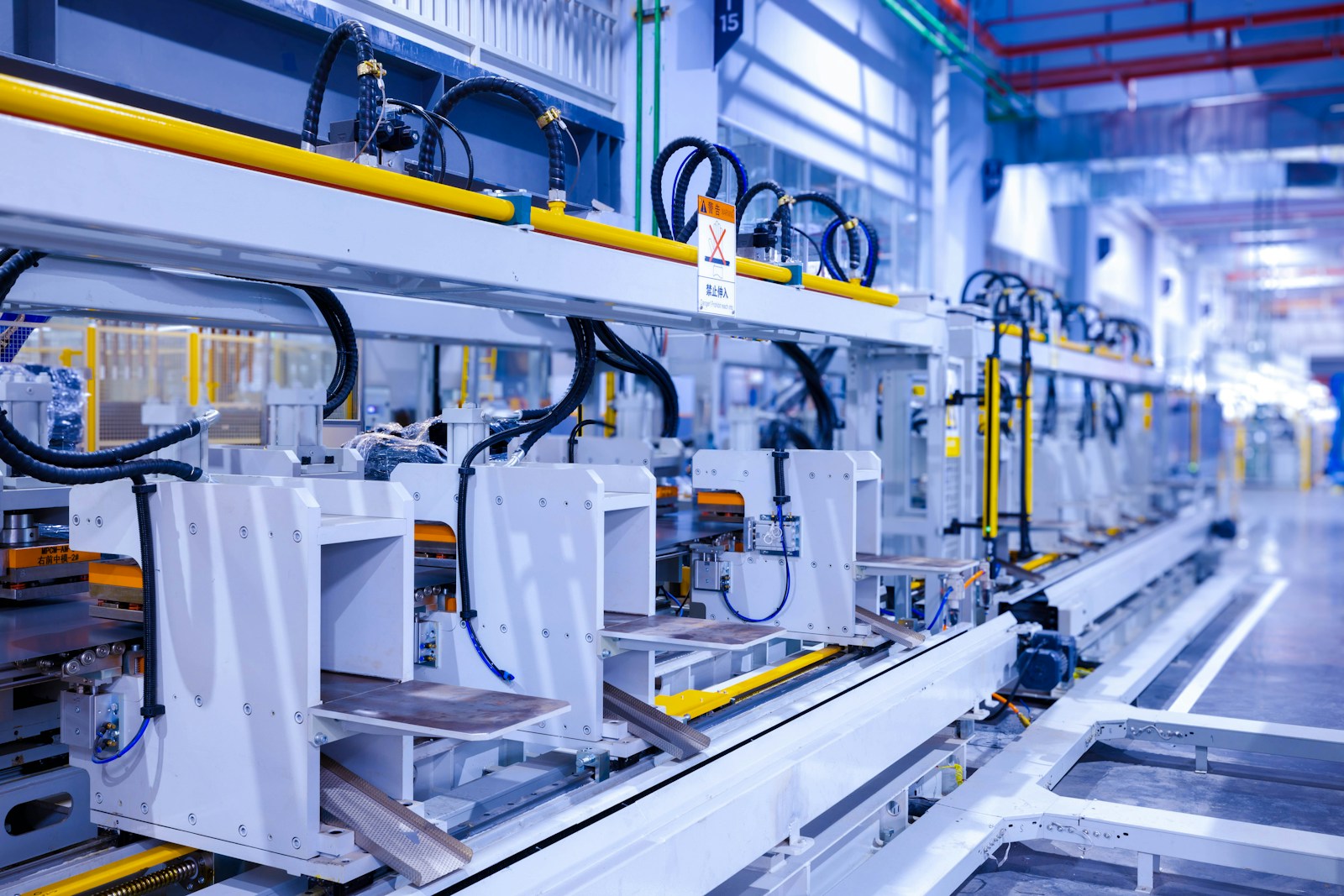
Uplift360’s first effort is a system that applies a chemical process to take the glues out of composite waste, which is typically from recovered old equipment. The material produced out of that process — carbon fibre — is then ready to be re-used to make new products.
Uplift360 claims that the quality of the material it makes in this process is as good as a “virgin” carbon fibre that might be produced in the more traditional way, out of petrochemicals.
The process has very obvious applications in creating materials to produce defence equipment, but also in a number of other industrial verticals such as automotive, consumer electronics and energy. In an example of how this could work in defence, three months ago the startup ran a project with the prime giant Leonardo, building a new drone arm entirely out of carbon fibre extracted from a disused wing of a Merlin helicopter.
Old systems really are being disrupted and replaced by new ones.
Now Uplift360 — which is co-headquartered in Bristol and Luxembourg — will use the seed funding to set up its first production facility, a smaller pilot operation in the Bristol area that will be coming online in around five months’ time and focused specifically on extracting carbon fibre.
From there, the strategy goes in two directions. Uplift360 plans to build a larger facility for full commercial production, and to carry out more research and development towards recovering other materials that are costly to produce from scratch, impossible to dispose of except through landfill, but reusable if they can be recovered. These will include aramids such as Kevlar and further down the line rare earth minerals. (Its location in Bristol puts it into close proximity to a number of potential customers and current partners like Babcock.)
Both of those future efforts will likely mean raising another, bigger round down the line, said Sam Staincliffe, the CEO and co-founder, in an interview.
“Fundable not funded”
Uplift360 is seeing a promising lift of its fortunes right now, but it wasn’t always this way.
Staincliffe told me that she and her co-founder Jamie Meighan first came up with the idea in 2021, after both worked for years in defence and adjacent fields (Staincliffe as a civilian and Meighan as an officer in the RAF) and saw first-hand the huge paradox of hard assets: equipment is costly to make, and costly to dispose of, yet potentially very valuable even in their disused state if someone could figure out how to extract the materials out of the old equipment, to then use in producing new equipment.
Neither co-founder is technical, but they had made contact with chemists to search for such a method. The first part of that work was bootstrapped: they couldn’t raise the money to get the idea off the ground.
A proposal that the pair had sent around defence organisations set up at the time to back “small businesses” (effectively, startups and SMEs) had come back with the words “Fundable, not funded”, she recalled. “Someone even said, ‘fund this now,’” she said with a laugh. But the fact was that circular economy was not on their radar or deemed to be a high enough priority at that time. VCs, too, were largely still keeping anything with whiff of defence at arm’s length.
Jump to 2022, and technology — by way of drones and AI — was quickly shaping up to be a major part of how Ukraine was fighting against Russia, and the startup’s funding fortunes began to turn.
“It took us nine months to find the right people who said, ‘we want this and will support this,’” she said.
Uplift360 spent a further couple of years tapping R&D teams at different universities and ultimately settled on working with experts out of Imperial College, Bristol University and in Luxembourg. Chemists, Staincliffe said, painstakingly combed through many approaches to find the solution (literal and figurative) that would work to remove glue but retain carbon fibre.
Notably, while machine learning and other data science was used to ease the process along, at the end of the day, she said it was about human chemists rooting out different ideas and trying things that only a human could think to do. “Deep chemistry” is how she described this area of deep tech.
Yet this is not just about science for the sake of it. I asked about the business model, and Staincliffe noted that the company charges customers to take away their industrial waste, just as a disposal company would do, and the carbon fibre product that comes out of its chemical process is then resold directly by Uplift360, giving it two revenue streams. She said that it has a number of organisations lined up as customers for when it gets the full production system up and running.
NIF’s involvement in this funding round underscores its focus on deep tech, which was highlighted as a key area where NIF wanted to invest more when we interviewed partner Patrick Schneider-Sikorsky last year. But also, it points to how the group continues to widen its scope to find startups that support the idea of resilience for its Member States. (Carbon fibre essentially needs petrochemicals to be produced the traditional way; this company cuts that needs out of the supply chain.)
“We have a very broad mandate for how things fit [into our thesis],” NIF partner Sander Verbrugge told Resilience Media in an interview. “The key for us is that Uplift360 solving a multitude of problems but also be a perfect dual use tech.”
But while there are indeed a number of products where carbon fibre is used today across a wide range of verticals, defence, Staincliffe said, remains its primary focus. In addition to building new kit, there is a lot of work to do in cleaning up the mess of attritable systems and cabling littering battlefields. She noted that the startup is currently in discussions around cleanup and rebuilding in Ukraine.
“The opportunity reconstruction is massive but urgency growing on multiple fronts,” said Nina Litman-Rovena, an investment manager at Extantia. “Composite waste, wind turbines, and more — the opportunity is way larger. Uplift360 is really the perfect example of how a tech can tick all of the boxes.”