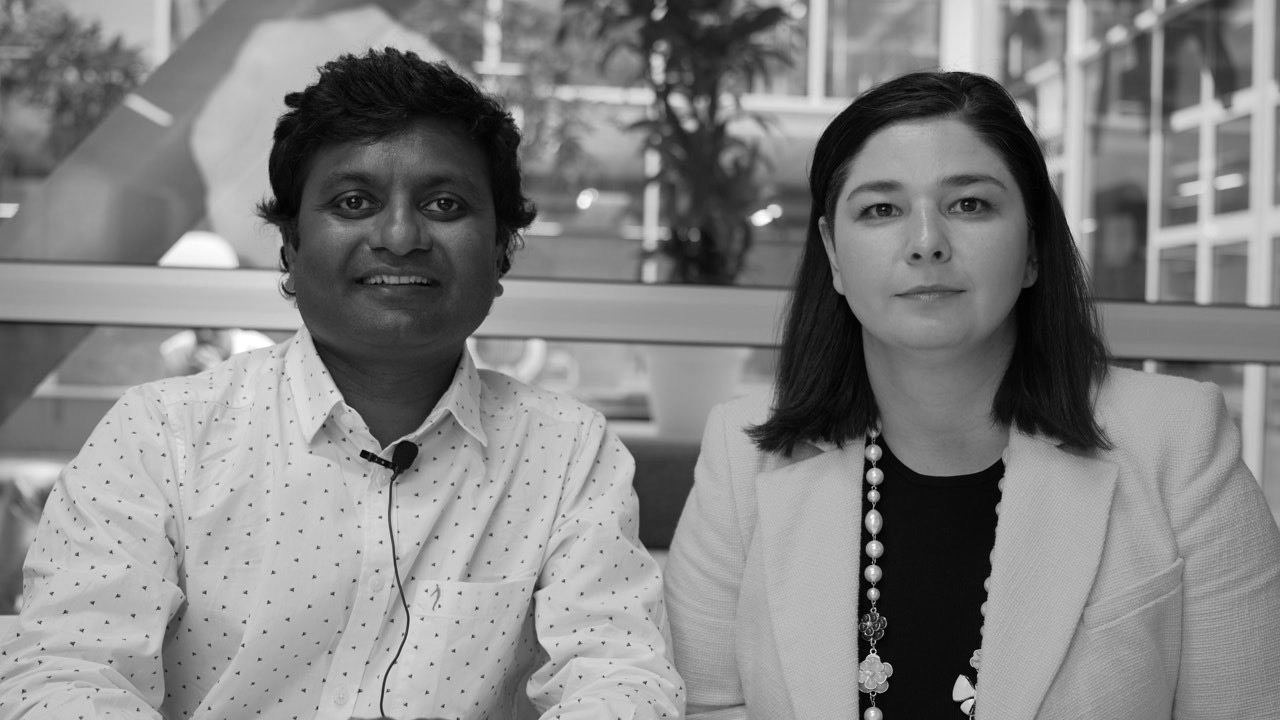
Joining the fight to dispel disinformation Norway’s Factiverse is has joined the defence tech ranks with the NATO DIANA programme. CEO Maria Amelie talks to Resilience Media’s Fiona Alston about getting the facts right and her own fight for democracy.
Factiverse is a fact-checking start-up from Norway, Stavanger and Oslo to be exact. Founded by Vinay Setty a professor in machine learning at University of Stavanger, who started researching the project in 2015 – pre-public AI chatbots, he was later joined by co-founder and CEO Maria Amelie, former journalist and author.
Amelie makes something very clear, Factiverse does not use GenAI.
The catalyst for the project, now start-up, was their concerns over disinformation. They wanted to build an ‘output reliability tool to detect content’ but things have moved on from those initial thoughts, and thanks to a place on a NATO DIANA programme, they have moved towards the ‘disinformation monitoring and analysis space’.
Finance has been considered but the areas Factiverse cover are media, government and defence. The tool can also check statements in 114 languages, which Amelie puts down to the company being European based rather than “American focused where they concentrate mostly on English”.
About Factiverse
Factiverse feed their AI model with trustworthy high quality data keeping its ‘big brain’ healthy and sell the API to companies and government organisations, to run as a fact-checking tool that saves time and helps people make educated choices.
Amelie compares the Factiverse model to GenAI which requires a lot of data, tends to create hallucinations and can be easily ‘data poisoned’ telling us “someone else can just feed it with lots of malicious data and then you are going to get wrong answers in ChatGPT.”
“Our model is classic machine learning, natural language processing – we’ve fed it with thousands of high-quality articles and checked facts – because it thinks intuitively it provides you with the most credible source on the topic, not the just the first things it finds online like a GenAI chatbot will,” she explains, adding it also doesn’t provide you with broken links.
Where is all this fine information coming from, and how are they sure they are feeding the brain all the good stuff? Well, Factiverse partners with Nordic fact checking organisations through the EDMO (the EU Digital Media Observatory) Nordic hub called Nordis.
“We use some research data sets that come from fact checking organisations and we only look into fact checking organisations that have been certified with the International Fact Checking Network (IFCN) every year,” she explains.
Factiverse is not alone on the mission as a fact checking tool but rather than seeing other companies as ‘competitors’ Amelie rather suggests they could be allies, particularly in the defence sector.
“Other disinformation monitoring companies that are working on defining and analysing narratives and that are already working with the defence sector – companies like Blackbird or Cyabra, they could be a competitor, but they can also buy some of our APIs as well and integrate, and use them to analyse information,” she says.
In terms of clients Factiverse is working with the Norwegian national broadcaster, NRK, ahead of the September elections. “We are working on helping them to analyse more information in real time, for example, video and audio during TV debates, and also radio programs – we’re gathering all that and then analysing it quite quickly,” she says.
Scaling the company will be the next move, is Norway the place that a startup in this sector can thrive? On the media side of things Amelie says that Norway’s media innovation is strong, and the media clusters, particularly in Bergen have been instrumental to Factiverse. In terms of talent, they have already begun a pipeline.
“We find a lot of good technical talent here. We are connected to the university, so we’ve had about 40 students writing their thesis with us, in the past four years, in machine learning. We have great resources and potential talent pool once, once we get to the seed round of funding.”
Amelie’s backstory
When Amelie was in her early teens she arrived in Finland, with her parents, from Russia’s North Ossetia, by way of Moscow, as refugees. The move was unsuccessful so they later arrived in Norway. Again they failed to claim asylum but Amelie, however, was accepted to university in Norway. During her five years of study, without papers, she was unable to make any headway with the situation.
“I consulted a lot of lawyers, but they said there’s no hope for you in this situation. You’re just going to be deported, and not only going to be deported, but you’re also going to be expelled from Schengen for at least ten, maybe 20 years. I decided I might as well do something useful about that, so I wrote a book about my life in Norway.”
Amelie’s book became a best seller, alerting people to what appeared to be a broken system in Norway. Others recognised themselves in her story and so begun a movement to change the rules.
“They did deport me, actually,” she says. “But because there was so much support from the general public, and the Supreme Court was on my side, I was allowed to come back three months later on a new law that they created specifically, not just for me, but people in this situation. I came back on a work permit to work as a technology journalist.”
Does this experience influence her drive to succeed with Factiverse? Of course it does.
“Even though I was a teenager when I left, I remember how powerful narratives spread and influence you.”
“I was allowed to stay [in Norway] because people voiced their opinion, they said this is not fair – it was just so much democracy in action. And I think it’s amazing that people believe in democracy.”
“One of the motivations for me and my co-founder, and the team as well, is we need to do something. We have to work for it [democracy] every day, otherwise we’re just going to lose it,” she says.
How the model works
Much like we need to work to keep democracy, Factiverse needs to work to keep ‘the brain’ fed. Improving the model is a process that’s ongoing and the nutrition of good facts and reliable data are fed to it a few times a year.
“If you want to fact check something, like a sentence about Norway spending x amount of GDP on defence, for example, we search in real time, online and find sources. We’re not searching in just a database, we are actually searching in Google, in Bing, in the Semantic Scholar (a research database of articles) – and we can also connect proprietary databases that customers want to search in,” Amelie explains.
“We train the model to show you sources that previously have been more critical or more credible on the topic that you’re looking into,” she says.
She goes not to explain that it’s not always about what is true or false but what information can help ‘empower and understand’ topics.
“Instead of some AI telling you what’s true or false we say it’s disputed or it’s supported – and then we say the source that is disputing this is more to the left politically, or maybe more to the right – or this data set is showing that this source is has a high trust score or low trust score,” she explains.
The move to add the defence sector has shaped new challenges for Factiverse but in some cases half the battle is already won.
“With media, we actually have to spend quite a bit of time educating them about the challenges of disinformation, especially AI general disinformation, and with the defence and government sector, they are in it already – they are concerned about cognitive warfare and about everything,” she explains.
“What we see that they need is not just analysing capabilities, but also monitoring capabilities, they don’t just need help analysing news, but also social media,” she adds.
Investors include Validé, the University of Stavanger and some angels, to date raising around $1.5M. Factiverse have also been able to avail of some grant funding for R&D and says it currently has some runway as it begins its build towards a seed funding round.
Amelie says that that because of the NATO DIANA programme they have been fortunate to have received interest from as many 40 investors, so another battle has been halved before she begins raising a seed round later this year. For now, the focus is on securing customers and keeping those investors updated.