Ukraine is working directly with SpaceX to prevent Russian forces from using Starlink terminals to guide long range drones, according to Ukrainian officials posting on LinkedIn. The effort follows repeated discoveries of Starlink equipment attached to Russian drones recovered after attacks inside Ukraine. Kyiv says the issue has moved from isolated incidents to a recurring operational problem.
Ukraine’s defence minister, Mykhailo Fedorov, said the government has been in contact with SpaceX leadership and credited the company with responding quickly once the evidence was shared.
“The Ministry of Defence, together with SpaceX, is already addressing the issue of Starlink use on Russian UAVs,” said Fedorov. “Within hours of reports that Russian drones equipped with Starlink connectivity were operating over Ukrainian cities, the Ministry of Defence of Ukraine team promptly contacted SpaceX and proposed concrete ways to resolve the issue.”
“I am grateful to SpaceX President Gwynne Shotwell and personally to Elon Musk for their swift response and for immediately beginning work on a solution,” he wrote.
Polish Deputy Prime Minister and Minister of Foreign Affairs Radosław Sikorski called for Musk to stop allowing Starlink access to Russian drones in a post on X.
“Hey, big man, Elon Musk, why don’t you stop the Russians from using Starlinks to target Ukrainian cities. Making money on war crimes may damage your brand,” he said.
The Institute for the Study of War wrote that Russia’s drones were benefiting from Starlink’s tracking and networking capabilities, thereby allowing them to fly further into Ukraine, Poland, and the rest of Europe.
“Russian forces are increasingly using Starlink satellite systems to extend the range of BM-35 strike drones to conduct mid-range strikes against the Ukrainian rear,” they wrote on X.

The drones are being used to target civilians deep within Ukraine and experts have ascribed a recent attack on a Ukrainian passenger train to a BM-35 equipped with Starlink technology.
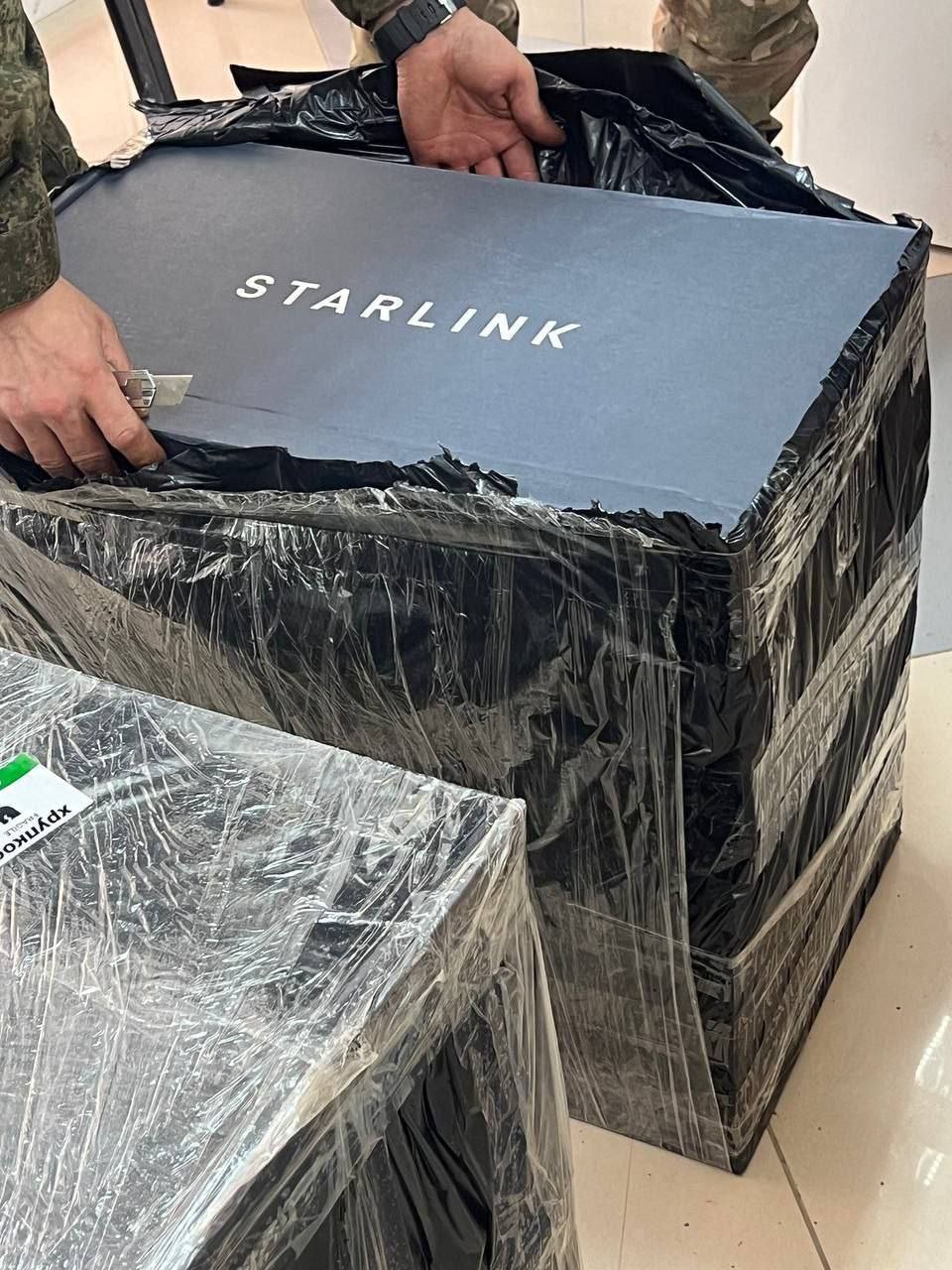
SpaceX has denied selling or shipping Starlink terminals to Russia and has stated publicly that it does not conduct business with the Russian government or military. Musk himself said that the company was not selling to Russia stating in February 2024:
“A number of false news reports claim that SpaceX is selling Starlink terminals to Russia. This is categorically false. To the best of our knowledge, no Starlinks have been sold directly or indirectly to Russia,” he wrote.
According to Serhiy Beskrestnov, a newly appointed adviser to the defence ministry, technical countermeasures from Ukrainian forces alone are unlikely to solve the issue.
“The complexity of this process lies in the fact that Starlink cannot be suppressed by electronic warfare systems and even their position in flight cannot be detected by electronic reconnaissance equipment. Therefore, we initially realized that the main solution to the problem lies in organizational matters,” he wrote. “We already have hundreds of confirmed cases of UAV attacks on Starlink satellites not on military targets, but on peaceful rear and frontline cities. Including residential buildings. In fact, this is terrorism using modern peaceful communication technologies. We are preparing a comprehensive solution, both quick and temporary, and more systematic and long-term.”
Today he also posted an image of an alleged broken Starlink device removed from a crashed Russian drone.

The situation highlights a recurring tension in modern warfare. Commercial systems designed for civilian connectivity are increasingly embedded in military operations, often faster than governance frameworks can adapt. Ukraine’s collaboration with SpaceX is an attempt to contain that risk without losing access to a system it still depends on for its own defence.