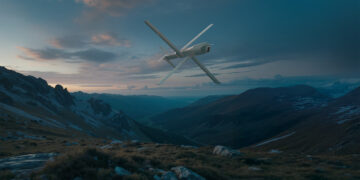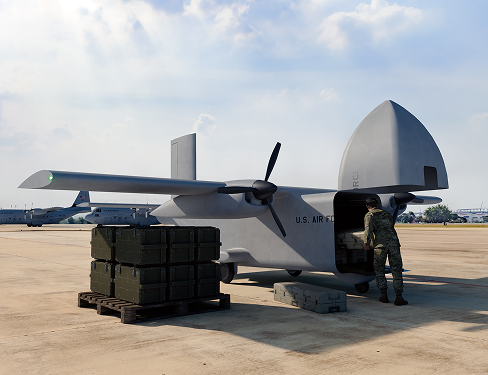
Aerospace engineer Arthur Dubois, Grid Aero’s CEO, argues that autonomy in the air coming faster than autonomy on our roads. Airspace is more structured and predictable, and, as he notes in our interview, “kids don’t jump out into the middle of the road.” The challenge, then, is not the sophistication of the algorithms so much as proving their reliability. Aviation demands demonstrable performance and his planes — essentially stripped down propeller transport aircraft with no cockpits — offer amazing durability and distance while reducing human risk.
Grid Aero is building a class of aircraft that sits in the important gap between traditional cargo planes and small drones. The company, founded just over a year ago, is developing a large autonomous aircraft capable of carrying thousands of pounds over thousands of miles. In aviation terms, this is a Group 5 unmanned aircraft system, closer in size and capability to a small plane than to what most people think of as a drone.
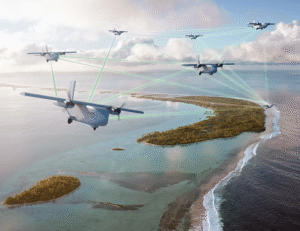
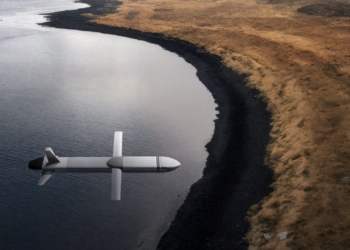
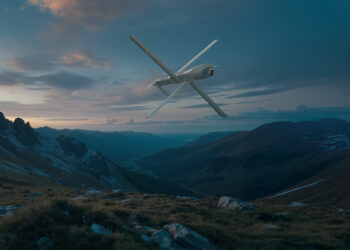
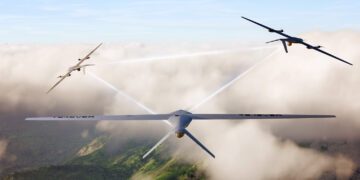
Grid Aero’s aircraft looks like a conventional plane, with wings and twin engines, but without a cockpit or any of the systems required to keep humans alive onboard. By removing life support, crew safety systems, and pilot accommodations, the aircraft becomes simpler, cheaper, and more expendable. These aircraft are meant to operate in environments where loss is a possibility.
“It’s really just like this super bare bones aircraft that’s designed to carry heavy payloads to the middle of nowhere, thousands of miles into the Pacific if you have to,” said Dubois. “And that’s really where the innovation comes in on the logistics front. It is this combination of low cost, pretty big aircraft that can fill a logistics mission that previously only was filled by manned aircraft.”
Dubois said that what operators need instead is a way to move meaningful payloads over long distances using drones that are low cost enough to risk. Grid Aero’s aircraft is designed to sit exactly at that intersection.
While the aircraft is capable of fully autonomous flight from takeoff to landing, Grid Aero does not view autonomy as the only option. Human operators can interact with the system, reroute flights, or take remote control when needed. The company is currently in the prototype phase, with a full-scale aircraft undergoing testing.Dubois is engaging both military and commercial customers, but widespread deployment is still several years away. Dubois estimates that it will be roughly five years before these aircraft become visible to the general public, largely because early operations will be intentionally kept out of populated areas.
The most interesting aspect is, quite, simply, the reduced complexity of these drones. While they look impressive, Dubois points out that it’s the mesh network and the sensors that make them much more than any other airplane in the sky. And it’s this melding of simplicity, capacity, and autonomy that makes Grid Aero a fascinating company.