One theme emerging across the defence tech ecosystem in Ukraine this year is an increasing number of international partnerships for manufacturing and more. Today comes news of the latest of these: The Fourth Law — the Kyiv startup that builds autonomy technology for aerial and other hardware systems, as well as hardware of its own — has raised some money from a strategic partner: Axon.
The US company is probably best known for its Taser devices used by public safety, but it has developed a wide range of other technology, including an extensive drone business. It’s been making other investments in Ukrainian startups: last week Farsight Vision disclosed that Axon has invested in a seed round for the startup.
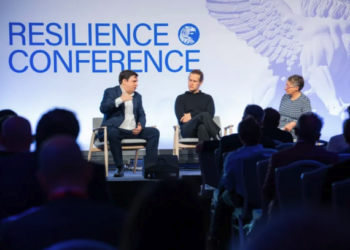
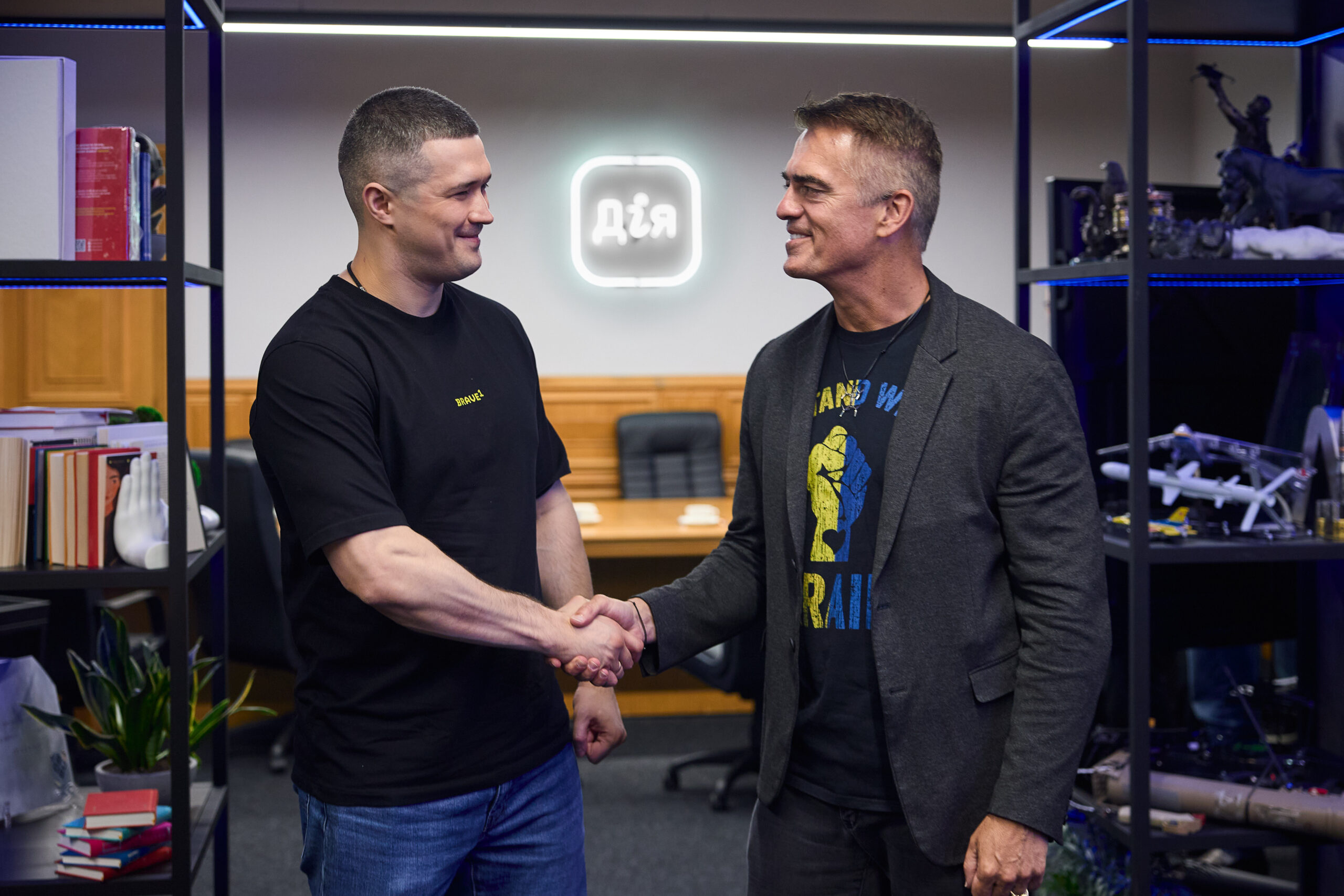
Yaroslav Azhnyuk. The Fourth Law’s CEO and founder, said he first met Axon through BRAVE1, Ukraine’s defence tech cluster. “After [Axon CEO] Rick Smith met [Ukraine defence minister] Mykhailo Fedorov, BRAVE1 introduced our teams and supported the process that led to this investment,” he said in a statement. The ministerial connection is an important one: the picture that TFL provided to Resilience Media along with this news is of Fedorov (not Axhnyuk) and Smith, pictured above.
Fedorov was digital minister at the time of that introduction, and it’s his involvement in helping shape how defence tech was evolving and playing a critical role in Ukraine’s war effort that arguably led him to recently taking on the role of leading the defence ministry. It will be worth watching the progression of the existing partnerships and whether we see more of these emerging in coming months, both to support the war effort, but also to see how Ukraine’s industry positions itself in a reconstruction economy, eventually.
The companies did not disclose the amount of funding, but since Axon is publicly traded in the US, that amount might come out in a future filing. TFL also declined to say how much it has raised overall (it noted a previous round in July 2025 without disclosing investors or amount); nor did it provide a valuation for its company.
Last of all, the companies did not detail how they would work together beyond making and taking investment. Typically strategic investments come with the potential of the businesses collaborating as well.
Ukrainians have been fast off the mark in taking technological know-how and applying it to helping the country fight against Russia, which invaded Ukraine and has been waging a brutal war against it for the last four years. Ukraine from the outset was outnumbered when it came to traditional artillery and troops, and Russia has thrown giant resources into that remaining the case, so that has led Ukraine to be particularly innovative in leveraging technology to make up for the shortcomings.
The Fourth Law is a prime example of how Ukraine has mobilised to strong effect. Azhnyuk’s previous startup, PetCube, helped users keep an eye on their furry loved ones — a goal that feels like a world away from where Ukrainians find themselves these days. In 2022, he turned his technical and enterprising talents towards helping Ukraine fight this war, and he’s done it with flying colours.
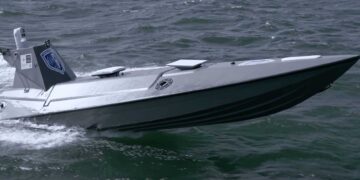
The company says that more than 50 Ukrainian military units across the front line are now using its UAVs and terminal guidance and cruise hardware (used to control and enhance the functionality of other unmanned equipment, including interceptor drones). TFL claims it directly contributes to better mission success rates (by a factor of two to four, it says), doing so at a very competitive price point (10% of the unit cost).
But one persistent issue for a lot of Ukrainian startups has been around scaling. The war has created significant export restrictions, production constraints, and kept most international investors away.
Now that is all slowly starting to change. There more production partnerships and investments like this one with Axon getting forged, with others including a recent deal between Auterion and Airlogix; and another between Quantum Systems and Frontline. And, Ukraine is making significant efforts to establish international production hubs, both to build more equipment in less territories further from the front lines, and to begin the process of exporting that tech to other markets.
“Exporting can transform Ukraine’s defense tech industry in many ways, as there is significant excess capacity that can be utilised,” said Azhnyuk in an emailed response to questions from RM. “Currently, Ukraine has a number of technological domains where we possess strong, and in some cases, world-leading expertise. In collaboration with our international partners, we can develop advanced, integrated capabilities to bolster the defense and security of the Free World.”
For international partners, tying up with Ukraine startups gives them a window into leapfrogging competition closer to home.
“Ukraine is innovating drone technology at a pace most of the world isn’t built to match,” said Rick Smith, Axon’s founder and CEO, in a statement. “Teams like The Fourth Law are developing autonomy under real battlefield constraints, where systems are built, tested, and improved in real time. We’re investing because the world can learn how drones are developed and deployed in Ukraine, and we believe even more solutions with global relevance will emerge from the work companies like The Fourth Law are doing.”