Sunday 8 March, 2026
[email protected]
Resilience Media
  • About
  • News
  • Resilience Conference
    • Resilience Conference Warsaw 2026
    • Resilience Conference Copenhagen 2026
    • Resilience Conference London 2026
  • Guest Posts
    • Author a Post
  • Subscribe
No Result
View All Result
  • About
  • News
  • Resilience Conference
    • Resilience Conference Warsaw 2026
    • Resilience Conference Copenhagen 2026
    • Resilience Conference London 2026
  • Guest Posts
    • Author a Post
  • Subscribe
No Result
View All Result
Resilience Media
No Result
View All Result

Estonia needs to stay on guard, says Estonian Foreign Intelligence Service

Russia remains a threat, whatever happens in Ukraine, says a new public report, and cyberspace is the weakest link

Fiona AlstonbyFiona Alston
February 12, 2026
in News
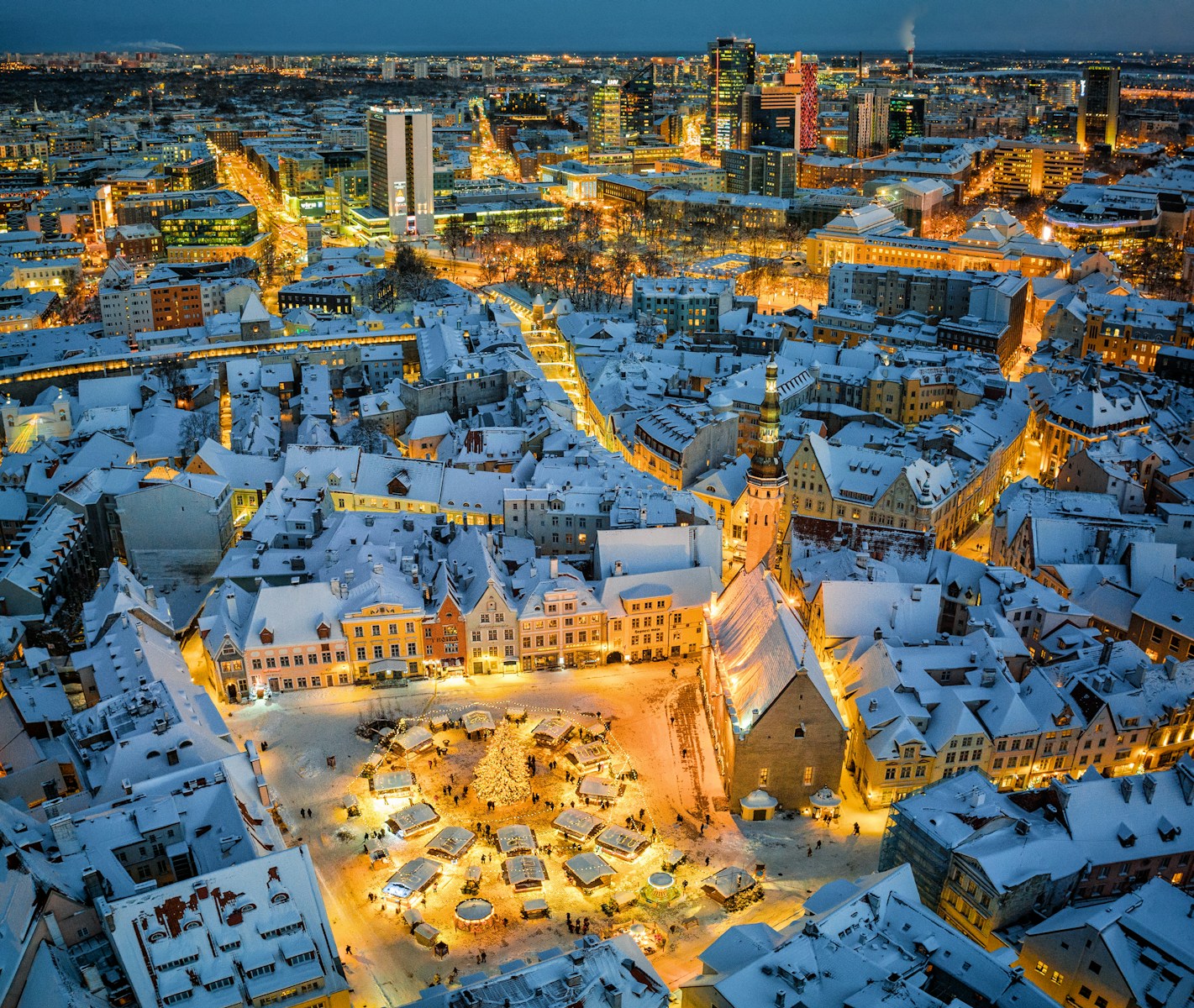
an aerial view of a snowy city at night
Share on Linkedin

The Estonian Foreign Intelligence Service produced their 2026 public report this week. Main takeaways suggest Estonia is safe from a Russian invasion for now, but no one should breathe easy. Peace talks between it and Ukraine are a mere manipulation tool, it noted, and in the meantime Russia is releasing its more heinous individuals into the wild with the intention to fight with war, regardless of their lawlessness.

You Might Also Like

Ukrainian autonomy company The Fourth Law unveils an anti-Shahed drone

Ukraine’s autonomous weapons makers push for industrial scale

MSC got the urgency right. The hard part comes next

It also said that the biggest threat to Estonia is through cyberspace and there is also a warning to Estonia to ensure identity verification when accepting job applications or academic admissions. 

In his forward, Director General of the Estonian Foreign Intelligence Service, Kaupo Rosin, said Estonia is relatively safe for now.

“In the Estonian Foreign Intelligence Service’s assessment, Russia has no intention of militarily attacking Estonia or any other NATO member state in the coming year,” he writes. “We are likely to reach a similar assessment next year because Estonia and Europe have taken steps that compel the Kremlin to calculate very carefully what, if anything, it can risk attempting. Even if no such intention exists today, our task is to ensure that this remains the case tomorrow and in the future. Russia’s military reform will enhance the capabilities of its armed forces in the years ahead. To counter this, Estonia and NATO must continue investing in defence. Russia’s calculations of the balance of power must always work to our advantage.”

The report detailed research findings that North Korean IT specialists are attempting to seek employment directly with European and American companies through false identity where they will “infiltrate the company’s IT systems and download confidential business information,” later using it for blackmail purposes to boost Pyongyang’s income.

“In this context, it is critical for Estonian companies to verify the true identity and background of job applicants from third countries. Additionally, firms must remain vigilant when operating in the cryptocurrency and blockchain sectors to ensure that their business partners are not front companies for North Korea,” said the EFIS.

Estonia has been proud of its wider AI adoption as a country, but the report warned officials to consider the serious risks of AI both at state and organisational levels. Those using AI in their organisations need “to think systematically, implement strong risk-management practices, and adopt clear policies and security measures.”

Protecting sensitive information not only belonging to Estonia but exploitation to gain access to sensitive information belonging to its allies and about countries it views as adversaries, is one of the main areas Estonia needs to defend. 

Assessments of the state of the Russian forces suggest that the aggressor is playing the long game and the ‘recent uptick in peace-talk rhetoric is merely a tactic to buy time’, trying to get on side with the States. 

“For Russia, any potential settlement must harm the interests of Ukraine and the countries supporting it. To this end, Russia continually attempts to use peace talks as a tool for manipulation,” it noted, “once again exploiting Western goodwill to justify new and broader demands.”

Russia is establishing large numbers of unmanned systems units across all services, and branches of its armed forces and training of operatives starts early. The country has an aim of training 1 million specialists by implementing UAV-specific coursework in Russian schools. The aim is to have this in place in 75% of all schools in the country by 2030. 

Russia is also doubling down on traditional military supplies. Artillery ammunition in production in the country has increased by more than seventeen-fold since 2021, indicating it is preparing for future conflicts even as its war against Ukraine continues.

As for military personnel, there has been a lot written about how Russia has been facing a shortage of ordinary Russians stepping up to fill rapidly-depleting ranks in Ukraine, and the tactics it is adopting to fill that gap. The Estonian report leans into that, too. It notes that there is evidence of the recruitment of vulnerable groups. For example, it cites stories of students coming from the African countries to study in Russia, only to be led into signing up to military positions and then sent to the frontlines to die. Russia is also sending its worst of society from its prisons to army, the report said.

“Lawlessness, abuse of power, corruption, theft, alcoholism and drug use are widespread in Russia’s armed forces. Frontline soldiers also frequently commit serious crimes against civilians,” the authors write. “Additionally, reports are increasingly emerging of illegal trafficking in weapons taken from the battlefield, which are likely to end up in the hands of criminal networks.”

Unsurprisingly, the report authors conclude that Estonia needs to keep travel restrictions and enhanced background checks in place “even after the end of the full-scale war” for people coming from Russia, who in any case need to apply for visas to come to or through Estonia. “This will also help prevent Russian war criminals from entering Europe,” it added.

Another point that the report makes on Russia is while it had a mistrust of China, and the feeling seems to be mutual, both nations feel they will gain more than they may lose from cooperation.

While the report is sobering reading, the immediate threat to those of us living in Estonia appears to be manageable through securing information systems, ID verification and stringent cybersecurity. 

You can read the full report here. 

Tags: CybersecurityEstoniaRussiasecurity
Previous Post

Germany awards Stark and Helsing contracts to deliver next-generation strike drones

Next Post

Dronamics partners with HENSOLDT to build a heavy defence drone with 24-hour endurance

Fiona Alston

Fiona Alston

Fiona Alston is a defence tech, innovation and business journalist based in Estonia. With over a decade of experience covering tech, business and sustainability for Irish and European publications, she has a knack for bringing interesting and technical stories to an everyday audience.

Related News

Ukrainian autonomy company The Fourth Law unveils an anti-Shahed drone

Ukrainian autonomy company The Fourth Law unveils an anti-Shahed drone

byJohn Biggs
March 6, 2026

Ukraine-based autonomy company The Fourth Law has unveiled Zerov, an autonomous interceptor drone built to engage long-range strike UAVs in...

Ukraine’s autonomous weapons makers push for industrial scale

Ukraine’s autonomous weapons makers push for industrial scale

byLuke Smith
March 6, 2026

In the past five months in Ukraine, Major Maksym Gromov's unit launched 608 autonomous Lupynis drones against Russian adversaries. Four...

asphalt road between trees

MSC got the urgency right. The hard part comes next

byRobin Dechant
March 6, 2026

A few weeks on from the Munich Security Conference, something many of the Resilience Media community no doubt attended, I...

NATO Innovation Fund appoints a president, Ari Kristinn Jónsson

NATO Innovation Fund appoints a president, Ari Kristinn Jónsson

byIngrid Lunden
March 5, 2026

The NATO Innovation Fund, the VC formed out of the strategic alliance of NATO countries that counts most (but not...

SkySafe Wants to Be the Air Traffic Control for Drones

SkySafe partners with major energy sector player to build out drone defence

byJohn Biggs
March 5, 2026

Southern States LLC and SkySafe announced a partnership to integrate real time drone detection and airspace intelligence into Southern States’...

Uforce raises $50M at a $1B+ valuation to build defence tech for Ukraine

Uforce raises $50M at a $1B+ valuation to build defence tech for Ukraine

byIngrid Lunden
March 5, 2026

The United Kingdom and Ukraine look like they may have minted their first defence tech ‘unicorn’. Uforce (stylised ‘UFORCE’) —...

Anthropic, OpenAI, and the new rules of Defence AI

Anthropic, OpenAI, and the new rules of Defence AI

byCarly Pageand1 others
March 3, 2026

Anthropic is facing the prospect of being frozen out of US government work after refusing to relax safeguards on how...

Periphery CEO Toby Wilmington

Periphery and Midgard partner to secure robots against capture and reverse engineering

byPaul Sawers
March 2, 2026

Modern conflict has pushed autonomous machines into some of the most hostile operating environments. Drones are intercepted mid-flight, ground robots...

Load More
Next Post
Dronamics partners with HENSOLDT to build a heavy defence drone with 24-hour endurance

Dronamics partners with HENSOLDT to build a heavy defence drone with 24-hour endurance

Wrecking-ball politics and the end of mutually-assured stability

Europe recommits to itself as US uncertainty looms over Munich Security Conference

Most viewed

InVeris announces fats Drone, an integrated, multi-party drone flight simulator

Twentyfour Industries emerges from stealth with $11.8M for mass-produced drones

Senai exits stealth to help governments harness online video intelligence

Uforce raises $50M at a $1B+ valuation to build defence tech for Ukraine

Harmattan AI raises $200M at a $1.4B valuation from Dassault

Palantir and Ukraine’s Brave1 have built a new AI “Dataroom”

Resilience Media is an independent publication covering the future of defence, security, and resilience. Our reporting focuses on emerging technologies, strategic threats, and the growing role of startups and investors in the defence of democracy.

  • About
  • News
  • Resilence Conference
    • Resilience Conference Copenhagen 2026
    • Resilience Conference Warsaw 2026
    • Resilience Conference 2026
  • Guest Posts
  • Subscribe
  • Privacy Policy
  • Terms & Conditions

© 2026 Resilience Media

No Result
View All Result
  • About
  • News
  • Resilence Conference
    • Resilience Conference Copenhagen 2026
    • Resilience Conference Warsaw 2026
    • Resilience Conference 2026
  • Guest Posts
  • Subscribe
  • Privacy Policy
  • Terms & Conditions

© 2026 Resilience Media

This website uses cookies. By continuing to use this website you are giving consent to cookies being used. Visit our Privacy and Cookie Policy.