Sunday 17 May, 2026
[email protected]
Resilience Media
  • About
  • News
  • Resilience Conference
    • Resilience Conference Warsaw 2026
    • Resilience Conference Copenhagen 2026
    • Resilience Conference London 2026
  • Guest Posts
    • Author a Post
  • Subscribe
No Result
View All Result
  • About
  • News
  • Resilience Conference
    • Resilience Conference Warsaw 2026
    • Resilience Conference Copenhagen 2026
    • Resilience Conference London 2026
  • Guest Posts
    • Author a Post
  • Subscribe
No Result
View All Result
Resilience Media
No Result
View All Result

The UK adds a low-cost anti-drone system to its Typhoon fighter jets

At a "fraction of the price" of pricey missiles, the C-UAS system is the latest effort at the MoD to bring in faster and cheaper defence tech into the mix

Ingrid LundenbyIngrid Lunden
May 17, 2026
in News
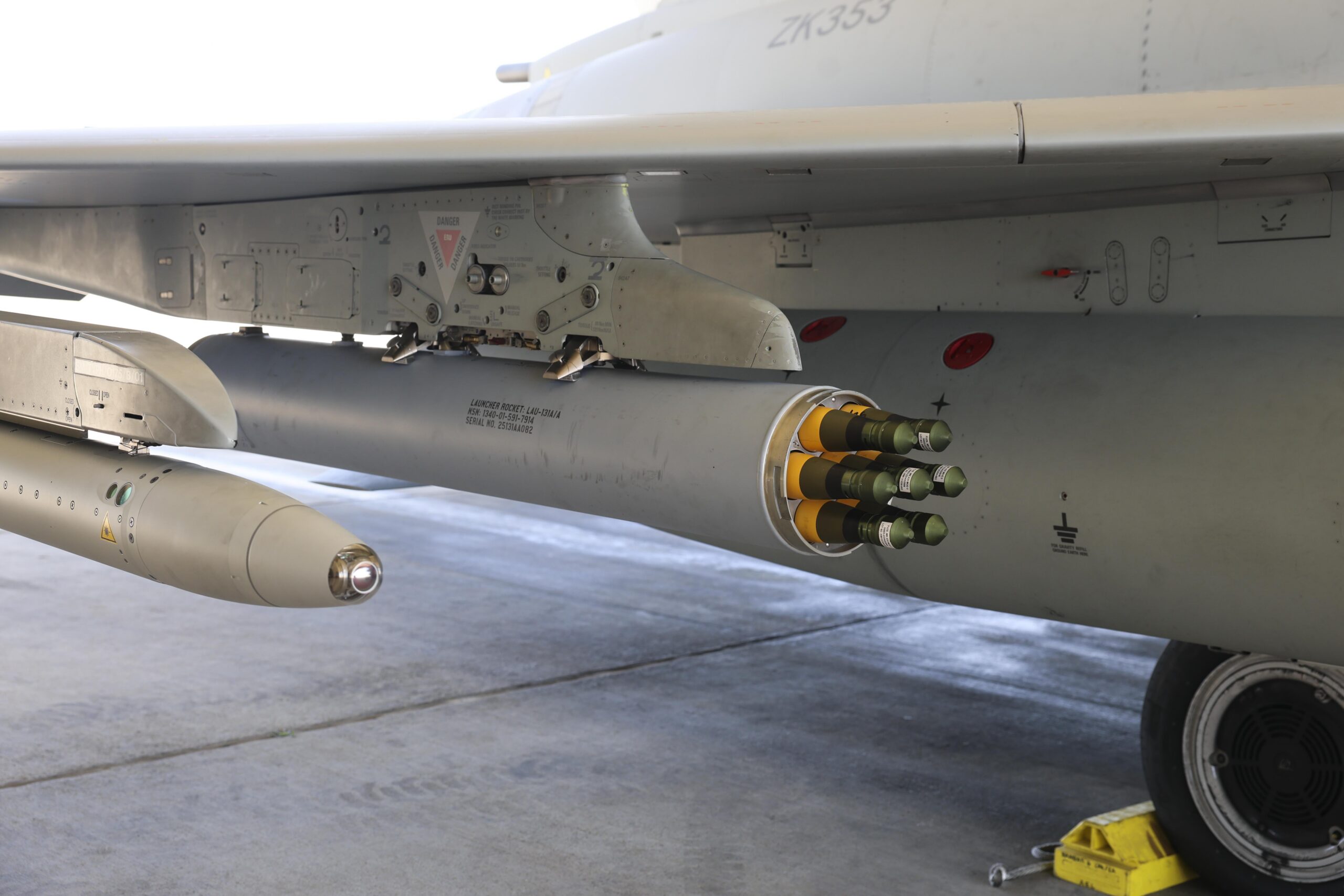
Image of the Advanced Precision Kill Weapon System (APKWS), armed on 9 Squadron RAF Typhoon aircraft deployed from RAF Akrotiri.

British citizens and regional partners will be better protected against drone attacks as the Royal Air Force deploys a new low-cost anti-drone weapon on operations in the Middle East. 
The new Advanced Precision Kill Weapon System (APKWS) will be fitted to RAF Typhoon fighter jets so that they can destroy targets precisely and at a fraction of the price of missiles currently used.

Rapid procurement and testing work by the Ministry of Defence and industry partners BAE Systems and QinetiQ has enabled the system to move from testing to deployment on operations in less than two months. 

March saw a successful test strike on a ground-based target, and RAF Typhoon pilots from 41 Test and Evaluation Squadron conducted successful air-to-air firing in April, demonstrating the system’s ability to defend against drone attacks. 

The system has now been deployed on operations in the Middle East with sorties flown by 9 Squadron RAF Typhoon fighter jets as part of the missions to defend British people, interests and partners from threats.

Image of the Advanced Precision Kill Weapon System (APKWS), armed on 9 Squadron RAF Typhoon aircraft deployed from RAF Akrotiri. British citizens and regional partners will be better protected against drone attacks as the Royal Air Force deploys a new low-cost anti-drone weapon on operations in the Middle East. The new Advanced Precision Kill Weapon System (APKWS) will be fitted to RAF Typhoon fighter jets so that they can destroy targets precisely and at a fraction of the price of missiles currently used. Rapid procurement and testing work by the Ministry of Defence and industry partners BAE Systems and QinetiQ has enabled the system to move from testing to deployment on operations in less than two months. March saw a successful test strike on a ground-based target, and RAF Typhoon pilots from 41 Test and Evaluation Squadron conducted successful air-to-air firing in April, demonstrating the system’s ability to defend against drone attacks. The system has now been deployed on operations in the Middle East with sorties flown by 9 Squadron RAF Typhoon fighter jets as part of the missions to defend British people, interests and partners from threats.

Share on Linkedin

The UK has been under pressure to modernise its military amid an increasingly heated geopolitical climate and a rapidly evolving technological landscape. Today, the Ministry of Defence announced its latest effort to meet that challenge: a low-cost anti-drone system for the Middle East, which it described as designed to destroy targets for a “fraction of the price” of the missiles that are currently being used in the region. 

You Might Also Like

Fractile raises $220 million to build powerful AI chips

Quantum Systems acquires Estonia’s SensusQ

Multiverse raises $70M to help future-proof workforces in areas like AI

The Advanced Precision Kill Weapon System (APKWS), as it is called, was co-developed by defence contractors BAE and QinetiQ. Designed to be fitted on Typhoon fighter jets, it is already deployed on nine of these for the RAF, the MoD said. 

The UK has not been actively running offensive operations in the region, but it has let the US and Israel use its bases, and so the UK military is using nine Squadron RAF Typhoon fighter jets to defend those bases, as well as other UK interests and to help allies in the region, as well as in other hotspots globally.

“This has been a superb effort working with industry to test and deploy this system in a matter of months, which will help the RAF shoot down many more drones at a much lower cost,” said Minister for Defence Readiness and Industry Luke Pollard MP, in a statement. “Our Typhoon fleet is the backbone of UK and NATO air defence, with the RAF protecting European’s Eastern flank from Russian drone incursions and defending our partners across the Middle East.”

The introduction of the new system is a significant step in how the country is shifting its defence posture. 

The wars in Ukraine and Iran and the wider Middle East have highlighted how critical AI and other new technology have become to modern warfare. In the case of drones, they are faster and cheaper to produce, and often more agile and smarter than missiles — giving much smaller forces a stronger fighting chance against their foes. 

That’s played to Ukraine’s advantage against Russia, but also to Iran’s advantage in the Middle East, where it has been using its Shahed drones to effectively shut down the very strategic Strait of Hormuz and continue to wreak havoc elsewhere, even as the US and Israel have pummelled Iran and its people on their home turf. 

Meanwhile, in the UK, the beleaguered government had been getting slammed by military experts for months over how slow it has been to respond to new and technologically-powered threats that started to become apparent especially after the war started in Ukraine. 

That criticism became even more pointed in March and April after attacks that started in Iran began spilling into UK interests, and the UK responded with more big spending on expensive legacy equipment. 

As one critic writing here put it, “The award of a £1 billion contract to Leonardo for 23 medium-lift helicopters equates to a whopping £43.5 million per unit. For the same money, UK defence could have had 50,000 of Iran’s Shaheds, if the Islamic Republic were open to expanding their export market. Not only was the decision to award this contract in contradiction to the UK’s own strategy of moving the force make-up away from ‘exquisite’ military capabilities and towards ‘consumable,’ but when have we seen reports of helicopters having an impact on the battlefields of Ukraine or Iran?”

The response has been a deliberate march, but movement nonetheless. 

The MoD noted that the introduction of the APKWS from procurement to deployment took less than two months. That included a successful test strike in March against a ground-based target as well as air-to-air firing evaluation to better simulate drone attacks. 

The MoD has also been trickling out a number of other “defence tech” advances. In early April,  the UK said it would be buying a “significant number” of Skyhammer interceptor missiles from Cambridge Aerospace in a multi-million pound deal. Also that month, the British Army announced a deal with ARX Robotics for the startup to supply it with uncrewed ground vehicles. The MoD is additionally apparently brokering meetings between Gulf states and a select group of startups and defence contractors to help those countries procure their own defence tech to defend themselves. (The list of companies includes those working on APKWS.)

And the MoD last week announced progress another another drone procurement project: it has shortlisted four companies for a tender to build “wingmen” support drones to work alongside its Apache helicopter fleet. (The shortlist includes Anduril Industries (UK) Ltd, BAE Systems Operations Ltd, Tekever Ltd and Thales UK Ltd.)

One of the other longstanding criticisms has been that the UK is not spending enough on defence, and that the percentage of GDP should be at least 3% (even if it means cuts elsewhere). Today’s announcement reaffirms that spend is still not there and currently has no plans to be. The government aims to get defence spending to 2.6% of GDP by 2027, from around 2.4% currently.


Tags: C-UASdefence techDronesUnited Kingdom
Previous Post

Fractile raises $220 million to build powerful AI chips

Ingrid Lunden

Ingrid Lunden

Ingrid is an editor and writer. Born in Moscow, brought up in the U.S. and now based out of London, from February 2012 to May 2025, she worked at leading technology publication TechCrunch, initially as a writer and eventually as one of TechCrunch’s managing editors, leading the company’s international editorial operation and working as part of TechCrunch’s senior leadership team. She speaks Russian, French and Spanish and takes a keen interest in the intersection of technology with geopolitics.

Related News

UK AI chip challenger Fractile secures $22.5M from NATO-backed venture fund

Fractile raises $220 million to build powerful AI chips

byJohn Biggs
May 16, 2026

UK AI hardware startup Fractile has raised $220 million in funding to build so-called "AI inference chips," specially designed chips...

Quantum Systems acquires Estonia’s SensusQ

Quantum Systems acquires Estonia’s SensusQ

byFiona Alston
May 15, 2026

German drone maker, Quantum Systems, is acquiring the Estonian intelligence management platform scaleup, SensusQ. No figures of the deal have...

person holding pencil near laptop computer

Multiverse raises $70M to help future-proof workforces in areas like AI

byIngrid Lunden
May 15, 2026

A UK company that has built a platform to help train people and organisations to future-proof them against technology evolutions...

Anduril raises $5B at $61B valuation in biggest defence tech deal of the year

Anduril raises $5B at $61B valuation in biggest defence tech deal of the year

byCarly Page
May 15, 2026

Defence startup Anduril Industries has pulled in a $5 billion Series H round at a $61 billion valuation, marking the...

SFC Energy AG contracted to supply field batteries to Ukraine

SFC Energy AG contracted to supply field batteries to Ukraine

byJohn Biggs
May 14, 2026

German fuel cell maker SFC Energy AG has received a €42.7 million order to supply “combat-proven” hybrid energy supply systems...

Expeditions backs frontier defence AI lab Twin Prime in $10m pre-seed raise

Expeditions backs frontier defence AI lab Twin Prime in $10m pre-seed raise

byCarly Page
May 14, 2026

European defence-focused VC firm Expeditions has led a $10 million pre-seed investment into Twin Prime, a newly launched frontier AI...

Taiwan’s drone industry is booming — thanks to international exports

Taiwan’s drone industry is booming — thanks to international exports

byPaddy Stephens
May 14, 2026

Among the low-rise offices and monochrome factories of Taichung – a sprawling industrial powerhouse in central Taiwan – nestled down...

Noah Labs is bringing air gapped AI to militaries and governments

Noah Labs is bringing air gapped AI to militaries and governments

byJohn Biggs
May 12, 2026

Murat Işık, CEO and co-founder of Noah Labs, believes the next major cyberwar will not be fought with chatbots or...

Load More

Most viewed

InVeris announces fats Drone, an integrated, multi-party drone flight simulator

Uforce raises $50M at a $1B+ valuation to build defence tech for Ukraine

Auterion, the drone software startup, eyes raising $200M at a $1.2B+ valuation

Palantir and Ukraine’s Brave1 have built a new AI “Dataroom”

Senai exits stealth to help governments harness online video intelligence

Twentyfour Industries emerges from stealth with $11.8M for mass-produced drones

Resilience Media is an independent publication covering the future of defence, security, and resilience. Our reporting focuses on emerging technologies, strategic threats, and the growing role of startups and investors in the defence of democracy.

  • About
  • News
  • Resilence Conference
    • Resilience Conference Copenhagen 2026
    • Resilience Conference Warsaw 2026
    • Resilience Conference 2026
  • Guest Posts
  • Subscribe
  • Privacy Policy
  • Terms & Conditions

© 2026 Resilience Media

No Result
View All Result
  • Home
  • About
  • Subscribe
  • Events
  • Guest Posts
  • Interview
  • News
  • Resilience Conference London 2026
  • Resilience Conference Copenhagen 2026
  • Resilience Conference Warsaw 2026

© 2026 Resilience Media

This website uses cookies. By continuing to use this website you are giving consent to cookies being used. Visit our Privacy and Cookie Policy.