
Tuesday 26 May, 2026
[email protected]
Resilience Media
  • News
    • Events
    • Interview
    • Startups
    • Venture
    • Weekly Digest
  • Resilience Conference
    • Resilience Conference Warsaw 2026
    • Resilience Conference Copenhagen 2026
    • Resilience Conference London 2026
  • About
  • Guest Posts
    • Author a Post
  • Subscribe
No Result
View All Result
  • News
    • Events
    • Interview
    • Startups
    • Venture
    • Weekly Digest
  • Resilience Conference
    • Resilience Conference Warsaw 2026
    • Resilience Conference Copenhagen 2026
    • Resilience Conference London 2026
  • About
  • Guest Posts
    • Author a Post
  • Subscribe
No Result
View All Result
Resilience Media
No Result
View All Result

UK government backs Cambridge Aerospace in Skyhammer anti-drone defence deal

Ministry of Defence is backing UK defence startup as cheap drones expose gaps in traditional air defence systems.

Paul SawersbyPaul Sawers
April 10, 2026
in News, Startups
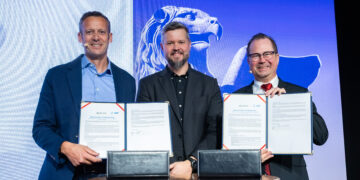
Steven Barrett, Cambridge Aeorspace and Charlie March, Never Lift on stage at Resilience Conference with Resilience Media Managing Editor, Ingrid Lunden

Steven Barrett, Cambridge Aeorspace and Charlie March, Never Lift on stage at Resilience Conference with Resilience Media Managing Editor, Ingrid Lunden

Share on Linkedin

The UK Government has announced that it’s buying a “significant number” of Skyhammer air defence systems from UK startup Cambridge Aerospace, with deliveries set to begin in May.

You Might Also Like

Germany chooses EU analytics company over US-based Palantir

Ukraine unveils first domestically developed guided aerial bomb

Britain turns on Borealis orbital defence network amid growing space threats

The announcement was made Friday in a speech by Secretary of State for Defence John Healey, who said the move forms part of a broader push to accelerate contracts with British defence startups while expanding support to Gulf allies and strengthening the UK’s own capabilities.

“We are applying the approach for UK support to Ukraine and accelerating contracts with the most innovative British businesses to rapidly expand support to Gulf partners and equip our own forces with anti-drone tech,” Healey said in a statement.

Low-cost aerial threats

The deal lands as low-cost aerial threats, particularly Iranian-designed Shahed-style drones, reshape how countries think about air defence. These systems have been used extensively in conflicts across Ukraine and the Middle East, where relatively inexpensive drones can overwhelm traditional, high-cost interception systems.

That mismatch — cheap incoming threats versus expensive defensive missiles — has pushed governments to look for alternatives that can be produced quickly and deployed in larger numbers. The UK has been leaning more heavily on domestic startups to close that gap, opening up procurement to newer entrants able to move from design to testing on compressed timelines.

Cambridge Aerospace, founded in late 2024, is one of a new group of defence companies positioning itself around that problem. Its Skyhammer interceptor is designed to target drones and low-speed missiles, with a stated range of more than 30 kilometres and a top speed of 700 km/h.

The founding team brings together figures from academia, government, technology, and defence. Alongside CEO Steven Barrett, a former MIT professor now at the University of Cambridge, the company’s co-founders include Chris Sylvan (ex-Anduril), Junaid Hussain (Auctor), and former UK defence secretary Grant Shapps, who serves as chair.

Speaking at Resilience Conference in London in 2025, Barrett confirmed the company had raised $136 million across three rounds of funding, including backing from US-based venture firm Never Lift.

Cambridge Aerospace began developing Skyhammer in January 2025 and moved into initial flight testing within six weeks, according to the company. Since then, it says it has carried out weekly test cycles aimed at refining the system’s ability to identify, track and intercept aerial targets, while integrating with different sensor platforms.
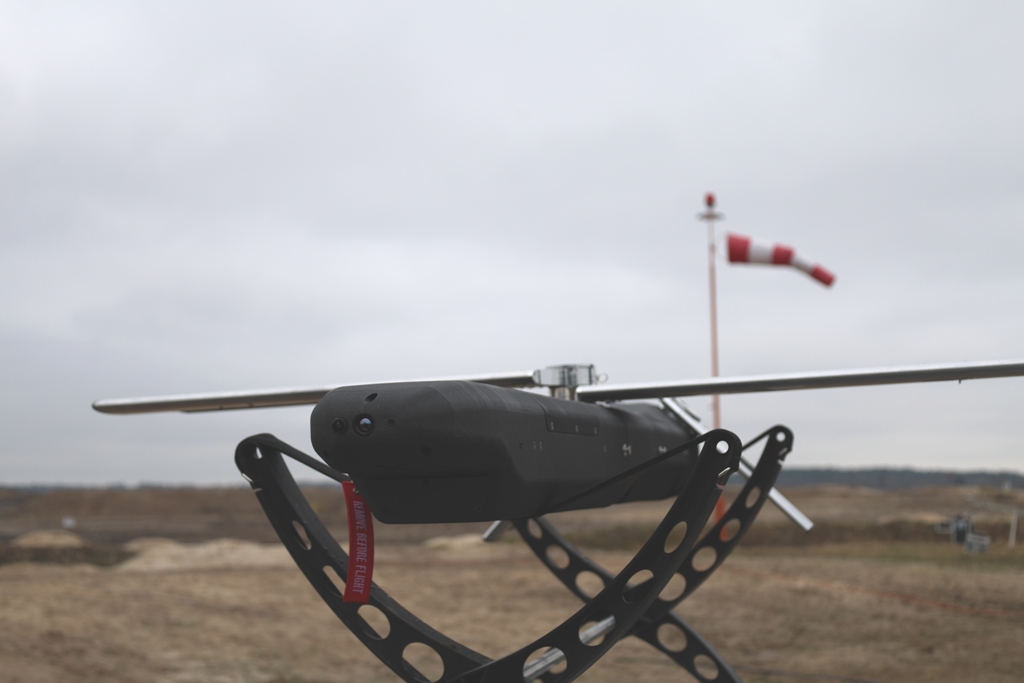
Skyhammer
Skyhammer (Credit: Cambridge Aerospace)

That pace of development sits at the centre of the government’s interest. Rather than relying solely on established defence primes, the Ministry of Defence has been widening its supplier base to include newer entrants that can iterate quickly, while also placing greater emphasis on sovereign defence technologies developed in the UK.

Healey pointed to Cambridge Aerospace as an example of that approach, tying rapid development to domestic security and industrial policy.

“Our government backing for Cambridge Aerospace is a prime case of a veteran-founded UK defence startup scaling at pace to deliver new interceptor missiles within weeks for our Armed Forces and Gulf partners, and good jobs and security here in the UK,” Healey said.

Cambridge Aerospace has also been scaling its operations in parallel. The company now employs more than 125 people across the UK and Europe, and is preparing a second production facility to increase output over the coming months.

Export ambitions

The Cambridge Aerospace contract reflects a shift in how the UK is approaching defence procurement and industrial policy. Alongside equipping its own forces, the government has been working to position domestic defence startups as suppliers to allied countries, particularly in the Gulf. Such efforts have included facilitating introductions between UK defence technology firms and Gulf states, as demand grows for counter-drone systems and layered air defence. Cambridge Aerospace was among the companies included in those recent discussions.

“With aerial threats to the UK and our allies increasing by the day, it is critical that we can defend ourselves effectively,” Barrett said in a statement. “Skyhammer was designed to do exactly that – bringing affordable mass to protect our skies.”

In addition to Skyhammer, Cambridge Aerospace is building out a broader portfolio that includes higher-speed interceptors such as Starhammer, alongside radar systems.

For the government, however, the bet is that younger companies can deliver systems quickly enough to keep pace with evolving threats, while also keeping production and supply chains within the UK.

This article was edited to include the full founding team.

Tags: Cambridge AerospaceSteven Barrett
Previous Post

LetsData catches the disinformation campaign boomerang

Next Post

Tiberius to link Ukraine-validated defence tech with UK manufacturing through GRAIL platform

Paul Sawers

Paul Sawers

A seasoned technology journalist, most recently Senior Writer at TechCrunch where his work centered on European startups with a distinctly enterprise flavour. At Resilience Media, Paul focuses substantively on the worlds of open source and infrastructure, looking at technology that helps people and society live outside the sticky ecosystems of Big Tech.

Related News

Germany chooses EU analytics company over US-based Palantir

Germany chooses EU analytics company over US-based Palantir

byJohn Biggs
May 22, 2026

Germany's Bundesamt für Verfassungsschutz (BfV) has chosen the French company ChapsVision over Palantir for its analysis tools, pushing the American...

Ukraine unveils first domestically developed guided aerial bomb

Ukraine unveils first domestically developed guided aerial bomb

byJohn Biggs
May 22, 2026

Ukraine's DG Industry has built the country's first guided aerial bomb. Defence Minister Mykhailo Fedorov announced the bomb, called the...

Britain turns on Borealis orbital defence network amid growing space threats

Britain turns on Borealis orbital defence network amid growing space threats

byCarly Page
May 22, 2026

Britain has activated a new military orbital surveillance platform six months ahead of schedule as the government warned that “space...

German couple arrested on suspicion of spying for PRC

German couple arrested on suspicion of spying for PRC

byJohn Biggs
May 20, 2026

German police have arrested nationals named Xuejun C. and Hua S. on suspicion of spying for China. German authorities have...

Corsair is a 24' Autonomous Surface Vessel capable of carrying up to 1,000 lbs over 1,000 NM.

The sea change in defence tech

byPaul Sawers
May 20, 2026

Warships are expensive, slow to build, and difficult to replace. At the same time, navies are being pushed to patrol...

UK awards 13 defence tech startups with £4M fast-track procurement deals

UK awards 13 defence tech startups with £4M fast-track procurement deals

byIngrid Lunden
May 19, 2026

The UK government is throwing its weight behind a list of defence tech startups and awarding a series of contracts...

Helsing, on the cusp of a $1.2B raise, forms space JV with OHB to build AI-based targeting systems

Helsing, on the cusp of a $1.2B raise, forms space JV with OHB to build AI-based targeting systems

byIngrid Lunden
May 19, 2026

Helsing, the European defence tech startup on the cusp of closing a $1.2 billion funding round at an $18 billion...

The UK adds a low-cost anti-drone system to its Typhoon fighter jets

The UK adds a low-cost anti-drone system to its Typhoon fighter jets

byIngrid Lunden
May 17, 2026

The UK has been under pressure to modernise its military amid an increasingly heated geopolitical climate and a rapidly evolving...

Load More
Next Post
Tiberius to link Ukraine-validated defence tech with UK manufacturing through GRAIL platform

Tiberius to link Ukraine-validated defence tech with UK manufacturing through GRAIL platform

Refute report finds coordinated election interference targeting European voters and diaspora

Refute report finds coordinated election interference targeting European voters and diaspora

Most viewed

InVeris announces fats Drone, an integrated, multi-party drone flight simulator

Uforce raises $50M at a $1B+ valuation to build defence tech for Ukraine

Auterion, the drone software startup, eyes raising $200M at a $1.2B+ valuation

Palantir and Ukraine’s Brave1 have built a new AI “Dataroom”

Twentyfour Industries emerges from stealth with $11.8M for mass-produced drones

Senai exits stealth to help governments harness online video intelligence

Resilience Media is an independent publication covering the future of defence, security, and resilience. Our reporting focuses on emerging technologies, strategic threats, and the growing role of startups and investors in the defence of democracy.

  • About
  • News
  • Resilence Conference
    • Resilience Conference Copenhagen 2026
    • Resilience Conference Warsaw 2026
    • Resilience Conference 2026
  • Guest Posts
  • Subscribe
  • Privacy Policy
  • Terms & Conditions
  • Mission Statement & Code of Practice
  • Press

© 2026 Resilience Media

No Result
View All Result
  • Home
  • About
  • Subscribe
  • Events
  • Guest Posts
  • Interview
  • News
  • Resilience Conference London 2026
  • Resilience Conference Copenhagen 2026
  • Resilience Conference Warsaw 2026

© 2026 Resilience Media

This website uses cookies. By continuing to use this website you are giving consent to cookies being used. Visit our Privacy and Cookie Policy.