Wednesday 17 December, 2025
Resilience Media
  • About
  • News
  • Resilience Conference
  • Guest Posts
    • Author a Post
  • Subscribe
No Result
View All Result
  • About
  • News
  • Resilience Conference
  • Guest Posts
    • Author a Post
  • Subscribe
No Result
View All Result
Resilience Media
No Result
View All Result

Archangel’s Daniel Carew On Why Europe Can’t Treat Defence As Niche

John BiggsbyJohn Biggs
September 5, 2025
in Interview
Share on Linkedin

When we sat down with Dr. Daniel Carew, the Canadian general partner at Archangel, the conversation started with a joke about not being the kind of doctor who could help out in an emergency. He has a PhD in Nanochemistry.

You Might Also Like

After leading Sweden into NATO, Tobias Billström eyes defence-tech opportunities at Nordic Air Defence

‘This is a revolution’: Inside Ukraine’s plans to seed 7,000+ techies across its military

Europe Can’t Just Hoard Nvidia Chips, Founders Warn – it Must Build its Own AI Backbone

“This is why it’s not on my passport, so when they call for a doctor on a plane, they don’t ask for me,” he said.

But the conversation quickly turned serious. Carew has spent his life circling defence—trained as an engineer, almost a military officer, then a PhD, consultant, and finally a venture capitalist. And through it all, the focus has been the same: building up tools that help with strategic defence.

“I was always planning to be a military engineer,” he said. “That was my dream from the very beginning. Then I won a full scholarship to the University of Toronto and decided not to do that.From the age I could read, I’ve been reading about DARPA because DARPA had all the coolest stuff.”

Now he has doubled-down on the future of defence in Europe simply because of the grave need.

Carew pointed out something blunt: for thirty years we’ve lived in a peace dividend. Post-Cold War, the U.S. sat atop the world, and Europe treated defence like a dirty word. Money flowed into consumer tech and platforms. That era is over. We’re back in what NATO officials now call “pre-war”—a multipolar world where states are less polite and competition is sharp.

For Carew, that means defence is no longer niche. It is the foundation. Nations that control supply chains, space data, drone technology, and industrial production will set the terms of global trade and power. Europe, he argues, must learn the lesson the U.S. and China already know: defence is the on-ramp for technology and any country not focused on defence is a country that will end up defenceless.

“I’m using defence sort of loosely here, right?” he said. “It’s really investing in competition between nations. Nations are becoming much less polite in terms of how they compete with one another. And I think, unfortunately, that is the truth from now on.”

Europe’s problem, Carew says, isn’t laziness. It’s chaos. Capability, willingness, and messaging, the three pillars of deterrence, are scattered across member states. Billions flow to Ukraine, but the effort looks uncoordinated. The result is uncertainty, both for adversaries and allies.

Archangel’s answer is to invest “defence first.” No hedging, no dual-use euphemisms. If technology is hardened in defence, it will eventually filter into civilian life. DARPA proved that with everything from UAVs to Moderna’s vaccine. But if you start consumer-first, you rarely make it back into defence. Europe needs to flip the funnel.

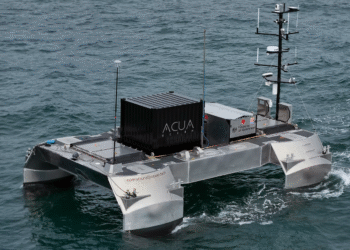
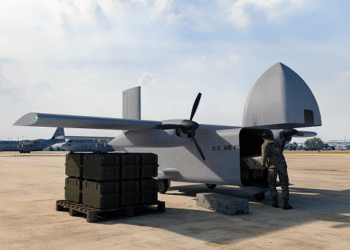
Archangel is already placing bets. High-speed boats for Baltic special forces. Reconnaissance platforms. Long-range strike capabilities. Communications systems designed for the next cycle, and the cycle after that. Carew thinks in decades, not quarters, and he wants startups that are willing to grow in that mold. Two PhDs in a garage are welcome, so long as they’re solving real problems articulated by militaries and strategists.

Carew’s message is clear: sovereignty is deterrence, defence is the forge, and Europe needs to relearn this fast. The positive spin, if there is one, is that building this capacity also builds jobs, industries, and unicorns. Defence-first can be an engine for growth, not just a cost.

Tags: ArchangelDaniel Carew
Previous Post

Stark Raises $62M For Its Strike Drones and UAV Control Systems, Offset Labs Secures Seed Funding For Its Defence and National Security AI Lab

Next Post

Guest Post: Why the Authoritarian Playbook Works in Information Warfare, and What to Do About It

John Biggs

John Biggs

John Biggs is an entrepreneur, consultant, writer, and maker. He spent fifteen years as an editor for Gizmodo, CrunchGear, and TechCrunch and has a deep background in hardware startups, 3D printing, and blockchain. His work has also appeared in Men’s Health, Wired, and the New York Times. He has written nine books including the best book on blogging, Bloggers Boot Camp, and a book about the most expensive timepiece ever made, Marie Antoinette’s Watch. He lives in Brooklyn, New York. He runs the Keep Going podcast, a podcast about failure. His goal is to share how even the most confident and successful people had to face adversity.

Related News

Tobias Billström, left, with NAD CEO Karl Rosander (credit: NAD)

After leading Sweden into NATO, Tobias Billström eyes defence-tech opportunities at Nordic Air Defence

byThomas Macauley
December 12, 2025

Just shy of two years after steering Sweden’s accession into NATO, Tobias Billström has taken a turn into the private...

Photo by Žilvinas Ka on Unsplash

‘This is a revolution’: Inside Ukraine’s plans to seed 7,000+ techies across its military

byThomas Macauley
December 11, 2025

Mykhailo Fedorov, Ukraine’s First Deputy Prime Minister and Minister of Digital Transformation, announced on Monday a significant step forward in how the...

Will Blythe, Arondite; Walter Goodwin, Fractile; and Mike Butcher on stage at Resilience Conference 2025

Europe Can’t Just Hoard Nvidia Chips, Founders Warn – it Must Build its Own AI Backbone

byCarly Page
November 3, 2025

Stockpiling Nvidia chips “isn’t good enough,” moderator Mike Butcher told the audience as he opened Resilience Conference’s panel on sovereign...

Exclusive: Expeditions Announces Lead Up to 150 Million Euro Fund To Support Defence In Europe

byJohn Biggs
October 28, 2025

Expeditions Fund wants to build Europe’s next defense industry, and they are doing it from the front line, not from a...

Weekend Read: Inside Bessemer Venture Partners Investing Thesis with Alex Ferrara

byLeslie Hitchcock
October 25, 2025

Resilience Media welcomed Alex Ferrara, Managing Partner, Bessemer Venture Partners to the Resilience Conference 2025 stage, alongside Auterion CEO Lorenz Meier. Bessemer...

Quaze CSO Francis Roy Shows Off Wireless Field Charging System

byResilience Media
October 24, 2025

Resupplying robots with power is the next logistics fight. That was the clear thread in my talk with Francis Roy, Chief...

Alex Ferrara at the Resilience Conference. Credit: Resilience Media

Bessemer’s Resilience Tech Shopping List

byIngrid Lunden
October 24, 2025

We’re at a high watermark for defence tech investing across Europe, with startups in the region expected to raise more than...

The SDR, Four Months On

byIngrid Lunden
October 23, 2025

The Strategic Defence Review was launched earlier this year with a splash: nearly 150 pages painstakingly and deeply identifying how the UK...

Load More
Next Post
Photo by Lana Codes on Unsplash

Guest Post: Why the Authoritarian Playbook Works in Information Warfare, and What to Do About It

Photo by Jordan Seott on Unsplash

Guest Post: The Case for Strategic Autonomy in the UK and Europe

Most viewed

UK launches undersea surveillance programme to counter growing Russian threat

Helsing teams up with Kongsberg to boost its space strategy

Quantum Systems closes a €180 million Series C extension, hits a €3 billion valuation

We Are Already Living in a World at War—It’s Time to Act Like It

Can the UK counter Russian laser threats?

Inside the drone revolution: How war has changed and what that means for modern armies

Resilience Media is an independent publication covering the future of defence, security, and resilience. Our reporting focuses on emerging technologies, strategic threats, and the growing role of startups and investors in the defence of democracy.

  • About
  • News
  • Resilence Conference
  • Guest Posts
  • Subscribe
  • Privacy Policy
  • Terms & Conditions

© 2025 Resilience Media

No Result
View All Result
  • About
  • News
  • Resilence Conference
  • Guest Posts
  • Subscribe
  • Privacy Policy
  • Terms & Conditions

© 2025 Resilience Media

This website uses cookies. By continuing to use this website you are giving consent to cookies being used. Visit our Privacy and Cookie Policy.