When I called Sasha Yatsenko, the power had just cut out.
No sirens, no warning, just a few minutes of darkness and then the usual scramble you hear about in Kyiv when someone has to keep a business going in the dark. For the last few months, he told me, this is how it worked.
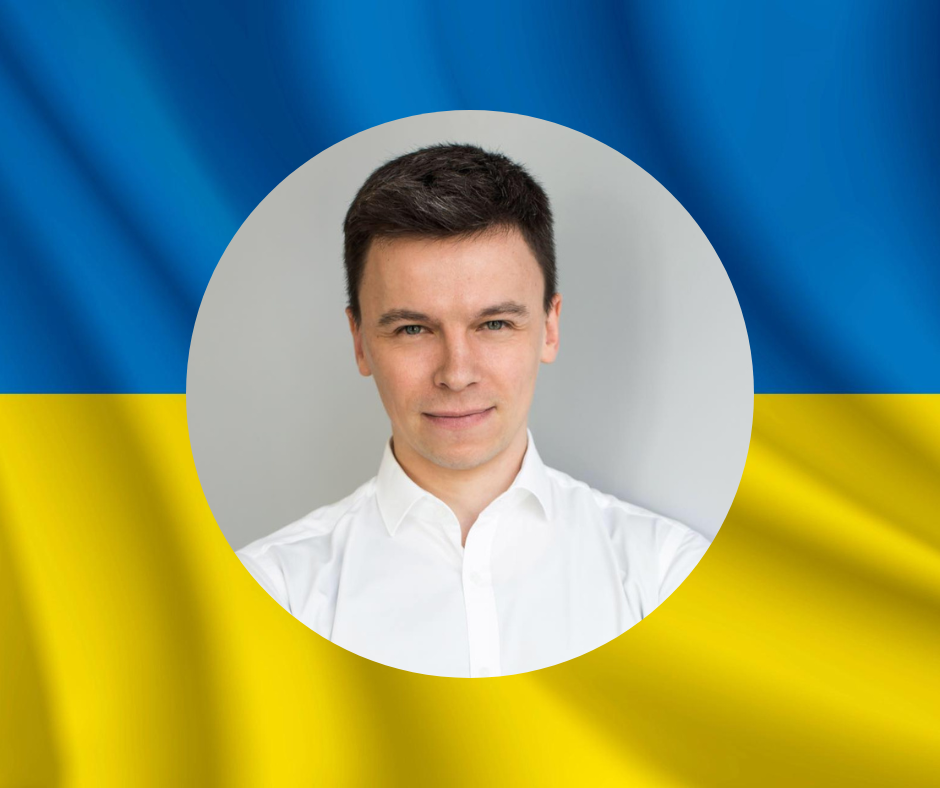
Yatsenko is a principal with Smok Ventures in Warsaw, but he lives in Kyiv. He’s plugged into the European funding world, but he’s also inside the country where the war is not an abstract topic. War is what shapes what gets built and what he invests in.
We talked about what it means to invest in Ukraine when the entire culture is under pressure, and why, despite the urgency and the obvious demand, defense tech funding is still far smaller than it should be. Yatsenko walked through the current state of the market, how deals actually get done, why most capital still sits on the sidelines, and what Western investors can do that matters. We also got into the bigger question that hangs over all of this: how Ukraine’s war-driven innovations in drones, autonomy, and hardware might spill into civilian industry, and what Europe should be preparing for next.
The interview has been edited for clarity.
Resilience: What is it like to invest in Ukraine? You have an entire culture that’s been it’s on its head right now. So how do you even get work done?
Yatsenko: When it comes to investing in Ukrainian defense tech, it’s still not as good as it should be in terms of amounts. The market is growing, that’s true, but the numbers are still very low.
If we look at 2025, it’s something like around $100 million invested into Ukrainian defense tech venture. That’s really small. And if you compare it with Europe, it looks even smaller. Like, in London, you can have one company raise a $100 million round, and that one round can basically cover the whole Ukrainian defense tech venture investment for the year. And it’s kind of crazy because the war is happening here, the technologies are used right now, the innovations are here, but the investors are still not here in the same way.
From one side, it’s a minus. From another side, it’s an opportunity, because the market is underinvested and people who come early can really benefit.
From my perspective, we’re going to have several unicorns in the next year or so, especially in defence-related domains, aerospace, cybersecurity, defence tech itself.
In terms of investors, it’s not a huge number. I think it’s around a dozen investors who are really active, mostly on early stage. Some are local, some are international. But still, it’s mainly pre-seed and seed.
And last year, the biggest public investment I would say was Swarmer. You probably heard about them. They build autonomous systems for drones and swarming systems. They raised, I think, $15 million Series A, and that was the biggest public round in this space.
Resilience: Tell us about Smok VCs strategy in defence.
Yatsenko: We are running our second fund now, it was established late 2021. From this fund, we don’t invest into dual use or defence tech. But internally, we are discussing this a lot for the third fund. We plan to start fundraising in the next few months, and we want to include defence as one of the priority domains, like dual use level.
Because we see the opportunity. And also, part of the team is Ukrainian, and I’m based here in Kyiv all the time. So we see what’s happening. But with the current fund, we can’t do it, so it’s that feeling, like you see it, you want it, but you can’t.
So now we will see if we can make it happen. There are a lot of things to discuss because it’s still new for us. But it’s good that we are thinking about it seriously, and I see a huge opportunity for the fund.
Resilience: What can Western VCs do to help Ukraine?
Yatsenko: Just come here. We have several big events in Ukraine now.
You probably heard about Defence Tech Valley, the conference that happened in the autumn, I think September 2025. There were 5,000 plus visitors, maybe even 6,000 plus. And quite a lot of international people came to Lviv for it, to be here physically, meet stakeholders, hear from founders directly, and talk to the local ecosystem players.
Because, yes, we see more interest now, that’s true. But when it comes to real deals, there are still just a few.
In 2025, if you look at the number of deals in the ecosystem, the split between civil and defence-related was roughly 50/50. But if you look at volumes, it’s still underinvested.
And also the Ukrainian ecosystem is not huge in venture overall. I think in 2025 it’s going to be around $1 billion invested into Ukrainian and Ukrainian-rooted teams in general. But out of that, again, only around $100 million was invested into defence tech.
Resilience: Sitting in Kyiv, what do you think of Europe’s stance on the war? What do you think of America’s stance? Is this a real threat or seen as a closed conflict like the Bosnian War?
Yatsenko: Yeah, I think Europe is becoming more and more involved, especially the EU and the UK.
And it’s not like a Bosnia situation. It’s something much bigger. It’s going to have a much larger effect, not only for Europe, but globally. We see all the threats, all the shifts happening around the world, and obviously it’s going to change the defence landscape for Europe for the next years, probably for the next decades.
So Europe should be here, also in terms of venture investments. They should be here, for sure.
And then the question is, what does it mean to be prepared? Do they need to prepare for a wider war, or do they just need to re-arm and have the capabilities ready? From my perspective, at least it’s about re-arming the European-based armies.
Because it’s that basic thing, if you don’t want a war, you need to be prepared for a war. This rule still works.
And look, I’m not a full expert in geopolitics, but when you look at what Russia is doing, and what China is doing, publicly and not publicly, it’s clear everybody is preparing for something bigger in terms of conflict. So Europe should treat these threats as real and prepare seriously.
And Ukraine, we’ve been in this situation for 11 years already. Because of that, we have more understanding of what it looks like in reality, and how you actually handle it, and what Europe should be thinking about.
Resilience: What does your job look like once this war is over?
Yatsenko: Yeah, so when we talk about defence technologies and this whole idea of dual use, it’s real. It’s not just a buzzword.
And Ukraine is not the only example. You can look at Israel. They were in a similar situation, and in many ways they still are. Even back in the 80s and 90s, a lot of innovation there was dual use, it could work in the civil track and in the defence track.
So what we see now in Ukraine is not unique. We’ve seen this pattern before.
And because of that, founders and innovators should think in two directions at the same time. One, how can this tech help on the battlefield. Two, how can it be used later in peaceful times, when the war is over, in civil markets.
And this mindset should be in the heads of everyone involved, founders, investors, government people, ecosystem players. It matters for how you build, and it matters for what happens after.
Resilience: What’s the future for Ukrainian defence tech?
Yatsenko: The technologies that evolved in Ukraine over the last three or four years, they have applications outside the war.
A lot of it can be used pretty easily in civil areas, transport, logistics, working in dangerous environments, things like that. Aerospace in general is also a big one. For me it’s one of the closest areas where you’ll see the biggest move once the war ends, because the experience base is already here.
And you probably saw the news, today, just a few hours ago, that Mykhailo Fedorov, who was the minister of digital transformation, became the minister of defence. That’s a big signal. He spent years pushing digital systems and innovation on the government side, and now he’s moving into defence leadership. People like that can later move into the private sector too, or at least spread those practices wider.
And I think this is the bigger point. The experience we’re building in defence is going to shape hardware and manufacturing in Ukraine more broadly. For a long time China was the production factory for electronics, for the world and for Europe. If China keeps being seen as a threat, then Ukraine can realistically become an alternative production base for some of those things.