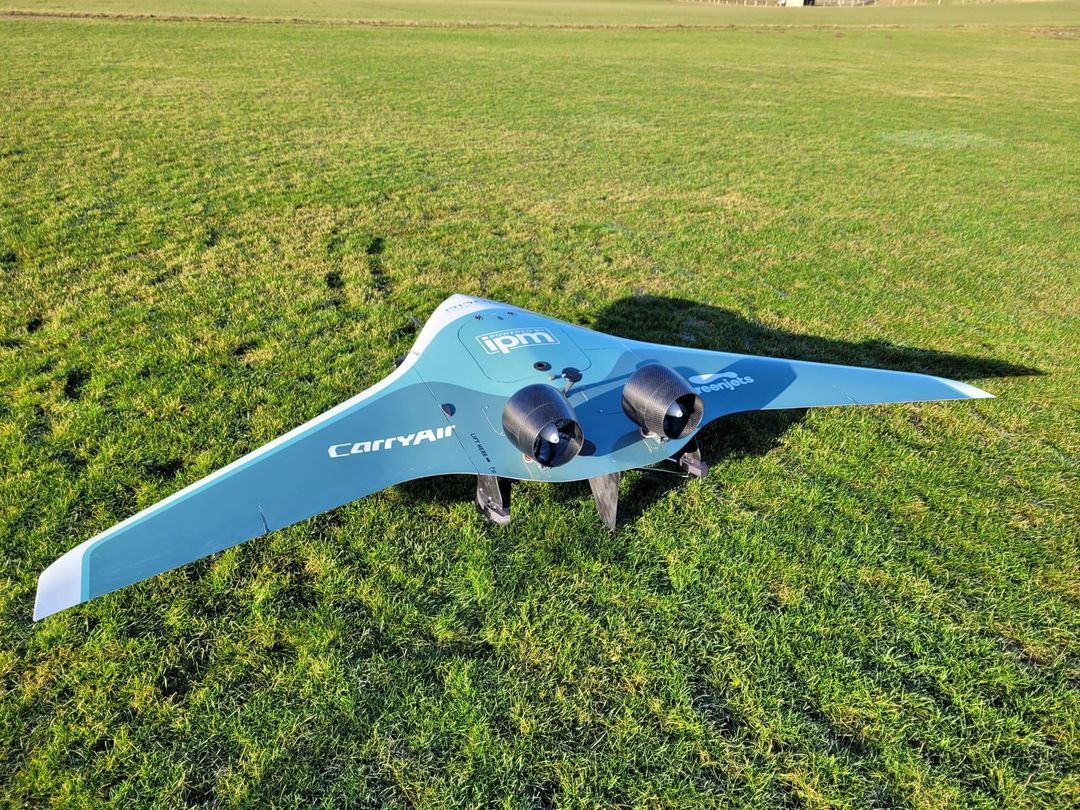
Greenjets has raised a $40 million (£30 million) Series A as the British aerospace company scales production of propulsion and aircraft technologies amid growing demand for sovereign defence capabilities across Europe.
The round was led by Blossom Capital, with participation from the NATO Innovation Fund (NIF), the UK’s National Security Strategic Investment Fund (NSSIF), Tanglin Ventures, and NSFO Family Office. The investment comes just days after Greenjets was selected alongside Cambridge Aerospace and Frankenburg Technologies under the Ministry of Defence’s Low-Cost Air Defence Effectors (LCADE) programme to develop a British low-cost drone interceptor.
The LCADE programme forms part of LEAP, a five-nation European initiative involving the UK, France, Germany, Italy and Poland to accelerate the development of affordable air defence systems capable of countering the growing threat posed by low-cost drones. Greenjets’ interceptor is due to enter demonstration trials later this year.
The funding marks another milestone for a company developing propulsion systems, aircraft platforms, and launch technologies for both defense and future aviation applications. Greenjets says its integrated technology stack allows it to rapidly develop, manufacture and deploy systems across multiple aerospace programmes, underpinning its ambition to become the UK’s next aerospace prime.
The investment comes as governments rethink the economics of air defence following Russia’s extensive use of low-cost attack drones in Ukraine. The UK has committed more than £750 million to short-range counter-drone capabilities and more than £5 billion to drones and autonomous systems under its latest Defence Investment Plan, creating fresh opportunities for companies developing sovereign defence technologies.
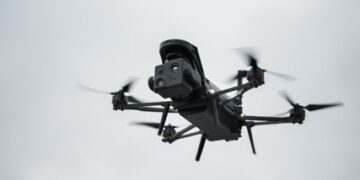
Greenjets argues that propulsion has become one of the biggest constraints in modern drone interception. As attack drones become faster, conventional propeller-driven interceptors can struggle to catch them, while turbojet-powered alternatives are slower to spool up and rely on more constrained supply chains. The company says its propulsion technology is designed to bridge that gap while supporting large-scale manufacturing.
Patrick Schneider-Sikorsky, partner at the NATO Innovation Fund, said: “The speed at which the defence and security drone industry is evolving means that propulsion is the constraint that determines whether an interceptor can close the gap on a 500 km/h target or vice versa. Greenjets is addressing this at the engine and airframe level, meaningfully improving the performance of UAS and CUAS companies, without them having to solve propulsion independently. This is exactly the kind of Allied supply-chain technology we were set up to back.”
Greenjets says it has expanded rapidly over the past year, growing from 12,000 to nearly 70,000 square feet of UK facilities, and expects to increase its workforce from around 160 employees to more than 250 as it transitions from development to production.
Co-founders Anmol Manohar and Guido Monterzino said the war in Ukraine had reinforced the importance of developing affordable defensive technologies alongside broader advances in aviation.
“The conflict in Ukraine has reinforced just how important those same technologies are in protecting lives, strengthening Europe’s resilience and enabling the future of flight. We believe building affordable defensive capability is a necessary response to today’s realities, and a natural extension of our mission to advance aviation.”
The new funding will support Greenjets’ transition from development to production, with the company targeting the delivery of thousands of systems over the next 12 months while expanding across Europe, the United States, the Middle East and India. The backing from both NATO’s venture fund and the UK government also reflects growing investor confidence in companies developing sovereign aerospace and defence technologies as European governments accelerate defence spending.