
Tuesday 14 July, 2026
[email protected]
Resilience Media
  • News
    • Events
    • Interview
    • Startups
    • Venture
    • Weekly Digest
  • Resilience Conference
    • Resilience Conference Warsaw 2026
    • Resilience Conference Copenhagen 2026
    • Resilience Conference London 2026
  • About
  • Guest Posts
    • Author a Post
  • Subscribe
No Result
View All Result
  • News
    • Events
    • Interview
    • Startups
    • Venture
    • Weekly Digest
  • Resilience Conference
    • Resilience Conference Warsaw 2026
    • Resilience Conference Copenhagen 2026
    • Resilience Conference London 2026
  • About
  • Guest Posts
    • Author a Post
  • Subscribe
No Result
View All Result
Resilience Media
No Result
View All Result

Helsing opens its first US factory, in West Virginia, to build more HX-2 drones

Defence tech will invest $50M; news comes one day after the company raised $1.8B

Ingrid LundenbyIngrid Lunden
July 14, 2026
in News, US Defence
Share on Linkedin

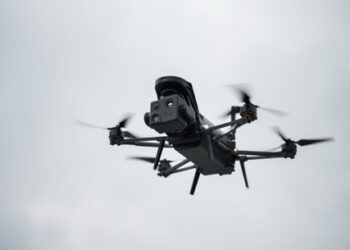
In July 2025, the US government tested out Helsing drones for the first time during the Project Flytrap exercise in Europe. One year later, Helsing is making a move in hopes of capitalising on that across the ocean. Today, the German defence tech startup announced that it would open its first factory in the US, in the state of West Virginia.

You Might Also Like

Expeditions leads €15M bet on European defence software startup Project Q

NATO DIANA selects ten innovators for its decision superiority challenge

Auterion to equip 50,000 Ukrainian strike drones with precision guidance tech

The news comes one day after Helsing announced a mega funding round of $1.8 billion at an $18 billion valuation, money that it specifically said it would be using to fuel its expansion to serve present and future contracts with NATO allies.

Helsing is coming with deep pockets, but its investment into the US operation is relatively small in comparison. The Parkersburg News and Sentinel, a local publication, notes that the company is due to invest $50 million into the factory.

On the other hand, it will be making an outsized impact in doing so. West Virginia is one of the poorest states in the US, with around 18% of its residents living in poverty and average income in the range of $55,000 to $59,000. The publication confirmed that the defence tech’s average salaries will be more than twice at amount, at around $125,000.

“Helsing’s decision to establish its first US manufacturing facility in West Virginia is another signal that our state is becoming a destination for advanced manufacturing and defense technology,” Governor of West Virginia, Patrick Morrisey, said in a statement. “This investment will create high-skilled jobs, strengthen America’s defense industrial base, and demonstrate that West Virginia has the workforce, energy resources, and manufacturing heritage to help lead the next generation of industrial innovation. We’re proud to welcome Helsing to the Mountain State.”

The West Virginia factory, which will be located in Martinsburg, is set to manufacture Helsing’s flagship HX-2 AI-powered drones at the rate of 2,000 per month when fully operational. To date, these have had their most visible use in Ukraine in its war against Russia (somewhat controversially, it seems), and as the cornerstone of the company’s very large contract with the German military, the Bundeswehr.

“Modern deterrence requires advanced technology and the ability to produce it at speed, at scale, and in sustained volumes,” said Dr. Jennifer McArdle, GM of Helsing US, in a statement. “The conflicts of today demonstrate that industrial capacity is a critical strategic advantage. With its commitment to innovation, skilled local workforce and competitive infrastructure, West Virginia is the right place for Helsing to start building this industrial capacity in the US.”

Currently, Helsing does not have any contract with the US government, but the Department of Defense has shown a strong appetite for buying from the new wave of defence technology startups, which are pitching the dream: cutting-edge weaponry and systems that can outclass current stocks and those of adversaries, at a fraction of the price of legacy systems.

Whether or not all of them will truly deliver on that remains to be seen — for now, large defence primes still account for the vast majority of defence equipment spend — but in the meantime companies like Helsing, and its big rival Anduril (valued at over $60 billion) have defined a new category: the “neo-prime.”

Indeed, Anduril has several deals in place with the US military, including a plum supplier deal in place with the US Army worth up to $20 billion if fully exercised. But that is alongside many other startups supplying the US government in smaller deals. These include other European companies like Auterion and Kraken, which indicates the window of opportunity that Helsing is hoping to glide through.


Tags: defence techDronesHelsinghx-2industrial technology
Previous Post

NATO DIANA selects ten innovators for its decision superiority challenge

Next Post

Expeditions leads €15M bet on European defence software startup Project Q

Ingrid Lunden

Ingrid Lunden

Ingrid is an editor and writer. Born in Moscow, brought up in the U.S. and now based out of London, from February 2012 to May 2025, she worked at leading technology publication TechCrunch, initially as a writer and eventually as one of TechCrunch’s managing editors, leading the company’s international editorial operation and working as part of TechCrunch’s senior leadership team. She speaks Russian, French and Spanish and takes a keen interest in the intersection of technology with geopolitics.

Related News

Expeditions leads €15M bet on European defence software startup Project Q

Expeditions leads €15M bet on European defence software startup Project Q

byCarly Page
July 14, 2026

European defence software startup Project Q has raised €15 million in Series A funding less than a year after its...

Deterrence lies in production capacity and cognitive warfare

NATO DIANA selects ten innovators for its decision superiority challenge

byJohn Biggs
July 13, 2026

NATO’s Defence Innovation Accelerator for the North Atlantic, or DIANA, has selected ten companies to take part in its Decision...

Silhouette of a drone in flight against a orange sunset sky.

Auterion to equip 50,000 Ukrainian strike drones with precision guidance tech

byPaul Sawers
July 13, 2026

Ukraine's drone war has always come down to volume and accuracy — get enough systems onto the battlefield, and get...

black corded electronic device

UK and allies warn defence sector over Russian campaign targeting internet-facing routers

byCarly Page
July 13, 2026

The UK and 18 international partners have warned organisations across the defence sector to strengthen the security of internet-facing network...

Helsing launches Area 9 research unit and unveils European robotics platform

Helsing is now Europe’s biggest defence tech startup, raising $1.8B at an $18B valuation

byIngrid Lunden
July 13, 2026

Helsing, the defence tech company out of Germany, today cemented its position as Europe's most valuable privately-held startup in the...

Kinetic disinformation and AI-scaled campaigns are the new faces of hybrid warfare

byStanislaw Naklicki
July 12, 2026

Disinformation components in kinetic Russian operations in Ukraine and Europe, along with the proliferation of AI capabilities, mean that the...

Nokia, NestAI combine 5G, AI, and sensing for constant battlefield connectivity

Nokia, NestAI combine 5G, AI, and sensing for constant battlefield connectivity

byJohn Biggs
July 10, 2026

Two Finnish companies, Nokia and NestAI, have announced the first products built through their 2025 partnership. The systems, which connect...

SFC Energy’s fuel cells are headed to Ukraine to supply troops with instant electricity

SFC Energy’s fuel cells are headed to Ukraine to supply troops with instant electricity

byJohn Biggs
July 10, 2026

https://youtu.be/EkWlOo8cEFs German fuel cell company SFC Energy recently announced that they are delivering approximately €42 million worth of combat-proven fuel...

Load More
Next Post
Expeditions leads €15M bet on European defence software startup Project Q

Expeditions leads €15M bet on European defence software startup Project Q

Cosine COO: AI belongs in the bunker, not the cloud

Cosine COO: AI belongs in the bunker, not the cloud

Most viewed

InVeris announces fats Drone, an integrated, multi-party drone flight simulator

Uforce raises $50M at a $1B+ valuation to build defence tech for Ukraine

Auterion, the drone software startup, eyes raising $200M at a $1.2B+ valuation

Palantir and Ukraine’s Brave1 have built a new AI “Dataroom”

Twentyfour Industries emerges from stealth with $11.8M for mass-produced drones

Senai exits stealth to help governments harness online video intelligence

Resilience Media is an independent publication covering the future of defence, security, and resilience. Our reporting focuses on emerging technologies, strategic threats, and the growing role of startups and investors in the defence of democracy.

  • About
  • News
  • Resilence Conference
    • Resilience Conference Copenhagen 2026
    • Resilience Conference Warsaw 2026
    • Resilience Conference 2026
  • Guest Posts
  • Subscribe
  • Privacy Policy
  • Terms & Conditions
  • Mission Statement & Code of Practice
  • Press

© 2026 Resilience Media

No Result
View All Result
  • Home
  • About
  • Subscribe
  • Events
  • Guest Posts
  • Interview
  • News
  • Resilience Conference London 2026
  • Resilience Conference Copenhagen 2026
  • Resilience Conference Warsaw 2026

© 2026 Resilience Media

This website uses cookies. By continuing to use this website you are giving consent to cookies being used. Visit our Privacy and Cookie Policy.