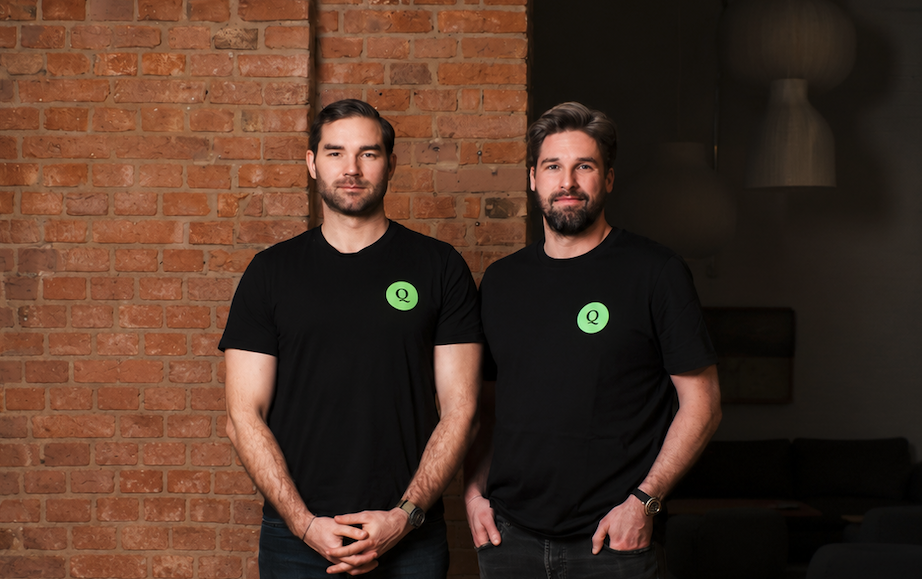
European defence software startup Project Q has raised €15 million in Series A funding less than a year after its seed round, as investors double down on military interoperability and Europe’s push for greater technological sovereignty.
The round was led by existing investor Expeditions, with German defence electronics specialist HENSOLDT and venture capital firm Heliad also participating. The Berlin- and Munich-based company said the investment leaves it backed entirely by European investors and will be used to accelerate development of HYDRIS, its open-source integration and orchestration platform for defence and security organisations.
The funding follows the public launch of HYDRIS last week, which Project Q says is designed to help armed forces, government agencies, and critical infrastructure operators connect commercial technologies, legacy systems, sensors, and command-and-control platforms through a vendor-neutral architecture. The platform aims to reduce the integration burden that has long complicated multi-domain operations while avoiding dependence on a single software supplier.
Leonard Wessendorff, chief executive and co-founder of Project Q, said the latest funding would help the company expand those capabilities at a time when European militaries are under pressure to modernise rapidly.
“The trust that our investors have placed in us is a great endorsement. We are particularly pleased that the funding comes entirely from Europe,” he said. “With HYDRIS, we will enable armed forces and security agencies to independently integrate new technologies and capabilities, continuously develop them further, and thus respond much more quickly to changing threat scenarios. In this way, we are laying the foundation for greater technological sovereignty in Europe.”
The investment also strengthens Project Q’s ties with HENSOLDT, one of Germany’s largest defence technology companies, as established defence contractors increasingly look to software firms to address long-standing interoperability challenges across European armed forces.
Mikolaj Firlej, general partner and co-founder of Expeditions, said that fragmented communications and mission systems remain major obstacles to effective multinational operations.
“A single special forces unit in a European country can use over ten different communication tools that do not talk with each other,” he said. “If Europe wants to act as a single projecting force and execute faster decision cycles than the adversary, the imperative is a deeper integration between many disconnected systems operating in 27+ different national systems.”
The investment suggests investors see software integration as becoming just as important to Europe’s rearmament effort as the sensors, drones, and vehicles those platforms are expected to connect.