Monumental — a construction tech company founded and run by Palantir alums — has raised $32 million to scale its business across Europe and break into the US market. A new investor, the US-based firm Khosla Ventures, is leading the round, with previous European backers Plural and Hummingbird participating along with others such as Material Ventures.
Monumental is based out of Amsterdam, and so far the startup has made some very interesting headway.
It’s designed both the software and hardware for robots that work as bricklayers; it’s created a ‘digital twin’ platform called Atrium for building planning, to map out what those robots will do; and it runs a services operation that provisions all of this to clients.
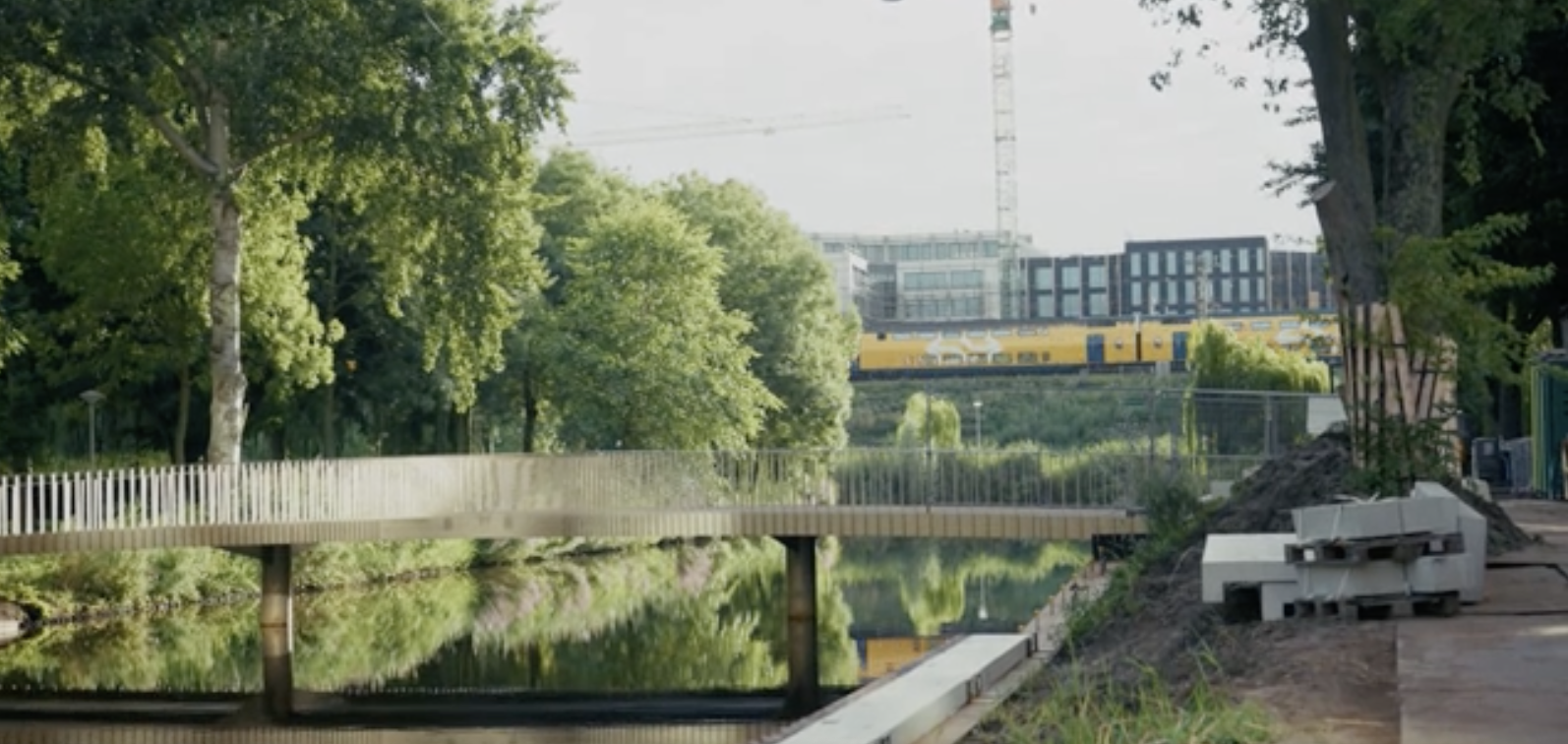
Monumental’s robot fleet currently numbers 150 and has been working across multiple projects, often simultaneously, across the UK and the continent, constructing homes, schools, a hotel, a community centre and — hat-tip to the company’s Dutch roots — a canal.
Robots are shaping up to be a key cornerstone of the thesis around industrial resilience.
The construction industry — just like the materials that are used for it — is a significant contributor to GDP for western countries (around 13% of global GDP, per McKinsey; more like between 4% and 8% in Western Europe), providing jobs, helping in the creation of infrastructure to enable other industries, and building homes. Yet today a major labour shortage in the construction market slows down how it works — a shortage that could be even more acute in a critical situation when labour might get diverted elsewhere but infrastructure still needs to be built.
In the UK, for example, it’s been estimated that the country needs 20,000 more bricklayers to hit its housebuilding targets, but only 1,990 qualified in 2024.
Robots have come along a lot in the last several years and will be stepping into the construction gap, said Salar al Khafaji, co-founder and CEO.
“It seems obvious that robots will be evolving” to fill this and other workforce holes, he said in an interview. “There are already so many things coming together, and Monumental proves that we are beyond the demo-ware stage.”
This also potentially offsets the threat aspect of the proposition — that is, robots and AI taking over our jobs. Even if there were thousands of robots in Monumental’s fleet, argued Al Khafaji, it wouldn’t make dent in the shortage of labour.
Al Khafaji came up with the idea for the company, he said, when he was still at Palantir. The AI and big data giant acquired his previous startup, a data visualisation company called Silk. Settling into R&D at Palantir, he thought about what to do next and decided that he wanted to focus on something “meaningful and physical” — “not another dashboard,” he joked. His mind turned to infrastructure, energy and defence in the more general sense, and this is how he started thinking about construction and robots.
(Note: Al Kahfaji is thinking about this problem from another direction, too. He also happens to be an investor in the factory startup Isembard.)
Looking at how the construction industry operates, he saw that provisioning it as a services business made the most sense: “Construction companies subcontract work out as much as possible,” he said.
If builders were not on construction companies’ books already, chances are robots definitely would not be, since they required a whole new skill set on top of the capital cost: a new range of employees who would update, maintain and target the machines to do what needed to get done.
The company has started with bricklaying as a first step, although longer term there are a number of other jobs on building sites that could get tackled. There is also an opportunity to consider Atrium, the “digital twin” system, which today is not used as an overall blueprint planning service, but today it’s already capable of handling visualisation (thanks to the team’s previous expertise with this at Silk) and it seems that there are a lot of opportunities to expand on that, with robot or not.
For investors, it’s a long-known rule of thumb that sectors that have been slow to evolve are prime opportunities for tech disruption, and while construction has definitely already appeared on the tech radar, there is a lot more to be built, so to speak.
“Construction costs have exploded while the industry itself has barely changed in decades,” said Vinod Khosla, founder of Khosla Ventures, in a statement. “That combination has produced the housing crisis: we know how to build, we’ve just made it too expensive and too slow. Monumental is solving this by bringing robotics into the physical world, and the proof is already standing: canal walls, houses, a school, 100 structures already built by robots. Beautiful buildings, built at scale, don’t have to cost what they cost today.”