Wednesday 18 March, 2026
[email protected]
Resilience Media
  • About
  • News
  • Resilience Conference
    • Resilience Conference Warsaw 2026
    • Resilience Conference Copenhagen 2026
    • Resilience Conference London 2026
  • Guest Posts
    • Author a Post
  • Subscribe
No Result
View All Result
  • About
  • News
  • Resilience Conference
    • Resilience Conference Warsaw 2026
    • Resilience Conference Copenhagen 2026
    • Resilience Conference London 2026
  • Guest Posts
    • Author a Post
  • Subscribe
No Result
View All Result
Resilience Media
No Result
View All Result

Germany Floats a New €100B Resilience Fund

The so-called Germany Fund would bring together public and private money to invest in German infrastructure, critical industries, defence -- and German startups building technology to serve all three.

Resilience MediabyResilience Media
August 6, 2025
in News, Startups
Photo by Marius Serban on Unsplash

Photo by Marius Serban on Unsplash

Share on Linkedin

The war in Ukraine; the spectre of Russia; Trump’s tariff policy and tensions with China. Countries in Europe need to improve their resilience in defence, infrastructure and critical industries in the wake of geopolitical and economic headwinds like these. Yet financing that effort has proven to be a challenge. Today, there’s news out of Germany on that front. The country is working on a new, €100 billion ($116 billion) investment fund to back companies and technologies to improve the security and operations across strategic areas such as these.

You Might Also Like

The UK is setting up meetings between Gulf states and defence tech startups

Sille Pettai steps down from CEO role at SmartCap

100 Startups to Watch in 2026

According to a report in Bloomberg the government is proposing to put €10 billion into the fund – dubbed the Germany Fund, or Deutschlandfonds. It will seek investment from international backers from venture capital, private equity, family funds, and others for the remainder.

The fund will aim to invest in existing, large infrastructure projects and businesses, but, critically, also in startups – described as “higher risk projects, particularly with smaller and mid-sized companies” in the report.

Generally, startups, particularly those trying to scale, have found it hard to raise money in Europe. This will be Germany’s way of not just giving German startups that capital, but also giving them a seal of approval to help them raise more.

“The Germany Fund will be used to make investments in growth, innovation and competitiveness in cooperation with private German and European investors,” said a ministry spokesperson quoted by Bloomberg. “Private capital is a key lever for overcoming major economic challenges.”

The €10 billion is still being negotiated with the ministry of finance and state development bank KfW, Bloomberg noted, but the financing has been “secured” already.

Importantly, the government has yet to give specifics on the timeline for the fund to launch, the investment structure, and the specific investment strategy. There is likely to be a lot of debate around what makes sense to come out of the fund, and what does not. The devil is in the details.

(And, again, even when the state agrees on how to seed the first €10 billion, there will still be €90 billion more to raise from outside backers.)

The Bloomberg report noted some other details about the plans.

For starters, it sounds like the sheer value of the fund is likely to make it into a catch-all for preexisting, related investment proposals. These include a currently-dormant €1 billion raw materials fund; and a potential defence industry investment fund still under discussion.

The fund could also roll up German investments in major infrastructure and industrial companies. The country already has stakes in two electricity grid operators, 50Hertz and TransnetBW, and it’s looking at two more (TenneT and Amprion). Equally it’s working on a blocking minority stake in arms maker KNDS (a Franco-German venture) and has expressed interest in a stake in the submarine division of ThyssenKrupp.

The size of the Germany Fund could also make it a magnet for a lot of other expenditure areas that might, on the surface, sound more tenuous in relation to the other investments. Bloomberg floated that one could be financing affordable housing.

Part of that might be down to the coalition nature of the government. The original idea for the Germany Fund appears to have been floated in 2023 by members of the SDP (and it was discussed as a cross-party concept even earlier). The left-of-centre SDP is now a part of the coalition led by Chancellor Friedrich of the right-leaning CDU. As in any coalition there are cooperations, but also tensions.

In any case, bringing infrastructure and defence up to speed in the face of outside threats are not the only reasons for the Germany Fund. Germany has been working on reordering and freeing up how it spends and invests money to boost its flagging economy.

Earlier this year, lawmakers approved an amendment to its “debt brake” (which is a constitutionally-bound rule that limits how the government can borrow and spend money) that gives it room to put an additional €500 billion into infrastructure spending and removes borrowing limits on spend of more than 1% of GDP on defence.

The Bloomberg report also noted that transactions/investments made from the Germany Fund will be structured as equity stakes, so they will also be exempt from the debt brake.

The Germany Fund appears to be separate from a smaller sovereign wealth fund in the country that aims to be worth some €200 billion by 2036.

Tags: GermanyGermany Fund
Previous Post

Point72 Launches $400M ‘Deterrence Fund’ to Back Early-Stage Defense Tech

Next Post

Transatlantic Financial Heavyweights To Fund New European Defence Bank

Resilience Media

Resilience Media

Start Ups. Security. Defense.

Related News

a view of a city from the top of a building

The UK is setting up meetings between Gulf states and defence tech startups

byIngrid Lunden
March 18, 2026

The last few weeks have seen the UK stepping up its direct military engagement in the Middle East to defend...

Sille Pettai steps down from CEO role at SmartCap

Sille Pettai steps down from CEO role at SmartCap

byFiona Alston
March 17, 2026

Big news in European defence tech investment. Sille Pettai, the CEO of SmartCap -- the Estonian state-owned investment fund --...

100 Startups to Watch in 2026

100 Startups to Watch in 2026

byLeslie Hitchcockand1 others
March 17, 2026

Defence has long been the domain of primes. The war in Ukraine has changed that by introducing the tech sector...

person on top of brown steel frame

How Ukraine is transforming its battlefield data into a world-first AI training hub

byThomas Macauley
March 16, 2026

After four years effectively as an all-in-one laboratory, training ground and live arena for technology to fight its own war,...

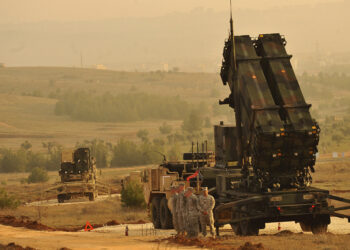
US and UK ballistic missile defence capabilities brought into focus as Iran lashes out against region

US and UK ballistic missile defence capabilities brought into focus as Iran lashes out against region

byTom Pashby
March 12, 2026

The ballistic missile defence capabilities of the US, UK and other allies have been put to the test as the...

Scout Ventures raises $125 million to expand investment in defence and dual-use tech

Scout Ventures raises $125 million to expand investment in defence and dual-use tech

byJohn Biggs
March 11, 2026

Scout Ventures has closed its fifth fund with $125 million in commitments, according to an announcement released March 10. The...

The signal is the weapon: How mobile networks became infrastructure for modern war

The signal is the weapon: How mobile networks became infrastructure for modern war

byJohn Biggs
March 11, 2026

Mobile World Congress (MWC) has been around since 1987. The conference, part trade fair, part consumer electronics expo, and part...

Hadean, the AI battle simulation startup, closes bridge round ahead of a Big B

Hadean, the AI battle simulation startup, closes bridge round ahead of a Big B

byIngrid Lunden
March 11, 2026

London-based Hadean began life several years ago as an AI gaming startup working on VR and video simulations, but it...

Load More
Next Post
Transatlantic Financial Heavyweights To Fund New European Defence Bank

Transatlantic Financial Heavyweights To Fund New European Defence Bank

BAE backs Oxford Dynamics to bolster UK defence autonomy with AI

BAE backs Oxford Dynamics to bolster UK defence autonomy with AI

Most viewed

InVeris announces fats Drone, an integrated, multi-party drone flight simulator

Uforce raises $50M at a $1B+ valuation to build defence tech for Ukraine

Auterion, the drone software startup, eyes raising $200M at a $1.2B+ valuation

Twentyfour Industries emerges from stealth with $11.8M for mass-produced drones

Senai exits stealth to help governments harness online video intelligence

Palantir and Ukraine’s Brave1 have built a new AI “Dataroom”

Resilience Media is an independent publication covering the future of defence, security, and resilience. Our reporting focuses on emerging technologies, strategic threats, and the growing role of startups and investors in the defence of democracy.

  • About
  • News
  • Resilence Conference
    • Resilience Conference Copenhagen 2026
    • Resilience Conference Warsaw 2026
    • Resilience Conference 2026
  • Guest Posts
  • Subscribe
  • Privacy Policy
  • Terms & Conditions

© 2026 Resilience Media

No Result
View All Result
  • About
  • News
  • Resilence Conference
    • Resilience Conference Copenhagen 2026
    • Resilience Conference Warsaw 2026
    • Resilience Conference 2026
  • Guest Posts
  • Subscribe
  • Privacy Policy
  • Terms & Conditions

© 2026 Resilience Media

This website uses cookies. By continuing to use this website you are giving consent to cookies being used. Visit our Privacy and Cookie Policy.