For the last three decades, European venture capital has benefited from a grand assumption that rarely makes it into pitch decks or LP updates: geopolitical stability. The rules-based international order – open markets, predictable regulation, enforceable contracts, and global supply chains – acted as the invisible scaffolding beneath every investment thesis. The scaffolding has now all but collapsed and the consequences for European startups and investors are profound.
2026 has ushered in a new era. Geopolitics now threatens to seriously complicate investment strategies and commercial choices. In the first few weeks of 2026 we have seen flashpoints in Venezuela, Iran, and Greenland, alongside broader global tensions (not to mention the tragic ongoing conflict in Ukraine). These events will have far reaching consequences for valuations, exits, supply chains, and even cap tables. Geopolitics has moved from the margins of venture to its centre. The question is no longer whether this shift matters, but whether Europe’s innovation ecosystem is prepared for it.
The end of predictability
For the venture community, Western governments have long offered a structural “trust premium” that authoritarian regimes cannot replicate without undermining their own power. But what happens when a democracy starts acting in ways that are less predictable and how does this complicate the decisions for startups and investors?
VC is fundamentally an exercise in long-term risk management. Trying to assess what the world will look like five to 10 years from the point of investment is made marginally easier if the regulatory and political environment is predictable and transparent, where the law protects minority investors and reputational risks are low. For a VC today, geopolitics is not a tick box but a central calculation of ‘Tail Risk’. That calculation becomes exponentially harder when the geopolitical environment is unstable.
Sanctions, export controls, tariffs, industrial and foreign policy now change faster than most markets can price. Dual-use and deep-tech companies, once under- served, are now exposed to the full force of geopolitical competition. The result is a new class of risk that European VCs must model but cannot diversify away.
Fragmented markets, weaponised supply chains
European startups have scaled in a world where globalisation was the default setting. That world is gone. Supply chains have become instruments of statecraft. Access to chips, compute, rare earths, and cloud infrastructure is increasingly determined by political alignment, not market efficiency. Startups that once envisaged global total addressable markets now face a world of regionalised markets with diverging standards and compliance regimes. This hits Europe’s most strategically important sectors hardest: AI, robotics, semiconductors, climate tech, and space. Scaling is no longer just a commercial challenge; it is a geopolitical one.
Capital is no longer neutral
The idea that “money doesn’t care about politics” has vanished. Foreign investment screening regimes (i.e. France’s PACTE Law, Italy’s Law Decree No. 21 or the UK National Security Investment Act) across Europe now scrutinise cap tables with unprecedented intensity. LPs themselves face geopolitical constraints, especially sovereign wealth funds and US institutional capital. Even cross-border acquisitions by Allies can be blocked on national security grounds. For VCs, this means higher compliance costs, smaller pools of “clean” capital, and more complex syndication dynamics. For founders, it means that the wrong investor can become a strategic liability (something that is playing out in real time for some startups right now).
Exits are becoming state-mediated
If the rules-based order helped underpin predictable exit pathways, its erosion narrows them. M&A is increasingly politicised. IPO markets are fragmented. Strategic exits, once the lifeblood of deep-tech venture, now require navigating a warren of national security and regulatory approvals. The result is likely longer holding periods, increased secondary transactions, and a growing reliance on government-approved buyers. None of this is conducive to the traditional venture model and will require specialist teams with unique networks to unlock the value investors seek.
Governments are bigger customers – and bigger risks
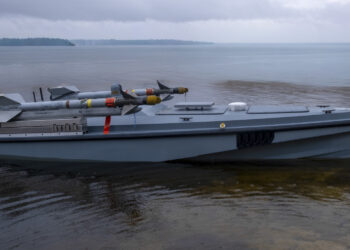
European governments are re-arming, re-industrialising, and rediscovering the importance of strategic autonomy. This creates enormous opportunity for startups building defence and dual-use technologies relevant to critical-infrastructure and economic prosperity.
But governments can also be volatile customers. Manufacturing requirements (i.e Made in America policy) complicates go-to-market strategies. Procurement cycles can be slow. Budgets can shift with elections. Programmes can be cancelled overnight. And political intervention in corporate strategy is becoming more common. Startups are now treating governments as mission-driven but politically constrained partners, not as stable anchor customers. Helpfully, European governments now know that they need to compete with adversaries, Allies and private industry in order to access the most transformational technology being built in the market. Greater transparency and responsiveness is now a measure of effectiveness for Government departments and deep industrial partnerships are seen as central to strategic autonomy.
Europe’s strategic fragmentation is now a competitive constraint
The rules-based order masked Europe’s structural weakness: it is not a single geopolitical actor. The erosion of that order exposes the fragility beneath.
With more than 30 different interpretations of “strategic autonomy” across our continent, that is also more than 30 procurement systems, export-control regimes and cultures to navigate.
Europe can lead in resilience tech
But this moment is not just a headwind. It is a generational opportunity. Europe is uniquely positioned to lead in the technologies that matter most in a fractured world: defence, cybersecurity, energy security, supply-chain resilience, climate adaptation, space, and sovereign AI. These are not just markets; they are strategic imperatives. The winners may well be the founders and investors who build for a world defined by fragmentation, competition, and scarcity, not by the frictionless globalisation of the past. Scaling across Europe will only become easier with closer trade ties, exploiting existing trade and cooperation agreements and reducing barriers to maximise the strength of Europe’s talent density, diversity and values.
A new operating model for European venture
The end of the rules-based order forces European VCs and startups to confront a new reality. Markets are political. Technology is strategic. Capital is scrutinised. Supply chains are weaponised. Exits are uncertain. Risk is asymmetric. But Europe still has enormous strengths: world-class research, deep technical talent, strong institutions, and a growing recognition that technological sovereignty is not optional.
The question is whether Europe’s political and venture ecosystem can adapt quickly enough. The next decade of European innovation will be shaped not by who builds the best product, but by who understands the world they are building it for.
Hugo Jammes is the co- founder of EDT Ventures. He previously ran the investment arm of the UK National Security Strategic Investment Fund (NSSIF). Prior to this, Hugo worked in investment banking and started his career as a professional soldier in the British Military.