
100 investors to watch 2026 100 investors to watch 2026 100 investors to watch 2026
Wednesday 28 October, 2026
[email protected]
Resilience Media
  • News
    • Events
    • Interview
    • Startups
    • Venture
    • Weekly Digest
  • Resilience Conference
    • Resilience Conference London — Oct 2026
    • Resilience Conference Copenhagen — May 2026 (PAST)
    • Resilience Conference Warsaw — Apr 2026 (PAST)
  • Launch
  • About
  • Guest Posts
    • Author a Post
  • Subscribe
No Result
View All Result
Resilience Media
No Result
View All Result

AI in cybersecurity remains a tool for understanding, not response

Analysis of thousands of real-world security queries shows practitioners are using AI primarily to contextualise risk, rather than to automate remediation.

Carly PagebyCarly Page
January 22, 2026
in Cyber, News
Laptop screen showing a search bar.
Share on Linkedin

Despite industry hype around autonomous defence, new research shows security teams spent 2025 using AI mainly to explain and contextualise security data, not to take action.

You Might Also Like

Finland’s Arctic RAVN secures €2.5M to expand European drone electronics production

Ukraine begins testing sovereign communications satellite in orbit

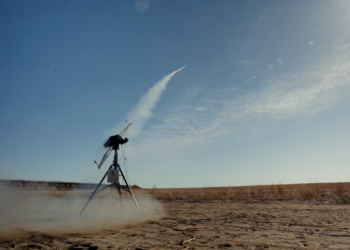
Canadian interceptor startup North Vector Dynamics secures $20M+, inks Czech MOU

That’s according to a new report based on anonymised prompts from more than 2,000 users of the Sola Security platform between May and December 2025. The data shows security teams turning to AI for explanation and investigation, with close to 60 percent of prompts focused on understanding issues rather than triggering automated response. This reflects what the report describes as a persistent “clarity bottleneck” inside security teams.

The report cites earlier ISC2 research showing limited AI adoption in security teams, with only one in three professionals using it day to day.

Looking across all 7,592 prompts, Sola Security found that most questions clustered around a small number of areas, led by application security, followed by cloud and infrastructure, security operations, and identity and access management. Application security alone accounted for more than a quarter of all queries, with risk assessment standing out as the most common concern. Many of the requests were narrowly focused, referring to specific GitHub repositories, OWASP frameworks, APIs, and known vulnerabilities in live code.

Most cloud questions focused on exposed or misconfigured resources, particularly systems left publicly accessible and the extent of the impact. Identity and access requests were often messier, pulling in several platforms at once as teams tried to untangle permissions across large environments.

The data also shows that security concerns change as organisations get bigger. Smaller teams mostly worry about cloud configuration issues, mid-sized firms spend more time on application vulnerabilities as development ramps up, and larger organisations are preoccupied with access controls, audit requirements, and creeping privileges.

While early users mostly asked AI to help them identify issues, behaviour changed over the course of 2025. Requests to “Monitor and Track” activity grew by 8.8 percentage points in the latter part of the year, while simple discovery declined. As the report puts it, early questions asked “what is this?”, while later ones asked “keep watching this”.

The report references comments from Andrew Ng, a leading AI researcher, who has argued that organisations are moving beyond single prompts towards “very complex workflows in these iterative multi-step agentic workflows”.

Even so, the report is clear that full autonomy is not the goal. Based on what practitioners actually asked AI to do in 2025, the priority remains helping security teams understand, prioritise, and monitor their environments more effectively – not replacing human judgement or decision-making.


Tags: AIsecurity
Previous Post

Capital under siege: Sanctions, supply chains and politics now drive VC decisions

Next Post

Inside Dronamics bid to become the unmanned logistics carrier for future conflicts

Carly Page

Carly Page

Carly Page is a freelance journalist and copywriter with 10+ years of experience covering the technology industry, and was formerly a senior cybersecurity reporter at TechCrunch. Bylines include Forbes, IT Pro, LeadDev, The Register, TechCrunch, TechFinitive, TechRadar, TES, The Telegraph, TIME, Uswitch, WIRED, & more.

Related News

Finland’s Arctic RAVN secures €2.5M to expand European drone electronics production

Finland’s Arctic RAVN secures €2.5M to expand European drone electronics production

byJohn Biggs
October 27, 2026

Finnish defence technology company Arctic RAVN has secured €2.5 million in convertible loan commitments to expand production of drone electronics,...

Ukraine begins testing sovereign communications satellite in orbit

Ukraine begins testing sovereign communications satellite in orbit

byCarly Page
October 27, 2026

Ukrainian defence technology company HIMERA and Denmark's GomSpace have begun testing a satellite in orbit as part of plans to...

Canadian interceptor startup North Vector Dynamics secures $20M+, inks Czech MOU

Canadian interceptor startup North Vector Dynamics secures $20M+, inks Czech MOU

byStanislaw Naklicki
October 27, 2026

There is a growing need for more and better interceptors against faster drones -- a challenge that has been hitting...

Tekever Commits £400M to UK Drone Manufacturing After RAF Contract Win

Tekever secures US Special Operations Command drone deal

byCarly Page
October 26, 2026

Tekever has secured a deal to supply uncrewed aerial systems (UAS) to the United States Special Operations Command (USSOCOM), marking...

Helsing unveils new air defence system and 2 jet- and rocket-powered drone interceptors

Helsing unveils new air defence system and 2 jet- and rocket-powered drone interceptors

byIngrid Lunden
October 26, 2026

Jet-powered propulsion for drones has been the single-most destructive development that Russia has introduced into its attacks against Ukraine, and...

Czech manufacturer announces a three tonne ground drone for logistics and protection

Czech manufacturer announces a three tonne ground drone for logistics and protection

byJohn Biggs
October 24, 2026

Czech defence technology company Cyber Drone Solutions has unveiled its Specthor heavy unmanned ground vehicle at Future Forces 2026 in...

Poland is building its own Starlink equivalent

Poland is building its own Starlink equivalent

byJohn Biggs
October 23, 2026

Poland is working on a domestic answer to Starlink, with Deputy Defence Minister Cezary Tomczyk saying the first offers have...

NATO’s theory of victory is an industrial strategy

NATO’s theory of victory is an industrial strategy

byTom Kühnel
October 22, 2026

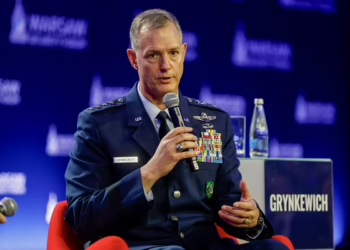
Last week in Warsaw, NATO’s Supreme Allied Commander Europe, General Alexus Grynkewich, did something SACEURs rarely do: he told the...

Load More
Next Post
Inside Dronamics bid to become the unmanned logistics carrier for future conflicts

Inside Dronamics bid to become the unmanned logistics carrier for future conflicts

white and black mountain under blue sky during daytime

Weekly Digest: Greenland stays safe, but geopolitics still drives defence tech

Top stories

Helsing unveils new air defence system and 2 jet- and rocket-powered drone interceptors
Drones & UAS

Helsing unveils new air defence system and 2 jet- and rocket-powered drone interceptors

October 26, 2026
Germany’s SWARM Biotactics Raises €10M to Deploy Insect-Based Bio-Robots
Startups

Germany’s SWARM Biotactics Raises €10M to Deploy Insect-Based Bio-Robots

July 7, 2025
NATO’s theory of victory is an industrial strategy
Guest Posts

NATO’s theory of victory is an industrial strategy

October 22, 2026
Tiger Global and Mark Cuban back physical AI safety firm with $20m investment
News

Tiger Global and Mark Cuban back physical AI safety firm with $20m investment

October 22, 2026

Resilience Media is an independent publication covering the future of defence, security, and resilience. Our reporting focuses on emerging technologies, strategic threats, and the growing role of startups and investors in the defence of democracy.

  • About
  • News
  • Resilence Conference
    • Resilience Conference Copenhagen 2026
    • Resilience Conference Warsaw 2026
  • Guest Posts
  • Subscribe
  • Privacy Policy
  • Terms & Conditions
  • Mission Statement & Code of Practice
  • Press

© 2026 Resilience Media

No Result
View All Result
  • Home
  • About
  • Subscribe
  • Events
  • Guest Posts
  • Interview
  • News
  • Resilience Conference London 2026
  • Resilience Conference Copenhagen 2026
  • Resilience Conference Warsaw 2026

© 2026 Resilience Media

This website uses cookies. By continuing to use this website you are giving consent to cookies being used. Visit our Privacy and Cookie Policy.