Wednesday 17 December, 2025
Resilience Media
  • About
  • News
  • Resilience Conference
  • Guest Posts
    • Author a Post
  • Subscribe
No Result
View All Result
  • About
  • News
  • Resilience Conference
  • Guest Posts
    • Author a Post
  • Subscribe
No Result
View All Result
Resilience Media
No Result
View All Result

NEWS: NATO Innovation Fund Strengthens Its Deep Tech Bench

The NATO Innovation Fund (NIF) has added two major names in European deep tech to its senior investment team: Dr. Ulrich Quay and Sander Verbrugge

Ingrid LundenbyIngrid Lunden
July 25, 2025
in News, Venture
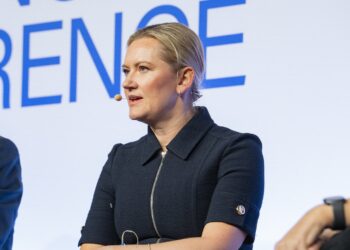
Photo credit Martin Bissig

Photo credit Martin Bissig

Share on Linkedin

The NATO Innovation Fund (NIF) has added two major names in European deep tech to its senior investment team. Dr. Ulrich Quay and Sander Verbrugge will join as Partners, reinforcing the fund’s effort to deliver fast, effective technology adoption across the Alliance. At the same time, Kelly Chen, one of its founding Partners, is leaving NIF to start her own new venture after two years as a partner in the founding team.

You Might Also Like

CHAOS Industries joins U.S. Army G‑TEAD Marketplace

Quantum Systems teams up with Frontline to mass-produce Ukrainian combat drones in Germany

Skana wants to shore up coastal defence with amphibious vessel for shallow waters

The team at NIF has undergone quite a lot of change since it was founded, and has come in for criticism for this.

However, our contacts at NIF are keen to point out that NIF itself is a startup, has scaled fast, and is also evolving amongst rapidly changing geopolitics and a developing new market.

Dr. Klaus Hommels, Chair of NIF, said in a release, ‘We warmly welcome Ulrich and Sander to the Fund’s partnership. Our two new Partners bring exceptional expertise in deep-tech investing, bringing experience and wisdom in adoption and scaling to founders and to other fund managers.’ He added that the aim continues to be to focus on advancing NATO’s technological agenda through the support of founders in Europe.

Dr. Quay, who led BMW’s corporate venture arm and is now Chairman of the Supervisory Board at Hamburg-based mobility startup FREENOW, brings a strong industrial lens. His background spans mobility, AI, and manufacturing which are the domains NATO nations are prioritizing as they look to modernize logistics, supply chains, and defense manufacturing.

‘It’s an incredible time to be joining the NATO Innovation Fund,’ said Dr. Quay in a statement. ‘Technological breakthroughs are often the solution to some of the most pressing issues facing humanity and I’m confident that we are well-positioned to strengthen the foundations of the Alliance’s defence and security, while also helping revitalise the industrial base of Allied nations.’

Verbrugge, coming from Innovation Industries and formerly with NXP and Innovation Industries, adds deep technical fluency in semiconductors and hardware. He has a PhD in Molecular Biophysics, and track record growing startups, both of which will be critical as NATO looks to scale dual-use innovation and as the Alliance faces up to the need for a sovereign semiconductor supply chain.

‘After years of combining my scientific background with my passion for supporting startups, I’m grateful for the opportunity to use my skillset in order to serve the NATO Innovation Fund’s important mission,’ said Verbrugge. ‘I’m looking forward to working with some of the Alliance’s boldest entrepreneurs to unlock the potential of innovative technologies and help meet some of the Alliance’s most pressing needs.’

This move comes as the NATO Innovation Fund sharpens its mandate in the wake of the 2025 NATO Summit. With rising demand for deployable, defensible tech, the Fund is now doubling down on adoption. Quay and Verbrugge will work closely with the Fund’s Mission Platform Group, which connects promising startups to Ministries of Defence and is building on the earlier appointment of John Ridge as Chief Adoption Officer.

It should be expected that the organisation would see changes in its team to reflect this. People will move on to other ventures taking what they’ve learned at NIF and building out a NATO ecosystem as they go.

What is clear from the personnel changes at NIF is a broader recognition that investment alone isn’t enough, and adoption will be key to the success of its mission, and to its portfolio.

The challenge continues to be translating early-stage breakthroughs into operational capabilities, something that anpplies across the defence tech sector. The shape of the team reflects this understanding quite clearly.

The NATO Innovation Fund is a €1 billion venture capital fund, backed by 24 NATO Allies, that invests in deep tech to address challenges in defence, security, and resilience. The fund invests independently, with 24 nations supporting its portfolio’s success and helping provide deep tech entrepreneurs with access to both commercial and government markets.

Participating NATO Allies are: Belgium; Bulgaria; Czechia; Denmark; Estonia; Finland; Germany; Greece; Hungary; Iceland; Italy; Latvia; Lithuania; Luxembourg; Netherlands; Norway; Poland; Portugal; Romania; Slovakia; Spain; Sweden; Türkiye; United Kingdom.

Tags: Kelly ChenKlaus HommelsNIFSander VerbruggeUlrich Quay
Previous Post

British manufacturing startup Isembard opens first US factory in Texas

Next Post

NIF Doubles Down on Deep Tech, Finland’s Defence Cluster, and Ancient Greece

Ingrid Lunden

Ingrid Lunden

Ingrid is an editor and writer. Born in Moscow, brought up in the U.S. and now based out of London, from February 2012 to May 2025, she worked at leading technology publication TechCrunch, initially as a writer and eventually as one of TechCrunch’s managing editors, leading the company’s international editorial operation and working as part of TechCrunch’s senior leadership team. She speaks Russian, French and Spanish and takes a keen interest in the intersection of technology with geopolitics.

Related News

CHAOS Industries joins U.S. Army G‑TEAD Marketplace

byJohn Biggs
December 16, 2025

CHAOS Industries says it has been added to the U.S. Army’s Global Tactical Edge Acquisition Directorate, or G-TEAD, Marketplace after...

Quantum Systems teams up with Frontline to mass-produce Ukrainian combat drones in Germany

byCarly Page
December 15, 2025

On the heels of raising €180 million earlier in December, German drone maker Quantum Systems has kicked off a new manufacturing operation...

The Alligator

Skana wants to shore up coastal defence with amphibious vessel for shallow waters

byPaul Sawers
December 15, 2025

In a year when the Baltic has turned into a geopolitical house of mirrors, with Russian “shadow fleet” tankers slipping through...

Arondite and Babcock partner to move the British Royal Navy closer to a autonomous fleet

byJohn Biggs
December 11, 2025

Arondite and Babcock have partnered to bring autonomy into the Royal Navy’s day to day operations. The two UK companies have agreed a...

Auterion demonstrates a multi-manufacturer drone strike under real conditions

byJohn Biggs
December 11, 2025

Munich-based Auterion ran what it calls the world’s first multi-manufacturer swarm strike with both FPV munitions and fixed-wing drones working as a...

Helsing teams up with Kongsberg to boost its space strategy

byIngrid Lunden
December 10, 2025

Defence startups that want to increase their chances of winning major government tenders are teaming up with primes. Today, Helsing...

No Anduril is an island: US defence unicorn teams with GKN Aerospace on the Isle of Wight

byIngrid Lunden
December 10, 2025

Anduril — the defence startup valued at over $30 billion earlier this year — has made a big push to position itself not...

Nu Quantum lands record $60M to build UK’s first scalable quantum-networking platform

byCarly Page
December 10, 2025

Cambridge-based Nu Quantum — which develops photonic technology used in quantum computing architectures — has secured a landmark $60 million in Series...

Load More
Next Post

NIF Doubles Down on Deep Tech, Finland's Defence Cluster, and Ancient Greece

Photo by Masood Aslami on Unsplash

Western-built Drones Can’t Deal With Electronic Warfare. One Latvian Drone Manufacturer Could.

Most viewed

UK launches undersea surveillance programme to counter growing Russian threat

Helsing teams up with Kongsberg to boost its space strategy

Quantum Systems closes a €180 million Series C extension, hits a €3 billion valuation

We Are Already Living in a World at War—It’s Time to Act Like It

Can the UK counter Russian laser threats?

Inside the drone revolution: How war has changed and what that means for modern armies

Resilience Media is an independent publication covering the future of defence, security, and resilience. Our reporting focuses on emerging technologies, strategic threats, and the growing role of startups and investors in the defence of democracy.

  • About
  • News
  • Resilence Conference
  • Guest Posts
  • Subscribe
  • Privacy Policy
  • Terms & Conditions

© 2025 Resilience Media

No Result
View All Result
  • About
  • News
  • Resilence Conference
  • Guest Posts
  • Subscribe
  • Privacy Policy
  • Terms & Conditions

© 2025 Resilience Media

This website uses cookies. By continuing to use this website you are giving consent to cookies being used. Visit our Privacy and Cookie Policy.