Saturday 2 May, 2026
[email protected]
Resilience Media
  • About
  • News
  • Resilience Conference
    • Resilience Conference Warsaw 2026
    • Resilience Conference Copenhagen 2026
    • Resilience Conference London 2026
  • Guest Posts
    • Author a Post
  • Subscribe
No Result
View All Result
  • About
  • News
  • Resilience Conference
    • Resilience Conference Warsaw 2026
    • Resilience Conference Copenhagen 2026
    • Resilience Conference London 2026
  • Guest Posts
    • Author a Post
  • Subscribe
No Result
View All Result
Resilience Media
No Result
View All Result

Rheinmetall and Auterion Announce New NATO-Wide Military Hardware-Software Partnership

This timely announcement was made from the stage of our event on manufacturing in Munich

Resilience MediabyResilience Media
February 17, 2025
in Events, News
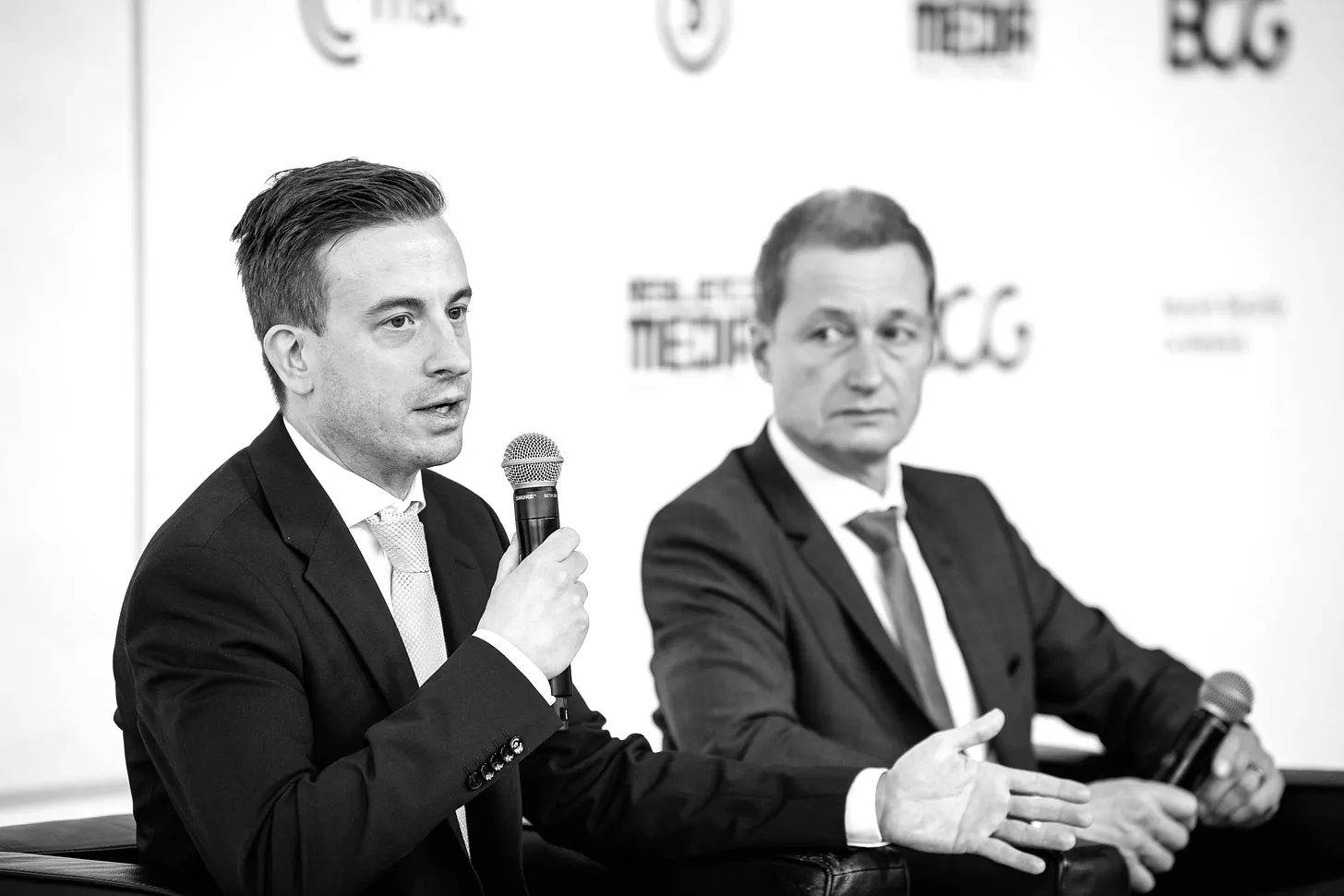
Lorenz Meier, CEO of Auterion and Klaus Kappen, Rheinmetall CTO, on stage at The Future of Defence Tech Manufacturing & Innovation event in Munich. Photo credit MSC/Alexander Körner

Lorenz Meier, CEO of Auterion and Klaus Kappen, Rheinmetall CTO, on stage at The Future of Defence Tech Manufacturing & Innovation event in Munich. Photo credit MSC/Alexander Körner

Share on Linkedin

Rheinmetall and Auterion announced on stage at The Future of Defence Tech Manufacturing & Innovation event a hardware-software partnership that will build a common operational platform, standardising military software across NATO.

You Might Also Like

Announcing the Resilience Conference Copenhagen Agenda

Spiral Hydrogen raises €2.7M to pilot its new hydrogen tech at the Port of Rotterdam

Report maps Russia’s hybrid war on Poland

“[W]hat we will see in the future are…hundreds of drones in coordinated strikes. And the best way to look at this problem is [to] imagine NATO having to fight together without English, without a common language,” said Auterion CEO Lorenz Meier. “That’s impossible. There’s a NATO language school. We need the same thing for autonomous systems.”

European manufacturing powerhouse, 136 year old Rheinmetall, and new player Auterion, founded in 2017, seem to have little in common, but looks can be deceiving. Having gone on a recent acquisition spree, Rheinmetall gave autonomy to the CEOs of the companies they purchased, allowing them to continue growing their businesses in ways that kept their unique company culture. This made those business units even more profitable for Rheinmetall and made Rheinmetall a more attractive partner for a startup like Auterion. Why? Rheinmetall’s leadership is comfortable with risk – courageous, even – allowing their partnerships to function with the agility that is in a startup’s DNA.

“…[Rheinmetall] have to [have courage]. We have to enforce our manufacturing base. We have to take risk, otherwise we are too slow,” said Kappen.

“Rheinmetall really impressed us by bringing in a lot of fresh blood. For example, the Chief Digital Officer of Rheinmetall is actually the former CEO of an acquisition,” Meier echoed. “And that changes completely how our experience is working with the company; really risk taking, forward leaning, willing to question itself, willing to question the old ways of doing things.”

With both companies being battle-tested in Ukraine, Meier’s drone operating system is a proven commodity. Linking up with the largest German arms manufacturer made sense, as Europe will need to scale dramatically its military and manufacturing capabilities. Manned and unmanned teaming will be a critical component of that success. Meier told the audience, “What we’re talking about is installing software on drones, treating them as autonomous computers, and getting joint behaviour like an enemy air suppression mission where you fly with drones that jam drones with warheads, and really a coordinated strike in the hundreds. That is where we’re going. And for that to happen, you have to have the ability to have a common software infrastructure.”

Those drones will be manufactured by Rheinmetall, in one of its factories in Italy, Ukraine, Hungary, or Germany.

When asked about the partnership, Meier took the opportunity to make an observation about the state of defence tech investing, suggesting that partnerships with companies like Rheinmetall are a better bet than venture capital funding.

“[W]hat I actually want to highlight about the manufacturing base is – and this is also going to be a little bit of a pointed comment towards the financial and venture industry – everybody talks about defence. Everybody talks about [its] importance, but then when it comes to the Dollars or Euros, they’re not moving. And it’s really hard as a business to do that. And where I have to commend Rheinmetall and their CEO is Rheinmetall took a risk and did lean forward without contracts, without anything.”

Both Meier and Kappen have hope for the future. When asked where the partnership will look like in five years, Kappen expressed hope that the war in Ukraine would be over for five years. Meier, was more sanguine: “A million drones that are ready to go at [a] moment’s notice and provide credible deterrence in Europe’s east.”

Watch their interview and the rest of The Future of Defence Tech Manufacturing & Innovation panels here.

The Future of Defence Tech Manufacturing & Innovation, was presented by the US Defense Innovation Unit and Munich Security Conference Tech & Innovation Thursday, sponsored by Boston Consulting Group, and powered by Resilience Media.

Tags: GermanyLorenz MeierNATORheinmetall
Previous Post

The launch of Isembard’s innovative approach to manufacturing

Next Post

Dispatches from Munich – Defence Tech, Manufacturing, and a Shifting Global Order

Resilience Media

Resilience Media

Start Ups. Security. Defense.

Related News

Colorful buildings line a canal with boats and cars.

Announcing the Resilience Conference Copenhagen Agenda

byLeslie Hitchcockand1 others
May 1, 2026

Resilience Conference Copenhagen, on May 11th, is nearly sold out. We are excited to announce the agenda, which brings together...

Spiral Hydrogen raises €2.7M to pilot its new hydrogen tech at the Port of Rotterdam

Spiral Hydrogen raises €2.7M to pilot its new hydrogen tech at the Port of Rotterdam

byFiona Alston
April 30, 2026

Estonian-Dutch dual-use startup Spiral Hydrogen will be taking its centrifugal bubble-free electrolysis technology from the lab to the Port of...

Report maps Russia’s hybrid war on Poland

Report maps Russia’s hybrid war on Poland

byJohn Biggs
April 30, 2026

A new report from Defence24 has outlined the role of Russia in a number of cyberattacks and acts of sabotage....

Line illustration showing trucks, cars and a cyclist, alongside a wind turbine, solar panel, power lines, buildings and a data centre, depicting energy infrastructure

Report: Europe’s reliance on imported energy and technology presents both risk and opportunity

byPaul Sawers
April 29, 2026

Europe’s reliance on external technology and infrastructure faces growing scrutiny, as policymakers and industry leaders confront the risks of depending...

Weekly Digest: The mystery of the British unicorn – the story of our dealings with Roark Aerospace

Inside the case of Roark Aerospace: The British defence unicorn no one can verify

byIngrid Lunden
April 28, 2026

On Boxing Day 2025, we received a press release from Roark Aerospace. The UK startup, which makes anti-drone systems, reported...

German military uniform (Touko Aikioniemi from Unsplash)

Europe’s armed forces are too reliant on US cloud providers, report finds

byPaul Sawers
April 28, 2026

Europe’s defence systems depend heavily on US cloud infrastructure, leaving key military functions exposed to potential service disruptions during geopolitical...

UNIVITY raises €27 million to build a 5G satellite constellation that can expand European communication networks

UNIVITY raises €27 million to build a 5G satellite constellation that can expand European communication networks

byJohn Biggs
April 24, 2026

UNIVITY has raised €27 million to transition its space-based telecom infrastructure from a demonstration phase to an early industrial stage....

Jacek Siewiera: a future NATO conflict will be fought against civilian targets

Jacek Siewiera: a future NATO conflict will be fought against civilian targets

byResilience Media
April 24, 2026

The wars in Iran and Ukraine have underscored how civilian infrastructure will become a feature of future conflicts. And Poland’s...

Load More
Next Post
Dispatches from Munich – Defence Tech, Manufacturing, and a Shifting Global Order

Dispatches from Munich - Defence Tech, Manufacturing, and a Shifting Global Order

In Munich as history unfolded

In Munich as history unfolded

Most viewed

InVeris announces fats Drone, an integrated, multi-party drone flight simulator

Uforce raises $50M at a $1B+ valuation to build defence tech for Ukraine

Auterion, the drone software startup, eyes raising $200M at a $1.2B+ valuation

Senai exits stealth to help governments harness online video intelligence

Palantir and Ukraine’s Brave1 have built a new AI “Dataroom”

Twentyfour Industries emerges from stealth with $11.8M for mass-produced drones

Resilience Media is an independent publication covering the future of defence, security, and resilience. Our reporting focuses on emerging technologies, strategic threats, and the growing role of startups and investors in the defence of democracy.

  • About
  • News
  • Resilence Conference
    • Resilience Conference Copenhagen 2026
    • Resilience Conference Warsaw 2026
    • Resilience Conference 2026
  • Guest Posts
  • Subscribe
  • Privacy Policy
  • Terms & Conditions

© 2026 Resilience Media

No Result
View All Result
  • Home
  • Subscribe
  • About
  • Events
  • Guest Posts
  • Interview
  • News
  • Resilience Conference London 2026
  • Resilience Conference Copenhagen 2026
  • Resilience Conference Warsaw 2026
  • Startups
  • Venture
  • Weekly Digest

© 2026 Resilience Media

This website uses cookies. By continuing to use this website you are giving consent to cookies being used. Visit our Privacy and Cookie Policy.