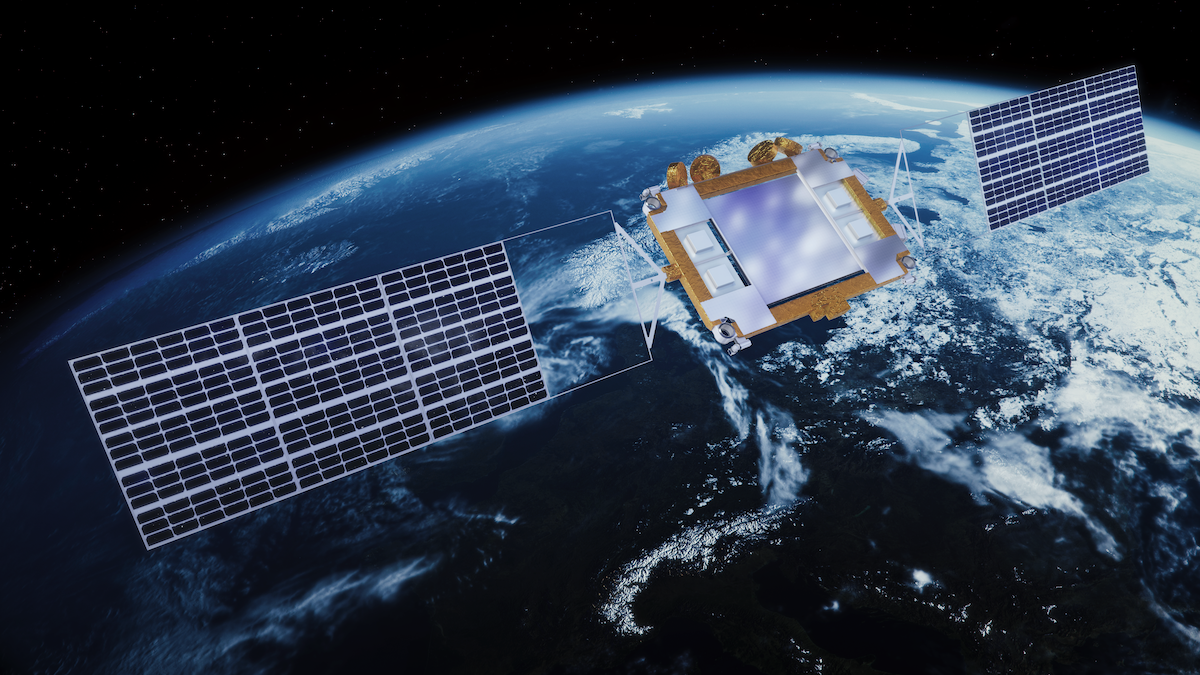
UNIVITY has raised €27 million to transition its space-based telecom infrastructure from a demonstration phase to an early industrial stage. The funding comes from Blast, Expansion, and the Deeptech 2030 fund managed by Bpifrance. This funding will be utilized to construct a new satellite network tailored for telecoms and other clients seeking a robust and integrated Very Low Earth Orbit network capable of extending existing networks.
UNIVITY differs in its approach to satellite connectivity. Most large satellite constellations today, led by vertically integrated players like Viasat, control the full system from satellite to customer. UNIVITY is trying to reverse that structure, giving carriers a way to extend their own networks into orbit rather than handing that layer to outside platforms.
This distinction is important for two reasons. First, operating in Very Low Earth Orbit reduces latency and allows satellites to deorbit or burn up naturally at the end of their life. Second, these satellites use existing 5G spectrum owned by telecom operators. The goal is direct compatibility with terrestrial networks, including direct-to-device connectivity for standard smartphones.

“We are building the reference space infrastructure designed for telecom operators, covering the full range of connectivity needs — from ultra-high-speed broadband to direct-to-smartphone connectivity,” said Charles Delfieux, Founder and CEO of UNIVITY. “The convergence between terrestrial and space networks is inevitable. Our ambition is to enable operators to leverage space as a natural extension of their terrestrial 5G networks, combining performance, competitiveness, and sovereignty.”
This funding will also push forward the company’s uniShape demonstrator, a two-satellite system designed to validate end-to-end 5G non-terrestrial network performance. The program, supported by CNES, is intended to prove that a hybrid network can operate across ground infrastructure and orbit without breaking the existing telecom model.
As satellite networks move closer to consumer devices, telecom operators risk being pushed into a secondary role. UNIVITY’s model tries to keep them at the center, treating space as an extension of their current footprint rather than a competing layer.
Further, European investors and state-backed funds are framing low-orbit connectivity as a sovereignty issue, not just a commercial one. The argument is simple: if orbital infrastructure is owned elsewhere, control over communications follows. By connecting to European satellites from Europe, nations and militaries get the peace of mind that their communications will remain online during conflict.