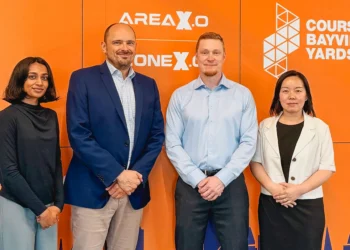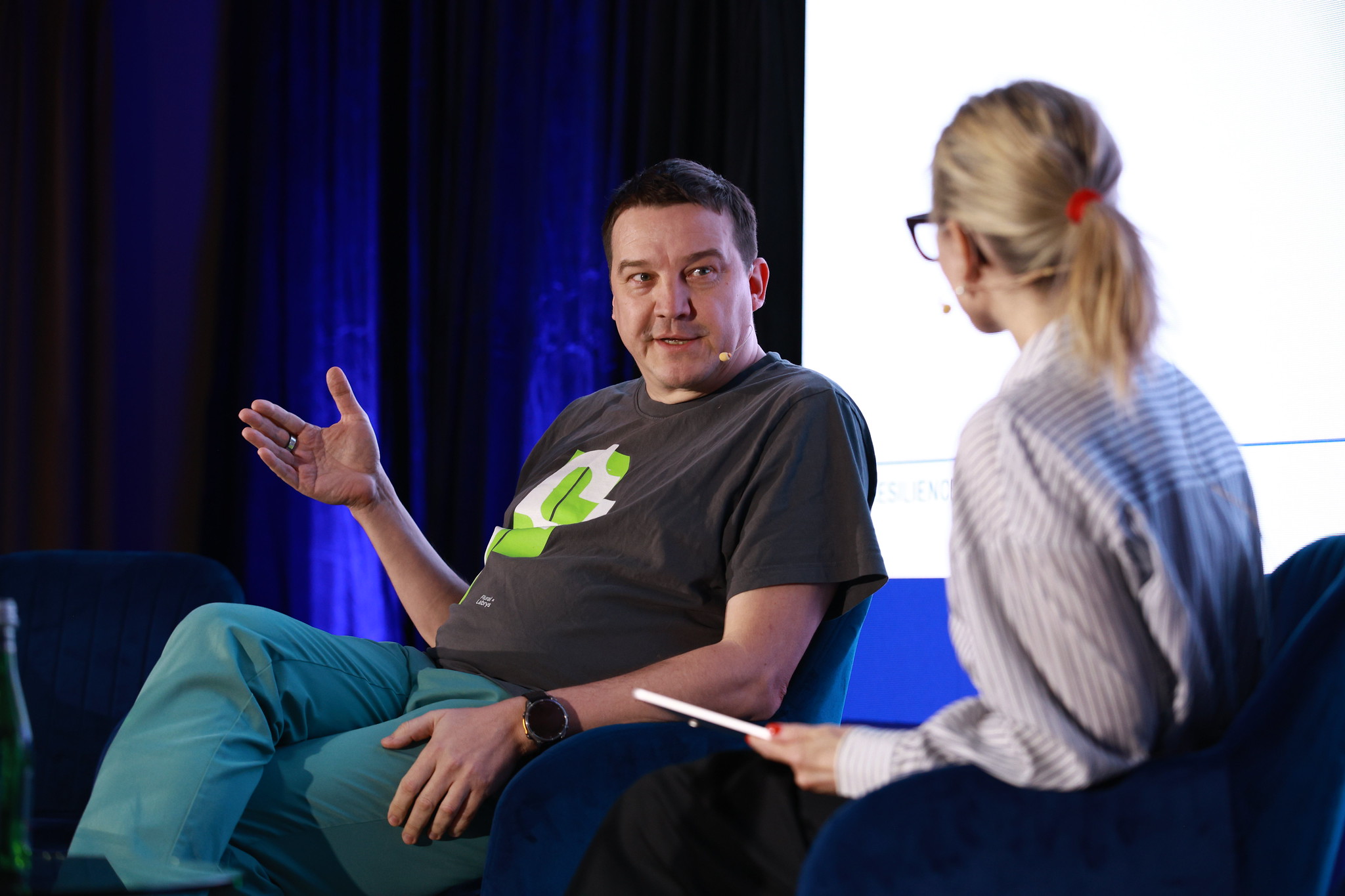
Sten Tamkivi, a partner at Plural and an early Skype executive, joined Resilience Media publisher Leslie Hitchcock on stage during the Resilience Conference in Warsaw to discuss lessons in startup ecosystem building that Poland can learn from Estonia.
Estonia made a mark in the world of tech with the 2003 launch of the Skype — co-founded by a Swede and a Dane but with software and subsequent R&D created and run in Tallinn, Estonia by four Estonians. That was the country’s anchor-tenant, so to speak, and Estonia has produced a number of major tech companies in the wake of Skype, many of them stemming out of Skype’s DNA, including Wise (formerly TransferWise) and Bolt (funded and advised by Skype alums, among others). In Estonia, start-ups have a “GDP-level impact”, with 4-5% of its domestic product coming from early-stage tech companies, Tamkivi said.
The Estonian market’s vibrant ecosystem is a template for Poland, and could spell a lot of opportunity, he continued. The key to unlocking Poland’s defence tech potential, Tamkivi added, is viewing start-ups as potential future GDP drivers, instead of dismissing them as “some guys playing with drones.”
There is a lot of room for growth. Despite having an economy twenty times larger than Estonia’s, Poland’s total venture capital investment was just €800 million in 2025, only twice much as Estonia’s in the same period.
Tamkivi highlighted what he perceived as a common mistake of Polish start-ups: falling into the “local market trap.” Admittedly, this can impact startups in any country with a large-enough domestic customer base, but in more mature ecosystems, such as in Germany and France, founders have learned to look beyond domestic customers as their sole focus. Startups in the still-young Polish ecosystem, he said, still focus too much on their domestic market.
However, Tamkivi also extends the idea of a limiting trap to Europe as a whole, which is an interesting position considering the conversation these days about European sovereignty.
“A very common misconception,” he said, “at a pan-European level is that Europe needs to build tech for Europe.”
He countered: “The only mindset that matters is how we can build global champions in respective fields that just happen to come from Europe.”
This is the founding principle behind Plural, which Tamkivi co-founded. One of the prime aims of the VC is to “have a GDP-level impact on Europe,” building on the experience its managers picked up in their prior careers as founders. Of course all VCs want to fund companies that grow huge, but stating it in terms of Europe’s economic future makes Plural stand out among European VCs.
As for defence tech, Plural’s focus on it underscores how the sector is growing in acceptance as a legitimate vertical for private investors on the continent, a relatively recent shift. Perhaps because of the roots of its founders and the proximity that Estonia has to Russia, Plural was an early mover in defence, deep tech and the wider resilience thesis, with its portfolio including the likes of Helsing, Frankenburg Technologies, Hypersonica, Augur, and more.
“We’re not a defence fund, we are truly generalist,” Tamkivi said, “but because we’re going after the most ambitious problems and the most ambitious people we can find, these days there is nothing more ambitious than actually defending our democracies.”
Tamkivi’s comments on stage about building Europe’s global industry leaders were echoed in the same week in Brussels, as Competition Commissioner Teresa Ribera told the Financial Times that the EU would relax merger rules in a bid to create “European champions.”