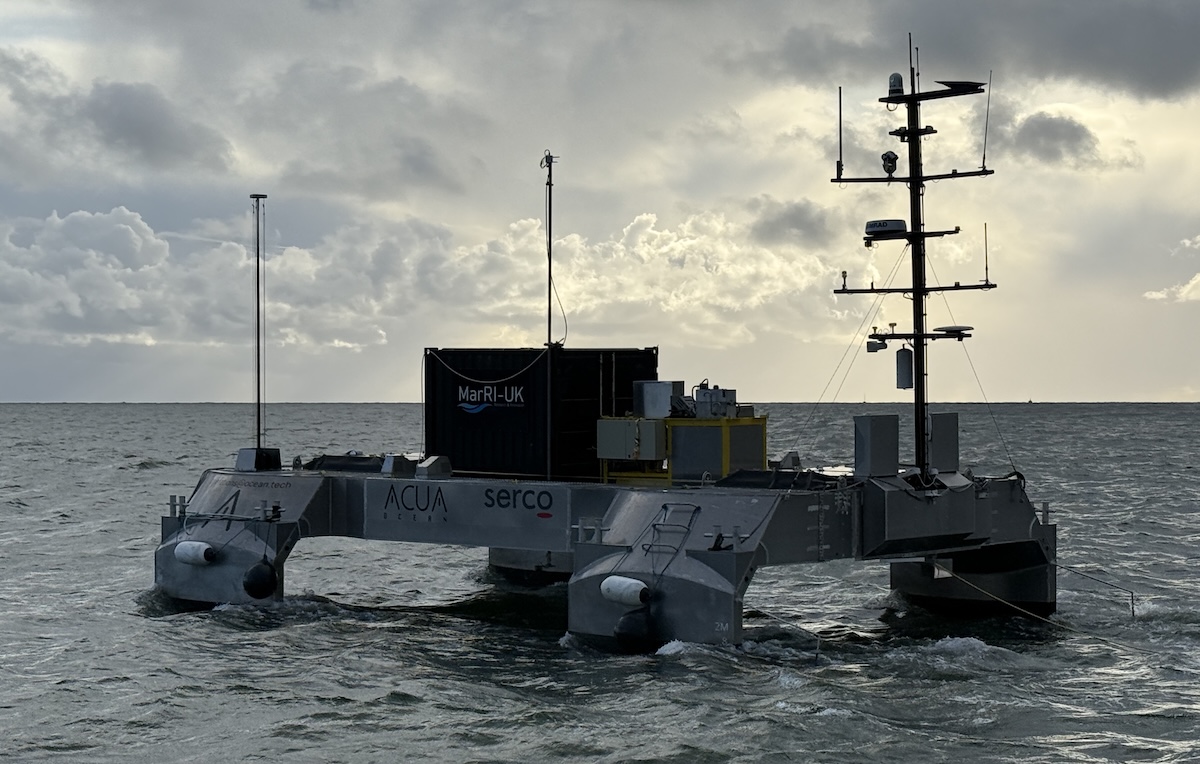
ACUA Ocean has completed three contracts under the Atlantic Net Technology Demonstrator programme, marking a step forward in the UK’s effort to field sovereign autonomous maritime systems it can design, operate, and sustain without outside dependence.
“Completing three contracts under the Atlantic Net Technology Demonstrator is a major achievement and a testament to our team’s expertise in defence autonomy solutions. It validates years of engineering investment in the Pioneer-class and proves that a British company can deliver world-class autonomous maritime capability entirely through sovereign means,” said Neil Tinmouth, CEO.
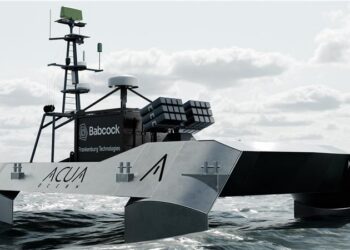
The contracts focused on the company’s Pioneer uncrewed surface vessel, which was tested across anti-submarine warfare situations. In higher sea states, where other vessels failed, Pioneer executed a number of tasks, including surface ISR, deployment of a sonar float, and operation of a towed array. ACUA also tested command and control systems against Royal Navy requirements.
The vessel itself is built around a SWATH hull design, which trades complexity for stability and endurance. At about 14 meters, the Pioneer Mk2 is a smaller platform that behaves like a much larger ship in rough water. It can last for weeks on the high seas, something competing vessels can’t.
ACUA Ocean retains full control over the propulsion system, software, and payload integration stack. That removes reliance on foreign components and export approvals, a constraint that has shaped many European defense programs. For planners, that means the system can be modified, scaled, or deployed without negotiating access at each step.
The ANTD programme was designed to move emerging technologies closer to field use. This set of trials suggests that uncrewed surface vessels are moving out of the experimental phase and into a role alongside crewed fleets.