Wednesday 17 December, 2025
Resilience Media
  • About
  • News
  • Resilience Conference
  • Guest Posts
    • Author a Post
  • Subscribe
No Result
View All Result
  • About
  • News
  • Resilience Conference
  • Guest Posts
    • Author a Post
  • Subscribe
No Result
View All Result
Resilience Media
No Result
View All Result

Russia is ‘Copying, Adapting, and Scaling’ Ukrainian Battlefield Innovations

Speaking at the Resilience Conference, two frontline officers say Moscow is adapting Kyiv’s best ideas

Resilience MediabyResilience Media
September 29, 2025
in News, Resilience Conference
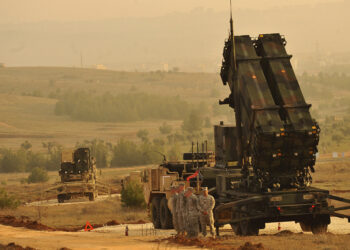
Photo by Eugene on Unsplash

Photo by Eugene on Unsplash

Share on Linkedin

Russia is not only catching up with Ukraine’s wartime ingenuity but is also actively copying and scaling it, according to two senior Ukrainian frontline officers who spoke at the Resilience Conference on Monday

You Might Also Like

CHAOS Industries joins U.S. Army G‑TEAD Marketplace

Quantum Systems teams up with Frontline to mass-produce Ukrainian combat drones in Germany

Skana wants to shore up coastal defence with amphibious vessel for shallow waters

Oleksandr Vorobiov, who heads training for Ukraine’s air defence forces, said Moscow has learned to replicate frontline tactics and systems developed by Ukrainian units. “They are scaling not their ideas. They are scaling your ideas,” he told the audience.

“They see what we are good at, and they can scale it, believe me. They start very slowly, like an elephant. But when they already run, it’s pretty hard to stop it. In technical products, they are just starting to run. And believe me, when they run in full power, I’m not sure that we will be able to overtake.”

Volodymyr Gorodnychyi, representing Ukraine’s Nemesis Regiment that specialises in attack drones, electronic intelligence and warfare systems, echoed the warning, pointing to Russia’s so-called Rubicon regiment.

“They scale our experience. We are intercepting not only big drones like Shahed, but also searching frequencies with special equipment,” he said. “They start to do the same. But moreover, they overtake us. They’ve built platoons whose only mission is to find our interceptor teams and destroy them. Once they do this, they again have the full power in the air.”

He added, “Rubicon is the most technologically advanced unit in the Russian armed forces. As soon as they come to some areas, we see direct input into our drones – their countermeasures are extremely advanced. For us, it’s a big threat.”

Both officers described how Ukraine has turned battlefield necessity into a live R&D lab, with improvised frontline workshops evolving into formalised projects that bring combat veterans into labs to work directly with startups and engineers.

“Every regiment has producers they work with,” Vorobiov explained. “We just call them and say, ‘We need to fix something.’ And they say, ‘Okay, what do we need to fix?’ It’s that fast. In modern war, strategy is urgent. If you think a product will last for years, you’re wrong. Every two or three months, it needs to be adapted.”

Founders and engineers are embedded close enough to test gear under realistic conditions and receive same-day feedback from the frontline. “At the initial stage, we test in a safe location, and then we move to combat as soon as we’re sure it’s ready,” Gorodnychyi said. “It’s quick. As soon as we get a product, we can test it the same day and provide feedback.”

The officers also highlighted the growing imbalance in resources. Kyiv alone can face hundreds of drones and missiles in a single night, with air defence involving as many as 100,000 Ukrainian personnel.

“We have the people. We don’t have enough weapons,” Vorobiov said. He pointed out the unsustainable economics of trying to shoot down cheap Shahed drones with Western missiles costing millions. “Expensive, ideal products don’t work now,” Oleksandr said. “Concepts work. Adaptation works. If you spend a million on a missile, in a month or two, it won’t be adaptable to reality.”

Asked what would happen if a 643-drone-and-missile attack like the one Kyiv endured this week were aimed at London, both officers were blunt.

Vorobiov said the UK and Europe would be unable to withstand such volumes: “You don’t have so many systems. Maybe the army positions would be okay. But Russia doesn’t hit the army,” he said. “They hit civilians, they hit factories. Europe and the West are not ready for such quantities.”

Gorodnychyi was only slightly more optimistic: “Yes, the RAF could protect against it – once or twice. But after two or three days, they would run out of missiles. We’ve already seen this in Israel.”

Both officers stressed that while Russia was slow at first, it is now accelerating, aided by Chinese support and a willingness to burn through resources. “They are scaling. They are scaling your ideas,” Vorobiov repeated. “When they run in full power, I’m not sure we will be able to overtake. That’s why we need to overtake them now.”


Tags: Nemesis RegimentOleksandr VorobiovUkraineVolodymyr Gorodnychyi
Previous Post

Isembard Launches MasonOS to Power the Next Generation of Factories

Next Post

NATO Warned: Defence Industry Bottleneck is Policy, Not Hardware

Resilience Media

Resilience Media

Start Ups. Security. Defense.

Related News

CHAOS Industries joins U.S. Army G‑TEAD Marketplace

byJohn Biggs
December 16, 2025

CHAOS Industries says it has been added to the U.S. Army’s Global Tactical Edge Acquisition Directorate, or G-TEAD, Marketplace after...

Quantum Systems teams up with Frontline to mass-produce Ukrainian combat drones in Germany

byCarly Page
December 15, 2025

On the heels of raising €180 million earlier in December, German drone maker Quantum Systems has kicked off a new manufacturing operation...

The Alligator

Skana wants to shore up coastal defence with amphibious vessel for shallow waters

byPaul Sawers
December 15, 2025

In a year when the Baltic has turned into a geopolitical house of mirrors, with Russian “shadow fleet” tankers slipping through...

Arondite and Babcock partner to move the British Royal Navy closer to a autonomous fleet

byJohn Biggs
December 11, 2025

Arondite and Babcock have partnered to bring autonomy into the Royal Navy’s day to day operations. The two UK companies have agreed a...

Auterion demonstrates a multi-manufacturer drone strike under real conditions

byJohn Biggs
December 11, 2025

Munich-based Auterion ran what it calls the world’s first multi-manufacturer swarm strike with both FPV munitions and fixed-wing drones working as a...

Helsing teams up with Kongsberg to boost its space strategy

byIngrid Lunden
December 10, 2025

Defence startups that want to increase their chances of winning major government tenders are teaming up with primes. Today, Helsing...

No Anduril is an island: US defence unicorn teams with GKN Aerospace on the Isle of Wight

byIngrid Lunden
December 10, 2025

Anduril — the defence startup valued at over $30 billion earlier this year — has made a big push to position itself not...

Nu Quantum lands record $60M to build UK’s first scalable quantum-networking platform

byCarly Page
December 10, 2025

Cambridge-based Nu Quantum — which develops photonic technology used in quantum computing architectures — has secured a landmark $60 million in Series...

Load More
Next Post
Dr Rich Drake, Anduril; Cameron McCord, Nominal; Oluseun Taiwo, Solideon; on stage at Resilience Conference with Leslie Hitchcock

NATO Warned: Defence Industry Bottleneck is Policy, Not Hardware

Steven Barrett, Cambridge Aeorspace and Charlie March, Never Lift on stage at Resilience Conference with Resilience Media Managing Editor, Ingrid Lunden

Never Lift Revealed as Early Investor in Cambridge Aerospace as Startup Confirms $136M Raised

Most viewed

UK launches undersea surveillance programme to counter growing Russian threat

Helsing teams up with Kongsberg to boost its space strategy

Quantum Systems closes a €180 million Series C extension, hits a €3 billion valuation

We Are Already Living in a World at War—It’s Time to Act Like It

Can the UK counter Russian laser threats?

Inside the drone revolution: How war has changed and what that means for modern armies

Resilience Media is an independent publication covering the future of defence, security, and resilience. Our reporting focuses on emerging technologies, strategic threats, and the growing role of startups and investors in the defence of democracy.

  • About
  • News
  • Resilence Conference
  • Guest Posts
  • Subscribe
  • Privacy Policy
  • Terms & Conditions

© 2025 Resilience Media

No Result
View All Result
  • About
  • News
  • Resilence Conference
  • Guest Posts
  • Subscribe
  • Privacy Policy
  • Terms & Conditions

© 2025 Resilience Media

This website uses cookies. By continuing to use this website you are giving consent to cookies being used. Visit our Privacy and Cookie Policy.