This article considers the Geostrategic implications for NATO and the UK; the Operational implications of Innovation; and the method by which we must reform the Public-Private sector, and the Defence-Science Industry relationships, if we are to secure our next 75 years of resilience, stability, security and prosperity, as well as NATO has in its 76th Anniversary year.
Whilst the UK is a leader in NATO, we have ground to cover concerning our Societal Preparedness for war, Resilience, the Remilitarisation of the UK’s, Canada’s and Europe’s industrial bases, and enhanced engagement with UK Science, Academia, and Industry.
To realise this, an understanding of “Industrial Interchangeability” applied into the UK and Europe’s regenerated and better integrated Defence Industrial Base must be pursued, institutionalised at the national level, and implemented swiftly, confidently, and decisively as achieved in Sweden and Finland. Future responsibilities of military leaders may extend esoteric understanding reserved for the military arena to the civilian population so that our people are persuaded of their vital contribution in the civil-military relationship. Each NATO country must combine 4 core public sector capabilities in Defence, National Security, Diplomacy, and Development, to Strategic Effect, alongside 4 private sector ones of Trade, Finance, the Intellectual-Scientific, and the Cultural, consequently, work in Economic Warfare will become increasingly important.
To fulfil the above, scientists need geostrategic awareness and UK policy makers need scientific awareness. To assist policy makers, and help resolve some of the geostrategic, scientific, and industrial complexities of our time, including how the UK can shape adversarial planning assumptions rather than respond to adversarial behaviours, includes the renewal of sovereign capabilities, and greater understanding of the application of Quantum and Superintelligence. The re-pursuit of grand strategy beyond the Operational and Strategic is necessary to realise our national objectives perpetually.
All regional shocks are global; therefore, NATO must consider the intrinsic importance of the security of the Indo-Pacific to the Euro Atlantic. Activity in the “vertical strategic plane” – actions in the Baltic directly impacts the Black Sea and vice versa – are as important as activity in the “horizontal strategic plane” between the Atlantic and Pacific. President de Gaulle foresaw the interlaced nature of geostrategy – NATO would have to later consider its “indivisible [strategic] responsibilities” that extend beyond Europe.
Only the finest see the strategic impact of actions. Those that see panoramically, essential in securing the maritime, help to galvanise our populations, aiding in their strategic understanding of, and role in, national endeavours and collective missions such as NATO.
Although we have been subject to strategic contradiction by adversaries – both applause and denigration – our military must exercise and pursue Grand Strategic understanding to develop a firm foundation and wield its mastery to discern what requires the UK’s acceptance and rejection. Our bond with the USA and Canada unites systemic Naval, Military, Intelligence, Security capabilities that fortunately possess greater strength than our internal challenges and adversaries’ capabilities. To maximise our strategic opportunities, a “Comprehensive Review of NATO” is needed, enabling the recalibration of threat perceptions, and “horizon scanning” for our future.
The UK needs to think higher – in Continents not Countries – not merely reacting to adversary’s Grand Strategies, but rather, through influence and impact. By this, we can achieve, through Structural Innovation a state of “Strategic Technological Dominance” over adversarial threats that surmount “Oscillating Operational Advantage”. We are in an era when the Euro Atlantic and Indo Pacific should be considered, not just indivisible, but co-joined by the Arctic, as “One Strategic Operating Environment”. Securing the Northern Shipping Route for the USA to utilise alongside Canada and ourselves; and regenerating our concurrent fighting abilities in the Indo Pacific and Euro Atlantic are propositions that would extend the UK’s Nuclear umbrella and allies’ security.
A joint Science-Industry approach will definitively secure NATO’s technological dominance over its adversaries in multiple environments including the Arctic. Ideas, Invention, and Innovation will form a “triangle of deployable effect” for NATO and its people, yet an ever-present paradox persists between the operational advantage required today, and the strategic advantage for long-term deterrence, and eventual prevailing against opponents.
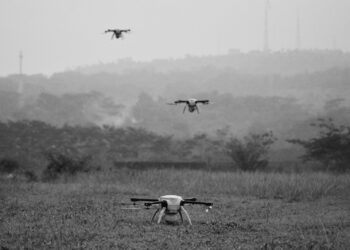
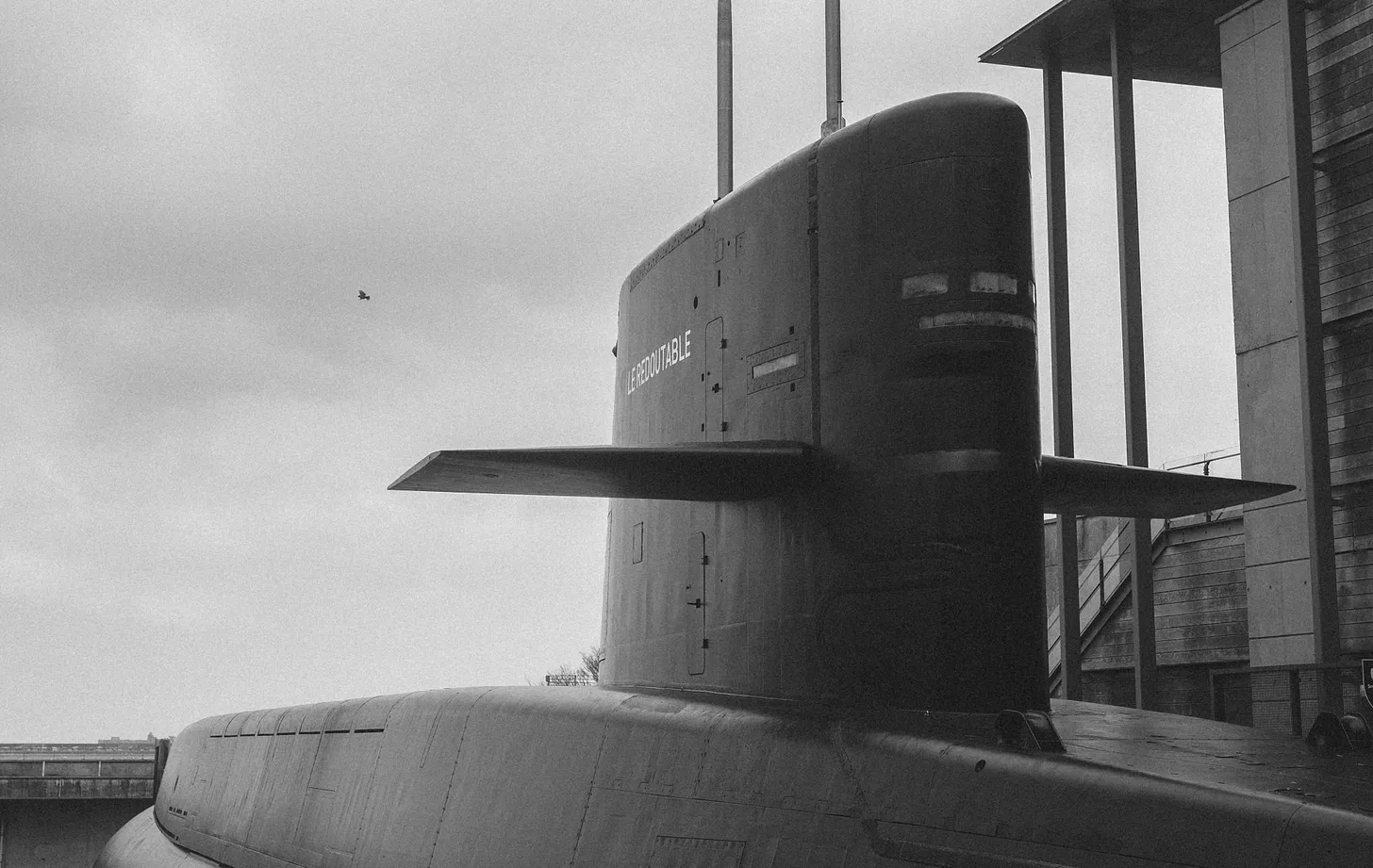
Recent events in the UK demonstrate that the primary strategic threats from Russia remain its Submarine and Nuclear Forces. In Ukraine, innovation capabilities depended on the success by which Ukrainian Defence and Academia reformed their relationship at high intensity and pace, achieved through a “whole of society” approach.
This era of UK innovation has inspired the regeneration of privatised capabilities in a reformed public service-led approach to establish a joint Science-Industry Academia in the Centre for Underwater Acoustic Analysis (CUAA), as a first step to contribute to our defence from “Seabed-to Space”. The increased scale of Submarines – our most strategic asset alongside UK Strike – must be actioned. We are limited only by our imagination.
Public Service should guide our innovation. Behind every successful innovation is the bond between science and Industry which delivers the greatest outcomes. The CUAA was established in the spirit of public service for the nation. It has brilliant Academics from UK Science who contribute to serving our nation. Identifying individuals willing to serve is pivotal, yet understanding how to add systemic capability, to our Navies and across Government Science, whether geostrategic, scientific, or industrial is critical to the industrial-military task.
The merger of capabilities across Government-Defence Security-Science, Industry-Civil society will increase resilience and propel us towards our mission of security against adversaries who attempt to undermine our purpose and values.
Professor Carl Stephen Patrick Hunter OBE is the Director-General of The Durham Institute of Research, Development and Invention. The views are his own.