Wednesday 18 March, 2026
[email protected]
Resilience Media
  • About
  • News
  • Resilience Conference
    • Resilience Conference Warsaw 2026
    • Resilience Conference Copenhagen 2026
    • Resilience Conference London 2026
  • Guest Posts
    • Author a Post
  • Subscribe
No Result
View All Result
  • About
  • News
  • Resilience Conference
    • Resilience Conference Warsaw 2026
    • Resilience Conference Copenhagen 2026
    • Resilience Conference London 2026
  • Guest Posts
    • Author a Post
  • Subscribe
No Result
View All Result
Resilience Media
No Result
View All Result

The New Economics of Defence: The Financial Barriers Holding Back Defence Innovation

Resilience MediabyResilience Media
February 24, 2025
in Events, News, Resilience Conference
Kelly Chen, Partner, NATO Innovation Fund; Eveline Buchatskiy, Managing Partner, D3; Rob Murray, Chief Innovation Officer, Saab; and Dr Tobias Stone, Co-founder, Resilience Media, on stage in Munich. Photo credit MSC/Alexander Koerner

Kelly Chen, Partner, NATO Innovation Fund; Eveline Buchatskiy, Managing Partner, D3; Rob Murray, Chief Innovation Officer, Saab; and Dr Tobias Stone, Co-founder, Resilience Media, on stage in Munich. Photo credit MSC/Alexander Koerner

Share on Linkedin

Russia is at war with the West. The Institute of Strategic Studies recently published a report saying that Russia’s defence spending is equivalent to $462 billion, while the whole of Europe, including the UK, is around $457 billion. NATO Innovation Fund and Dealroom just published a report showing that VC in defence, resilience, and security has reached $5.2 billion. ‘The New Economics of Defence Funding’ panel at The Future of Defence Tech Manufacturing & Innovation event in Munich discussed both how funding works today and how funding needs to adapt to meet this existential threat.

You Might Also Like

Sille Pettai steps down from CEO role at SmartCap

100 Startups to Watch in 2026

How Ukraine is transforming its battlefield data into a world-first AI training hub

Featuring Eveline Buchatskiy, Managing Partner of D3; Kelly Chen, Partner at NATO Innovation Fund; and Rob Murray, Chief Innovation Officer at Saab, the conversation covered getting more private debt and family offices involved in defence tech funding, the need for a multilateral defence bank, as well as how funds are supporting their founders as they struggle to raise capital. You can watch the full panel on our Youtube Channel.

The panelists discussed the challenge for defence startups needing to raise enormous Seed and Series A rounds with corresponding large valuations simply to have enough runway to prototype and scale a product because they are unable to receive a bank loan against their first signed contract. They also talked about how hard it is for defence startups to open bank accounts, with startups in Ukraine and Germany having to start out as ‘drone companies used to deliver fertiliser to Russia.’ Even NATO Innovation Fund had challenges getting a bank account. The struggle stems from compliance: anti-laundering policies, ESG compliance, and Know Your Customer (KYC).

Rob Murray says part of the answer to this, and an answer to the wider funding problem, is to establish a multilateral defence, security, and resilience (DSR) bank, which addresses and leverages deep capital markets. “We are at war… and this is no different from conflicts that go back centuries. They’re often funded through credit.”

Murray says a DSR bank would provide cheap capital to nation states who would have a hard time finding that money via convention tax and fiscal spend policy. This bank would nudge the challenge of defence procurement, by sourcing that through conditionality in loans. “It would also provide guarantees to commercial banks, because one of the reasons why commercial banks struggle to provide credit to the defence sector is [the] compliance risk,” he continued.

Its shareholders would be nation states which would provide guarantees to underwrite the compliance risk which unlocks credit to flow into the industry and provide debt.

NATO Innovation Fund has paved the way for wider DSR awareness. Prior to deploying its funds directly into startups, NIF established itself as a fund of funds, which allowed for cheques to be written by more venture firms, thereby producing more startup funding. Acknowledging the importance of public funding from the European Investment Fund and European Investment Bank, NIF is adamant that private capital is a huge part of the equation. “In order for this industry to be self propelling, it needs to be largely funded from private capital, both at the early stages as well as growth to exit,” said Chen.

Murray stressed the need for nations to back defence, security, and resilience as a vertical, which will help change cultural norms and bring together sectors which don’t traditionally overlap, such as capital markets, national security entities, defence environments. Buchatskiy echoed this, sharing how the government of Ukraine is already encouraging better banking treatment of defence tech startups.

In 2025, the Ukrainian government will guarantee up to five per cent of a commercial loans to startups, essentially filling the gap between the bank’s interest rate and five per cent of the loan. Not a new concept in Ukraine, as this was common practice in the agricultural industry prior to the full scale invasion. The Ukrainian government has taken that blueprint and applied it to the defence industry.

NIF agrees with those public-private partnerships, Chen said, and also includes primes in the orbit of their access. “[NIF is] working with EIF to make sure dual-use [technology] is more acceptable in their fund to fund investments. And then on the public contracts…we lump in the primes as well. We need to make sure that if we’re talking about defence, that they’re getting real sustainable, long term, large contracts on the other side.”

The urgency is undeniable. As Murray bluntly put it: Europe is at war. Yet, the financial infrastructure to support and scale its defence industry remains fractured, outdated, and in some cases, outright hostile to the very companies driving innovation. The panellists made it clear: the current system is unsustainable.


The Future of Defence Tech Manufacturing & Innovation, was presented by the US Defense Innovation Unit and Munich Security Conference Tech & Innovation Thursday, sponsored by Boston Consulting Group, and powered by Resilience Media.


Tags: D3Eveline BuchatskiyIISSKelly ChenNATO Innovation FundResilience ConferenceRob MurraySaab
Previous Post

Drones Instead of Tanks: A New Vision for European Defence

Next Post

The Role of Startups: Why Defence Tech Must Rethink Manufacturing and Investment

Resilience Media

Resilience Media

Start Ups. Security. Defense.

Related News

Sille Pettai steps down from CEO role at SmartCap

Sille Pettai steps down from CEO role at SmartCap

byFiona Alston
March 17, 2026

Big news in European defence tech investment. Sille Pettai, the CEO of SmartCap -- the Estonian state-owned investment fund --...

100 Startups to Watch in 2026

100 Startups to Watch in 2026

byLeslie Hitchcockand1 others
March 17, 2026

Defence has long been the domain of primes. The war in Ukraine has changed that by introducing the tech sector...

person on top of brown steel frame

How Ukraine is transforming its battlefield data into a world-first AI training hub

byThomas Macauley
March 16, 2026

After four years effectively as an all-in-one laboratory, training ground and live arena for technology to fight its own war,...

US and UK ballistic missile defence capabilities brought into focus as Iran lashes out against region

US and UK ballistic missile defence capabilities brought into focus as Iran lashes out against region

byTom Pashby
March 12, 2026

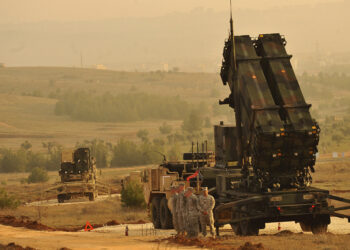
The ballistic missile defence capabilities of the US, UK and other allies have been put to the test as the...

Scout Ventures raises $125 million to expand investment in defence and dual-use tech

Scout Ventures raises $125 million to expand investment in defence and dual-use tech

byJohn Biggs
March 11, 2026

Scout Ventures has closed its fifth fund with $125 million in commitments, according to an announcement released March 10. The...

The signal is the weapon: How mobile networks became infrastructure for modern war

The signal is the weapon: How mobile networks became infrastructure for modern war

byJohn Biggs
March 11, 2026

Mobile World Congress (MWC) has been around since 1987. The conference, part trade fair, part consumer electronics expo, and part...

Hadean, the AI battle simulation startup, closes bridge round ahead of a Big B

Hadean, the AI battle simulation startup, closes bridge round ahead of a Big B

byIngrid Lunden
March 11, 2026

London-based Hadean began life several years ago as an AI gaming startup working on VR and video simulations, but it...

Hackathon-ing our way to a new defence ecosystem

Hackathon-ing our way to a new defence ecosystem

byFiona Alston
March 11, 2026

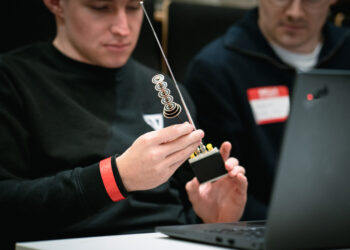
It takes a village to raise a child, but when it comes to building the next generation of defence in...

Load More
Next Post

The Role of Startups: Why Defence Tech Must Rethink Manufacturing and Investment

Western governments are not reacting to the threat of war quickly or clearly; will startups step in?

Western governments are not reacting to the threat of war quickly or clearly; will startups step in?

Most viewed

InVeris announces fats Drone, an integrated, multi-party drone flight simulator

Uforce raises $50M at a $1B+ valuation to build defence tech for Ukraine

Auterion, the drone software startup, eyes raising $200M at a $1.2B+ valuation

Twentyfour Industries emerges from stealth with $11.8M for mass-produced drones

Senai exits stealth to help governments harness online video intelligence

Palantir and Ukraine’s Brave1 have built a new AI “Dataroom”

Resilience Media is an independent publication covering the future of defence, security, and resilience. Our reporting focuses on emerging technologies, strategic threats, and the growing role of startups and investors in the defence of democracy.

  • About
  • News
  • Resilence Conference
    • Resilience Conference Copenhagen 2026
    • Resilience Conference Warsaw 2026
    • Resilience Conference 2026
  • Guest Posts
  • Subscribe
  • Privacy Policy
  • Terms & Conditions

© 2026 Resilience Media

No Result
View All Result
  • About
  • News
  • Resilence Conference
    • Resilience Conference Copenhagen 2026
    • Resilience Conference Warsaw 2026
    • Resilience Conference 2026
  • Guest Posts
  • Subscribe
  • Privacy Policy
  • Terms & Conditions

© 2026 Resilience Media

This website uses cookies. By continuing to use this website you are giving consent to cookies being used. Visit our Privacy and Cookie Policy.