Sunday 18 January, 2026
[email protected]
Resilience Media
  • About
  • News
  • Resilience Conference
  • Guest Posts
    • Author a Post
  • Subscribe
No Result
View All Result
  • About
  • News
  • Resilience Conference
  • Guest Posts
    • Author a Post
  • Subscribe
No Result
View All Result
Resilience Media
No Result
View All Result

What Is the Real Cost of Perceived Failure in Defence Tech?

A guest post from Will Stone, UK Member of Parliament for Swindon North, Labour Business Champion for Defence

Resilience MediabyResilience Media
November 4, 2025
in Guest Posts
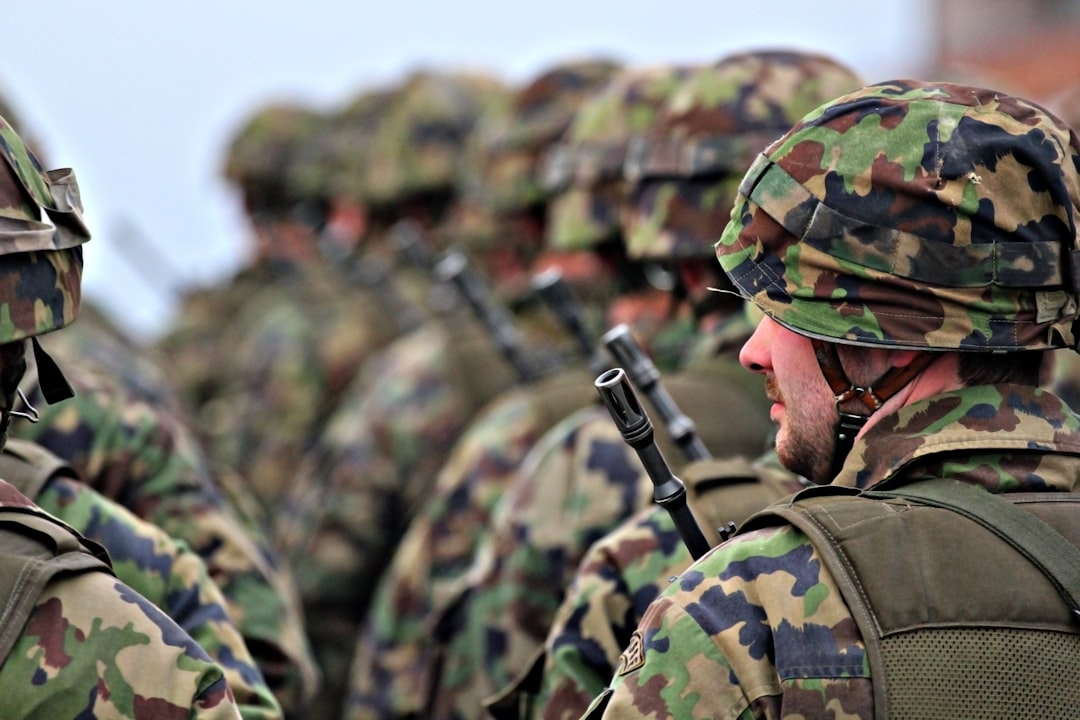
Photo by Simon Infanger on Unsplash

Photo by Simon Infanger on Unsplash

Share on Linkedin

I was recently asked to comment on the reported limitations of the Stark Virtus drone during a exercise in Kenya.

You Might Also Like

Guest Post: Where are Europe’s female defence tech leaders?

The Chinese GTG-1002 espionage campaign is an AI security wake-up call

The evolution of state sovereignty and national security in the digital age

My first point is critical, and drawn from my time in the military and from training professional athletes in combat sports: “It’s significantly better to fail in training, instead of failing in the theatre of war where the stakes are significantly higher.”

Training is where boundaries are pushed. It’s where we explore, test, learn, and adapt. I’ve been on exercises where entire companies were wiped out due to poor tactics. My immediate thoughts were always: “How did that happen? How do we make sure it never happens again? And thank goodness this wasn’t real combat.”

We’re living in a period of rapid evolution in warfare. Technology is advancing at pace, and if we want to see true innovation, we must accept that perfection is rarely achieved at the first attempt.

Equipment needs to be stress-tested, sometimes to the point of breaking, so that weaknesses can be exposed in a controlled environment. That’s how we identify cracks, recalibrate, and refine. When we learn and improve, the end product becomes stronger and more reliable.

So, what is the real cost of perceived failure? When a system achieves 80% success in testing, yet is publicly criticised for the 20% that didn’t go to plan, what message does that send to innovators?

To encourage progress, we need trust. If companies fear reputational damage every time they trial a product, they’ll hesitate to experiment. That hesitation stifles growth and slows down the delivery of cutting-edge kit to our troops.

Setbacks in training are acceptable, provided they lead to evaluation, adjustment, and improvement. The true danger lies not in the missteps themselves, but in the barriers they may subsequently create to thinking outside the box.

My hope and expectation? That the team at Stark is back at the drawing board, using lessons learned to make Virtus even better. That’s the path of progress.

Final thoughts slightly deviating from the original question, but important nevertheless. How did the information about an exercise that I imagine the Ministry of Defence would have undoubtedly wanted kept under wraps end up in the public domain?

Do these leaks of confidential information run the risk of hindering future collaborations and joint exercises between the MoD and the private sector?

These exercises where cutting edge technologies like those Stark and others offer are meant to test and refine tactics and techniques which our adversary would benefit from knowing about, hence having security and trust around them is key. Building relationships between the end user and the industry mission partners is crucial for crafting products fit for future warfare. Suppliers leaking information from these exercises to undermine competitors undermines both national security and partnerships between industry and the military users.

I want to see us push forward as a nation, advance in technology, and give our troops cutting-edge equipment. We don’t need to add fuel to the old low-risk isolationist mentality at the MoD. We are at a pivotal point where we need to embrace defence technology and business to grow our defence capabilities, and for this to work, we need trust.

What is the real cost of perceived failure? The cost outlined above could be significant: erosion of trust, slowing innovation, and reduced collaboration.

However, I am an optimist and I am hopeful that the industry can use this as a learning exercise and grow from it. Setbacks are natural. Let’s reshape mindsets so we can all grow.


Will Stone is the Member of Parliament for Swindon North, Labour Business Champion for Defence, and a former soldier with the 1st Battalion, The Rifles. Since being elected, Will has been advocating for his constituency to become the UK’s hub for drone manufacturing. He is passionate about reindustrialisation, ensuring our troops have the best kit and equipment, and using the defence industry as a lever for economic growth.


Tags: Will Stone UK Member of Parliament for Swindon North
Previous Post

Anduril Begins Flight Testing Of the Semi-Autonomous YFQ-44A Combat Aircraft

Next Post

Resilience Conference 2025: Investing in Hard Power

Resilience Media

Resilience Media

Start Ups. Security. Defense.

Related News

Guest Post: Where are Europe’s female defence tech leaders?

Guest Post: Where are Europe’s female defence tech leaders?

byBenjamin Lussert
December 12, 2025

Kraken Technology recently hired Erica Dill-Russell as its new chief commercial officer – a potential “trailblazer“ of a move in the market, given how...

The Chinese GTG-1002 espionage campaign is an AI security wake-up call

The Chinese GTG-1002 espionage campaign is an AI security wake-up call

byBen Van Roo
December 12, 2025

In September, a Chinese state-sponsored group ran a cyber-espionage campaign where off-the-shelf artificial intelligence tooling was believed to have performed...

The evolution of state sovereignty and national security in the digital age

The evolution of state sovereignty and national security in the digital age

byHugo Jammes
December 11, 2025

Over the last two decades, the nature of sovereignty and warfare has been fundamentally transformed by digital technologies and the...

Five Months After Launch, UK Defence Innovation is Still Missing in Action

Five Months After Launch, UK Defence Innovation is Still Missing in Action

byResilience Media
December 5, 2025

On 1 July 2025, the Ministry of Defence (MOD) launched UK Defence Innovation (UKDI), backed by a £400 million ring-fenced...

Killing is the core function of ‘defense technology’

Killing is the core function of ‘defense technology’

byCharles Eberly von Szecsey
December 2, 2025

I am sure most of us have spent considerable time this year moving through industry conferences where the talk always...

What business school teaches us about Ukraine’s geopolitical chessboard

What business school teaches us about Ukraine’s geopolitical chessboard

byResilience Media
December 1, 2025

In business, two parties negotiate when each has something the other wants, even though the value each assigns to what...

Europe Doesn’t Need Sovereignty. It Needs Control.

Europe Doesn’t Need Sovereignty. It Needs Control.

byNicola Sinclair
November 28, 2025

Nationalism is deepening Europe’s fragmentation. Today, defence ministries buy tech like Apple customers: powerful hardware, closed ecosystem, someone else’s rules....

Inside the drone revolution: How war has changed and what that means for modern armies

Inside the drone revolution: How war has changed and what that means for modern armies

bySrdjan Kovacevic
November 25, 2025

Reports from the Ukraine front line make clear the tactics and equipment deployed by both sides are unlike those used...

Load More
Next Post
Resilience Conference 2025: Investing in Hard Power

Resilience Conference 2025: Investing in Hard Power

From Cost-Plus to Code-First: The Radical Shift in Europe’s Defence Tech

Most viewed

InVeris announces fats Drone, an integrated, multi-party drone flight simulator

Harmattan AI raises $200M at a $1.4B valuation from Dassault

Defense Unicorns lives up to its name: $136M round lifts valuation past $1B

Hydrosat raises $60M for its thermal satellite imaging tech

Terra Industries raises $12M to become ‘Africa’s first neo-prime’

6 predictions for defence in 2026

Resilience Media is an independent publication covering the future of defence, security, and resilience. Our reporting focuses on emerging technologies, strategic threats, and the growing role of startups and investors in the defence of democracy.

  • About
  • News
  • Resilence Conference
  • Guest Posts
  • Subscribe
  • Privacy Policy
  • Terms & Conditions

© 2026 Resilience Media

No Result
View All Result
  • About
  • News
  • Resilence Conference
  • Guest Posts
  • Subscribe
  • Privacy Policy
  • Terms & Conditions

© 2026 Resilience Media

This website uses cookies. By continuing to use this website you are giving consent to cookies being used. Visit our Privacy and Cookie Policy.